


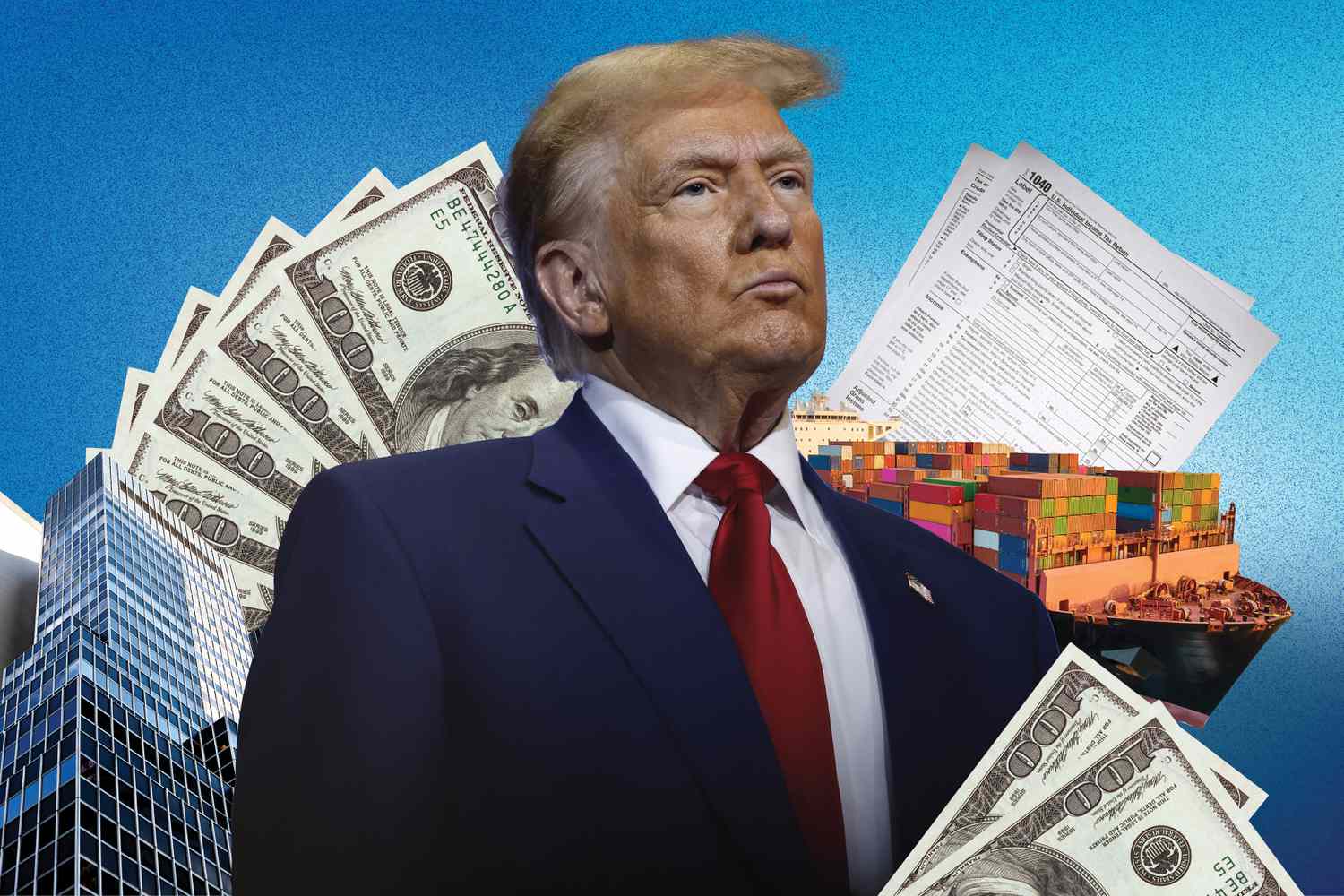
In the annals of contemporary American economic policymaking, few approaches have generated as much debate, admiration and criticism as what came to be known as “Trumponomics”. Rooted in aggressive tax reform, deregulation, protectionist trade measures and a renewed emphasis on domestic manufacturing, the economic doctrine pursued during the presidency of Donald Trump sought to fundamentally recalibrate the American economic architecture.
While critics questioned its sustainability and fiscal implications, supporters viewed it as a decisive correction to decades of economic stagnation, overregulation and industrial outsourcing. More importantly, Trumponomics represented an effort to restore American economic primacy amid growing competition from China and intensifying geoeconomic rivalries.
Strategic Foundation of Trumponomics
At its core, Trumponomics was driven by a relatively simple proposition: reduce taxes, remove regulatory barriers, incentivise domestic production and revive industrial competitiveness. The administration argued that excessive government intervention and high corporate taxation had weakened American manufacturing and encouraged corporations to move capital and production overseas.
The most significant pillar of this strategy emerged through the Tax Cuts and Jobs Act (TCJA), enacted in late 2017. The legislation represented one of the most substantial tax overhauls in modern American history. By substantially lowering corporate taxes and reducing tax burdens across income brackets, the policy aimed to increase disposable income, stimulate investment and improve business confidence.
Supporters argued that tax relief would enhance household purchasing power while encouraging corporations to reinvest profits domestically rather than retain them offshore. The expectation was that lower taxes would trigger higher capital expenditure, industrial expansion and job creation. For businesses, particularly multinational firms, the reduction in corporate tax rates significantly improved profitability and strengthened incentives for capital repatriation. Several companies redirected overseas earnings back into the American economy, boosting liquidity and market confidence.
However, the broader strategic logic extended beyond taxation. The Trump administration viewed economic strength as inseparable from national power. Economic revival was seen not merely as a domestic necessity but also as an instrument for reinforcing America’s geopolitical standing in a rapidly changing international order.
Deregulation as an Economic Multiplier
Alongside tax reform, deregulation emerged as another defining feature of Trumponomics. The administration aggressively sought to dismantle what it regarded as excessive bureaucratic obstacles to economic activity.
The philosophy behind deregulation was straightforward: governments should create enabling conditions rather than burden enterprises with unnecessary procedural constraints. Regulations perceived as costly or redundant were rolled back to reduce compliance costs for businesses.
The administration argued that years of regulatory expansion had increased operating costs, delayed project implementation and eroded industrial competitiveness. By easing restrictions, companies could invest more rapidly, expand production and improve productivity.
One particularly notable area of focus was infrastructure and industrial approvals. Delays caused by prolonged environmental clearances and administrative procedures were identified as major impediments to economic activity. Efforts were therefore directed towards simplifying approval mechanisms and accelerating project execution.
From a strategic perspective, deregulation aimed to improve efficiency across sectors, particularly manufacturing, energy and infrastructure. By reducing administrative bottlenecks, the government sought to create conditions conducive to faster growth and stronger industrial confidence. This approach reflected a broader ideological shift, moving away from state-heavy economic management towards market-led expansion.
GDP Expansion and Economic Momentum
The years immediately following the implementation of tax reforms witnessed visible economic acceleration. Economic indicators pointed to stronger growth momentum, increased consumer spending and improved investor confidence.
A combination of lower taxation, higher consumer purchasing power and greater business optimism contributed to stronger economic activity. Household spending increased as disposable incomes improved, while companies gained greater financial flexibility to pursue expansion strategies.
Consumer confidence remained particularly important in sustaining momentum. Increased spending often acts as a multiplier within advanced economies, boosting demand, production and employment simultaneously. At the same time, labour-market indicators improved significantly. Employment levels rose and job openings expanded across multiple sectors. Small businesses displayed renewed optimism regarding market expansion and future demand.
Supporters of Trumponomics frequently cited these indicators as evidence that deregulation and tax reductions were delivering tangible economic benefits. Nevertheless, economists remained divided over the extent to which these gains represented structural transformation rather than a cyclical recovery inherited from earlier economic momentum. Critics argued that the acceleration may have partly reflected pre-existing growth trends. Yet, from a political and policy standpoint, the Trump administration succeeded in shaping the narrative that confidence itself could become an economic asset.
Rebuilding Industrial Confidence and Domestic Investment
A notable feature of Trumponomics was its emphasis on encouraging domestic industrial production and reducing excessive dependence on imports. American firms were encouraged to increase local investment and expand manufacturing operations within the country.
By reducing corporate taxes and simplifying regulations, the administration sought to reverse decades of industrial outsourcing that had hollowed out parts of America’s manufacturing heartland. Investment incentives extended to machinery, equipment acquisition and productive infrastructure, encouraging businesses to modernise their operational capabilities.
In addition, targeted development initiatives in economically distressed regions sought to stimulate localised growth. Opportunity-driven investment frameworks aimed to attract capital into underserved communities through tax incentives and public-private partnerships. This represented an important policy signal: economic revival needed to be geographically broad-based rather than concentrated solely in major metropolitan financial centres.
China Factor: Trade, Tariffs and Strategic Competition
No assessment of Trumponomics is complete without examining its intersection with the growing economic rivalry between the United States and China. The Trump administration increasingly viewed trade imbalances as symptoms of broader structural vulnerabilities. Concerns over manufacturing dependence, intellectual property practices and industrial competitiveness pushed Washington towards a tougher economic posture. Tariffs imposed on Chinese imports reflected a strategic effort to pressure Beijing into trade renegotiations while simultaneously encouraging domestic production.
The administration argued that unrestricted imports had weakened American manufacturing competitiveness and widened trade deficits. Through tariffs, policymakers hoped to reduce economic dependence and rebalance trade relationships. However, the strategy produced mixed results.
On the one hand, tariffs signalled strategic resolve and reinforced America’s willingness to confront economic asymmetries. Domestic manufacturers in certain sectors experienced temporary benefits. On the other hand, uncertainty surrounding trade disputes disrupted supply chains, affected agricultural exports and heightened investor concerns. Industries dependent on imported inputs faced higher costs, while retaliatory measures created pressure on export-oriented sectors. Businesses also accelerated procurement cycles in anticipation of tariff increases, temporarily boosting activity but introducing market distortions.
The US-China economic confrontation highlighted an important geoeconomic reality: modern trade wars are rarely cost-free. Economic nationalism may strengthen strategic positioning, but it also creates domestic adjustment pressures.
Fiscal Deficits and Questions of Sustainability
Despite strong growth indicators, critics raised concerns about rising fiscal deficits. Tax reductions, while stimulating demand, also reduced government revenue. Questions emerged over whether economic growth would be sufficient to offset lost revenue over the long term. Skeptics warned that expanding deficits could create structural vulnerabilities if growth slowed or external shocks emerged. Moreover, some economists argued that the benefits disproportionately favoured corporations and higher-income groups, even though middle-income households also experienced temporary gains.
The central policy question therefore remained one of sustainability: Could tax-driven growth remain durable without undermining fiscal discipline? That debate remains unresolved and continues to shape economic discourse in the United States.
Lessons for India and Emerging Economies
For countries such as India, Trumponomics offers several important policy lessons.
First, regulatory efficiency matters. Excessive bureaucratic delays discourage investment and weaken competitiveness. Simplifying approvals while maintaining accountability can accelerate infrastructure and industrial growth.
Second, taxation influences investment behaviour. Rational and competitive tax structures encourage domestic manufacturing and attract global capital.
Third, economic nationalism must be carefully calibrated. While protecting domestic industries is important, abrupt protectionism can generate unintended disruptions.
Fourth, economic policy should align with national strategic objectives. Economic strength increasingly shapes geopolitical influence, technological capability and defence resilience.
Finally, confidence itself is a strategic asset. Markets respond not only to policy decisions but also to expectations, predictability and leadership narratives.
Conclusion
Trumponomics represented more than an economic experiment; it reflected a strategic attempt to redefine America’s domestic and global economic position. Through tax reform, deregulation, industrial incentives and assertive trade policies, the administration sought to restore economic confidence and reassert American competitiveness.
While debates continue over fiscal sustainability and distributional outcomes, there is little doubt that the policy reshaped global discussions on economic nationalism, industrial policy and geoeconomic competition.
For emerging powers navigating an era of technological rivalry and shifting supply chains, the Trump economic model offers both inspiration and caution. Economic resurgence requires bold reforms, but long-term success depends on balancing growth, resilience, inclusion and fiscal prudence.
In the twenty-first century, economic strategy is no longer merely about growth. It is about national power.
(Prof (Dr) Nishakant Ojha is a national security strategist and policy adviser specialising in strategic technologies, cyber security, defence communications and emerging geopolitical developments)
