


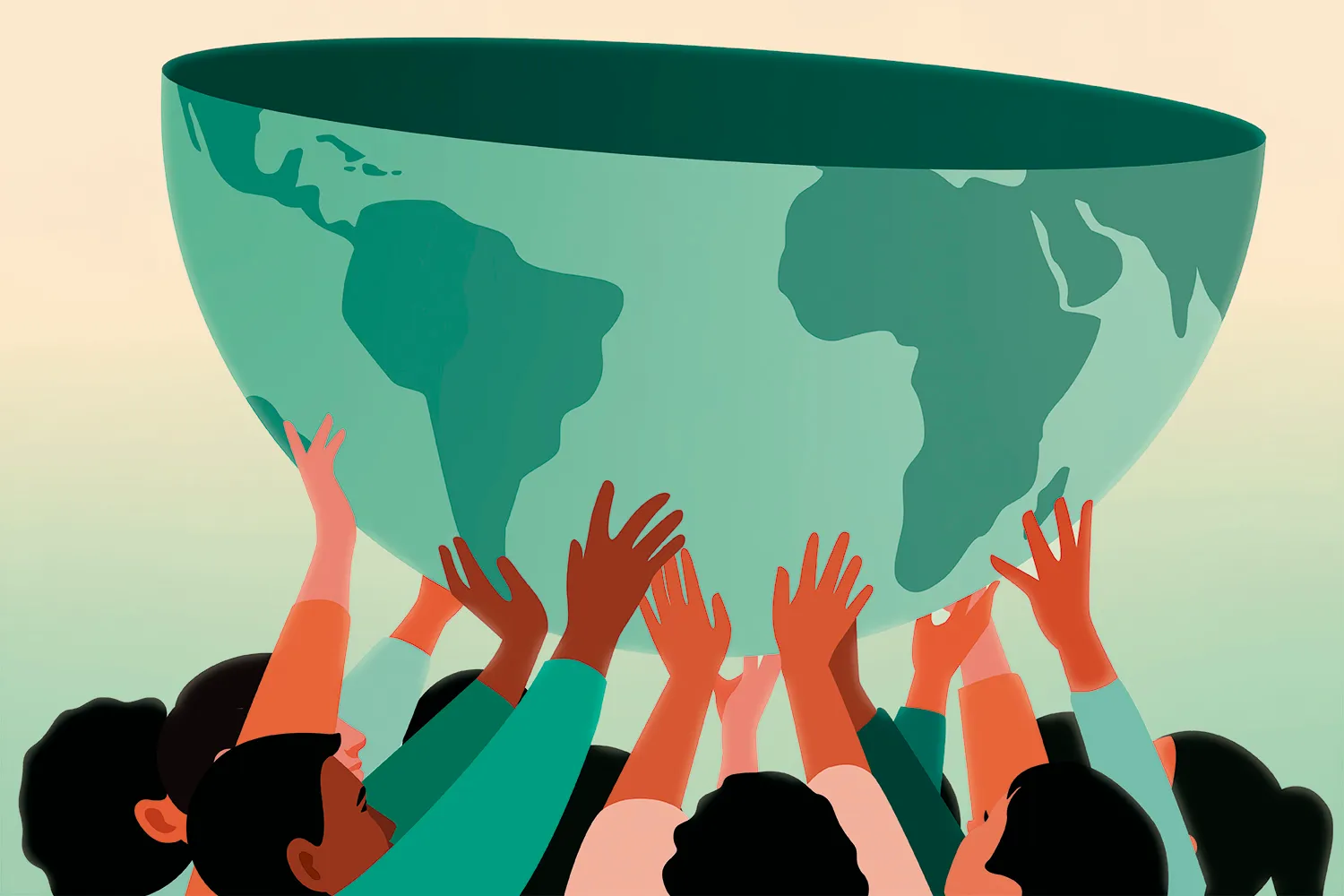
Since the end of the Cold War, the world order has been in a state of constant flux, more than ever before. For decades, the world was largely dominated by Western countries through institutions such as the United Nations, the World Bank, the International Monetary Fund (IMF) and the Group of Seven (G7). Today, however, a new geopolitical and economic landscape has emerged amid the rapid rise of the Global South. The developing countries of the Asia-Pacific, Africa, Latin America and parts of the Middle East are no longer merely participating in global affairs; they are increasingly shaping the future of global governance.
The Global South is more than a demographic or economic reality. It represents a broader shift in power, influence and ideas within the international system. This transformation is moving the world closer to a multipolar order, in which decisions are made from multiple centres of power rather than solely in the capitals of the West.
The decentralisation of global economic power is one of the principal reasons behind the rise of the Global South. Over the past two decades, the economies of emerging countries have played an increasingly important role in driving global growth. As a result, countries such as China, India, Indonesia, Brazil, Saudi Arabia, South Africa, Vietnam and several African economies have emerged as major engines of production, trade, investment and innovation. This transformation has reshaped the global economy through expanding middle classes, growing industrial capabilities and stronger integration into global value chains.
These achievements, however, do not make the Global South a politically or economically homogeneous group. Its member states display considerable diversity in political systems, levels of economic development, strategic outlooks and foreign policy priorities. Many developing countries, particularly smaller ones, continue to face fiscal constraints, governance challenges and infrastructure deficits, while China and India exercise considerable economic influence on the global stage.
Leadership competition is another factor that hinders collective action. China, India, the BRICS nations, South Africa and other regional powers all seek to play leading roles within the Global South. Their strategic interests are not always aligned, and differences frequently emerge over trade, regional security, development priorities and institutional reform. Building consensus among such a diverse range of actors therefore remains an enduring challenge.
Furthermore, domestic constraints limit the potential for change in many governments across the Global South. Economic growth has not always been accompanied by an equitable distribution of wealth. Income inequality, technological dependence, unemployment, weak governance, corruption and a lack of industrial diversification remain significant challenges. Climate change further exacerbates these vulnerabilities, threatening agriculture, food security and coastal and water-dependent communities across many developing nations.
However, these obstacles should not obscure the broader picture of global transformation. The influence of the Global South in international decision-making has grown significantly. From global trade negotiations to climate diplomacy, digital governance, health security, infrastructure financing and peacebuilding, the influence of developing countries has expanded to an unprecedented level in modern history.
This evolving landscape presents significant opportunities for middle powers such as Bangladesh. Pursuing balanced diplomacy, strengthening regional connectivity, expanding South-South cooperation and engaging constructively with both established and emerging powers can enhance Bangladesh’s strategic autonomy while contributing to a more inclusive international order. The country’s active engagement with the United Nations, BRICS partners, BIMSTEC, the Indian Ocean region and other multilateral organisations underscores the importance of multifaceted partnerships in today’s diplomatic environment.
Last but not least, the future of global governance will not be determined solely by competition among the great powers. It will increasingly depend on the extent to which the aspirations of the Global South are translated into meaningful institutional reform that promotes fair, representative and sustainable development. The rise of the Global South represents not merely a shift in power but also a rethinking of global cooperation. Although the world has become increasingly polarised, multiple centres of influence have emerged, and the Global South is no longer a passive participant in global politics but one of its principal drivers. The key question is whether this transformation will produce a more fragmented world or one characterised by more representative, equitable and resilient governance capable of addressing the challenges of the 21st century.
Alongside economic influence, institutional influence is also evolving. Across much of the developing world, mistrust of Western-dominated financial institutions has grown since the Second World War. Many countries in the Global South argue that the World Bank and the IMF, although still influential, no longer adequately reflect today’s economic realities. Consequently, alternative financial arrangements have gained momentum. The expansion of BRICS, the establishment of the New Development Bank (NDB) and the increasing use of local currencies in bilateral trade all illustrate the diversification of global financial governance and a gradual reduction in dependence on traditional Western financial institutions.
Meanwhile, geopolitical polarisation has created new opportunities for the Global South to pursue greater strategic autonomy. Rather than becoming entangled in the rivalries among major powers such as the United States, China and Russia, many developing countries have chosen not to align exclusively with any one bloc. Instead, they have prioritised national interests, economic development and policy flexibility.
The war in Ukraine provides a clear example of this new diplomatic approach. Several Asian, African and Latin American countries declined to align fully with either the Western alliance or Russia. For these nations, the defining priorities were not ideological divisions but food security, energy security, economic resilience and constructive political engagement. This reflects a growing determination among Global South countries not to become pawns in great-power competition but to pursue independent foreign policies aligned with their own development priorities.
Meanwhile, the international system of governance is evolving within a new geopolitical landscape. The membership and international influence of organisations such as BRICS and the Shanghai Cooperation Organisation (SCO) have expanded considerably. Alongside traditional Western-led institutions, these organisations provide alternative platforms for economic cooperation, infrastructure development, security dialogue and political consultation. They do not seek to replace existing international organisations; rather, they advocate a more pluralistic and diverse system of global governance that allows multiple voices to participate in agenda-setting and decision-making.
The rise of the Global South represents not only an economic and geopolitical transformation but also a historical one. Many developing countries continue to argue that the international system fails to reflect the interests of the majority of the world’s population. Consequently, reform of the United Nations Security Council (UNSC) has gained increasing prominence. India, Brazil, South Africa and several influential African countries continue to press for meaningful representation on the Security Council that reflects the geopolitical realities of the 21st century rather than those of 1945.
The demand for reform extends well beyond institutional representation. For decades, countries of the Global South have called for fairer international trade policies, greater climate finance, enhanced technology transfer and more inclusive development strategies. They argue that the legacies of colonialism, unequal economic development and imbalances in global decision-making continue to disadvantage developing economies. Accordingly, they seek a governance framework based on shared responsibilities and differentiated capabilities, particularly in relation to climate change, sustainable development, debt relief and digital transformation.
One of the most important arenas in which the voice of the Global South is increasingly being heard is climate governance. Although developing countries account for a relatively smaller share of global greenhouse-gas (GHG) emissions, they are among the most vulnerable to climate-related disasters. Consequently, they continue to urge developed countries to honour their commitments on climate finance, technology transfer and adaptation support. Their influence in international climate negotiations is steadily increasing, making it essential that the interests and priorities of developing countries are fully reflected in the future architecture of global governance.
