

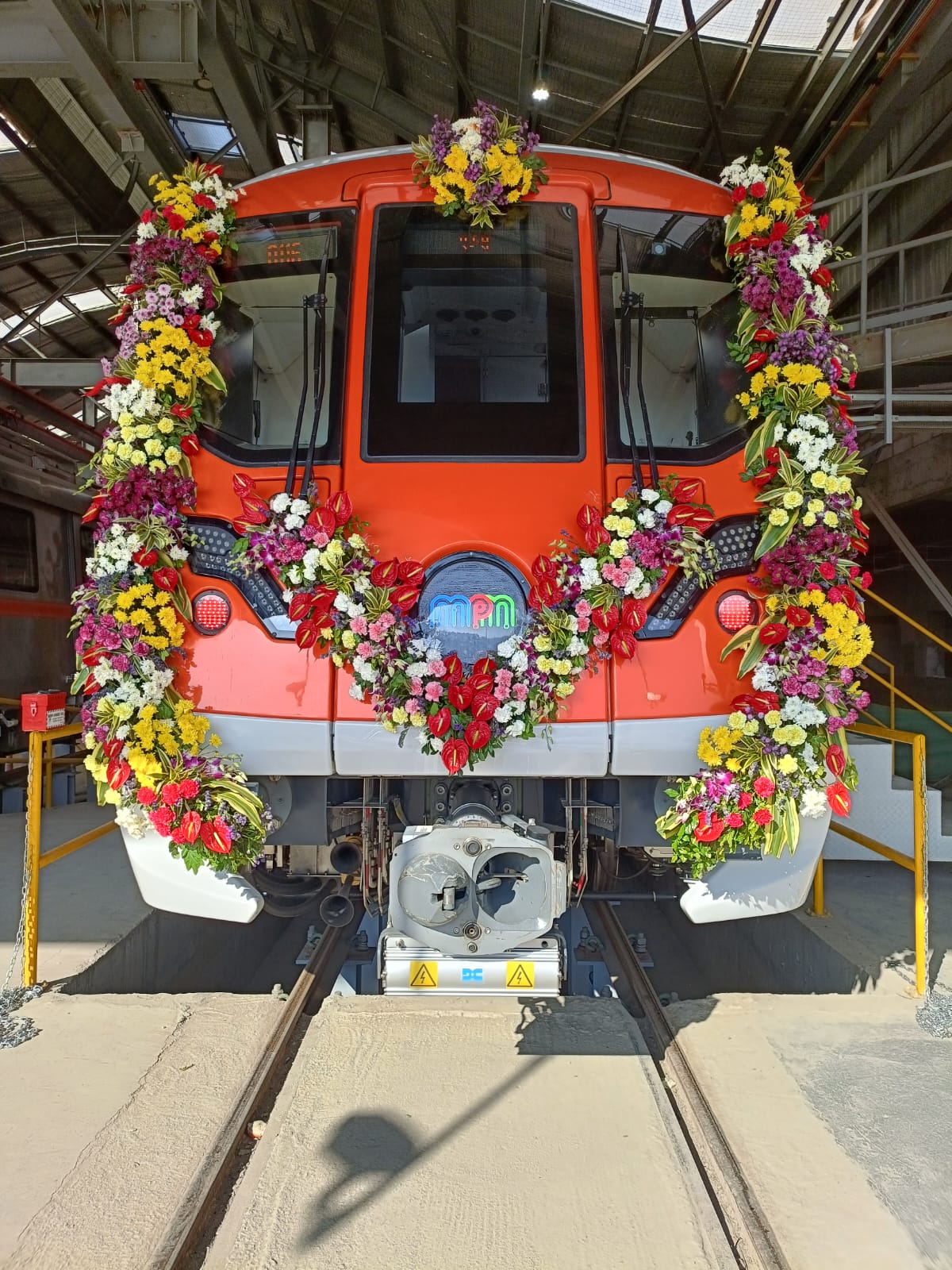
The ambitious Metro projects in Bhopal and Indore are in serious crisis even before becoming fully operational. With poor ridership and rising operational costs draining revenues, authorities have now turned Metro coaches and station spaces into venues for birthday parties, pre-wedding shoots, film and web-series shoots, advertisements, kitty parties, and photoshoots under a new initiative titled “Celebration on Wheels”.
What was once sold as a transformative public transport revolution is now desperately searching for customers beyond commuters. Officials describe the “Celebration on Wheels” as an “innovative attempt” to familiarise people with the Metro and increase public engagement and ridership. Critics, however, see it as a glaring sign of a deeper structural failure, with a taxpayer-funded transport system struggling to attract enough passengers to justify its enormous costs and ambitious promises.
The controversy has reignited uncomfortable questions over flawed planning, ballooning project costs, repeated delays, and the social and environmental disruptions imposed on residents in the name of urban transformation. Today, however, even with limited commercial operations, the bigger reality remains difficult to ignore: it is a Metro project that hardly anyone rides.
>> Coaches Become Event Venues
Under the “Celebration on Wheels” initiative introduced by the Madhya Pradesh Metro Rail Corporation Limited (MPMRCL), Metro coaches and select station areas can now be booked as event venues.
The scheme permits:
• Film shoots and web series
• Advertisements and promotional events
• Birthday parties
• Kitty parties
• Pre-wedding shoots
• General photoshoots
Bookings will be accepted on a first-come, first-served basis, with applications required at least 15 days in advance. Under the pricing structure introduced to monetise underutilised assets, a stationary coach will cost Rs 5,000 per hour, while a moving coach will be available for Rs 7,000 per hour. Each coach can accommodate a maximum of 50 people, and applicants will also have to pay a refundable security deposit of Rs 20,000.
Metro officials insist the initiative is not unusual and follows similar experiments conducted in other Indian cities. MPMRCL Managing Director S. Krishna Chaitanya defended the move, arguing that the Metro remains in its early stages and needs public familiarity before evolving into a fully utilised transit system. “We are trying to attract more and more audiences, making people realise that there is a new public transport system,” Chaitanya said. “Any public transport can only be utilised to its fullest when end-to-end connectivity gets established.”
At present, operational stretches remain limited, covering around six kilometres in Indore and seven kilometres in Bhopal. “Naturally, nobody will be interested in travelling in the Metro for two or three kilometres,” he said. “By introducing ‘Celebration on Wheels’, we are bringing the Metro closer to the people.” Chaitanya also pointed to the experience of Delhi Metro, noting that even India’s most successful urban rail system took years to achieve sustainable ridership levels. “Delhi Metro did not have passengers for five years. There are definitely losses. Bhopal and Indore are not exceptions. Every Metro incurs losses,” he said.
The “Celebration on Wheels” programme is not the first unconventional idea explored by the Metro corporation. At one stage, MPMRCL examined the possibility of allowing coaching institutes to operate from Metro stations to generate non-fare revenue. The proposal reflected both commercial necessity and the changing economics of urban infrastructure. Madhya Pradesh has a thriving coaching industry, with thousands of students preparing every year for engineering, medical, civil services, banking, and other competitive examinations. Metro stations, equipped with air-conditioned infrastructure, surveillance systems, and central locations, were viewed as a potentially attractive alternative. Larger station halls could have been converted into classrooms, while smaller booths could function as counselling or registration offices. Though the proposal has yet to materialise, it has revealed the extent to which Metro authorities have been seeking supplementary sources of income.
Urban transport systems worldwide rely heavily on non-fare revenue from retail spaces, advertising, real estate development, and commercial partnerships. Yet experts argue that the aggressive search for alternative revenue in Bhopal and Indore reflects concerns over passenger volumes even before the projects are fully complete.
>> Delays and Rising Costs
At launch, the Bhopal Metro project was sanctioned at Rs 941 crore, while the Indore Metro project was pegged at nearly Rs 7,500 crore. Both projects are being implemented under MPMRCL, a special-purpose vehicle jointly owned by the Centre and the Madhya Pradesh government. But the projects have witnessed significant delays and steep cost escalations.
According to officials, the original completion target was 2023-24. That timeline has now shifted substantially. In Bhopal, the revised completion deadline is projected around 2028-29, while in Indore it stretches to 2030-31 after one elevated station was redesigned as an underground structure. Officials say delays in finalising tenders, some of which were completed only in 2024-25, contributed to the rising costs. The total project cost has now climbed from approximately Rs 14,400 crore to nearly Rs 23,000 crore.
Chaitanya attributed the escalation not only to delays but also to policy changes and construction modifications introduced during execution. Even as work continues, Phase One remains incomplete, with around 31 kilometres of Metro corridors still under development across both cities. For critics, the repeated timeline slippages raise difficult questions about planning accuracy, financial discipline, and long-term sustainability.
>> Original Promise
The current scramble for revenue stands in sharp contrast to the original mandate attached to the Metro projects. Government documents prepared during the planning stage framed the projects as large-scale public welfare infrastructure designed to improve the quality of life and reshape urban growth.
The Bhopal Metro Project’s Social Impact Assessment (SIA) and Resettlement Action Plan (RAP), finalised in 2024, stated that the Madhya Pradesh government envisioned “a highly efficient and comfortable state-of-the-art urban rail system” aimed at upgrading urban living standards. But the same report also revealed the enormous social footprint of the project.
According to the assessment:
• 1,342 properties are likely to be affected
• 496 residential properties face impact
• 514 commercial properties are affected
• 133 mixed residential-commercial structures are impacted
• 195 community property resources are affected
The report further estimated that:
• 1,563 households would be affected
• 373 are titleholders
• 1,190 are non-titleholders
• 1,218 structures would face full impact
• 124 structures would be partially affected
The rehabilitation and resettlement implementation plan alone was estimated to cost Rs 446.87 crore. Behind those figures are families, businesses, roadside vendors, and entire communities forced to adapt to years of disruption and uncertainty.
In both Bhopal and Indore, Metro construction altered traffic patterns, reduced commercial accessibility, and triggered environmental concerns over tree felling and shrinking green cover. Residents and activists repeatedly questioned whether the eventual public utility of the Metro would justify such extensive social and ecological costs.
Critics argue that the increasing push towards private event-based usage risks normalising a hierarchy within public infrastructure itself, where access and experience are increasingly shaped by purchasing power.
>> Merely a Public Attraction?
Urban planners caution against dismissing the Metro’s commercial initiatives too quickly. Around the world, transport systems increasingly function as mixed-use urban spaces rather than purely transit corridors. Yet the optics of hosting birthday parties and pre-wedding shoots inside Metro coaches while ridership remains modest have triggered public unease.
The concern is not merely symbolic. Transport economists note that Metro systems become financially viable only when supported by high commuter density, integrated feeder services, and long operational corridors. Limited operational stretches often struggle to attract consistent passenger traffic.
In Bhopal and Indore, connectivity remains fragmented. Many commuters still rely on private vehicles, auto-rickshaws, and conventional buses for daily travel. Experts say this has created a difficult transition phase in which infrastructure exists, but behavioural adoption remains slow.
For Metro authorities, “Celebration on Wheels” may simply be an interim strategy to increase visibility and public interaction. For critics, however, it reflects a mismatch between aspiration and execution.
“The issue is not whether non-fare revenue is acceptable,” said an urban mobility researcher based in Delhi. “Every Metro system in the world seeks alternative income. The issue is whether a project sold primarily as essential urban mobility infrastructure is now being publicly marketed as an event venue before its transport goals are fully realised.”
In Madhya Pradesh, the Metro story is increasingly becoming one of tension between ambition and reality. For now, Metro coaches in Bhopal and Indore are preparing not just for commuters, but also for celebrations, advertisements, and film shoots. It is a striking contrast to projects once introduced as transformative engines of public transport. Whether “Celebration on Wheels” becomes a clever transitional strategy or a lasting symbol of misplaced priorities may ultimately depend on one question. When the full networks finally arrive, will the cities truly ride the Metro?
(Deshdeep Saxena is a Bhopal-based senior journalist with many years of experience)