

Bengal’s religious imagination carries a distinctly feminine force. The Bengali Hindu psyche has been shaped not by the warrior prince of Ayodhya, Ram, but by the fierce mother goddess. Bengal bows before Kali, weeps before Durga, sings to Shyama, and surrenders itself to the maternal divine. Religion here is emotional, poetic and intimate. The cry of “Jai Maa Kali” or “Bolo Durga Mai Ki Jai” emerges not as slogans of conquest, but as invocations of protection, suffering and spiritual belonging.
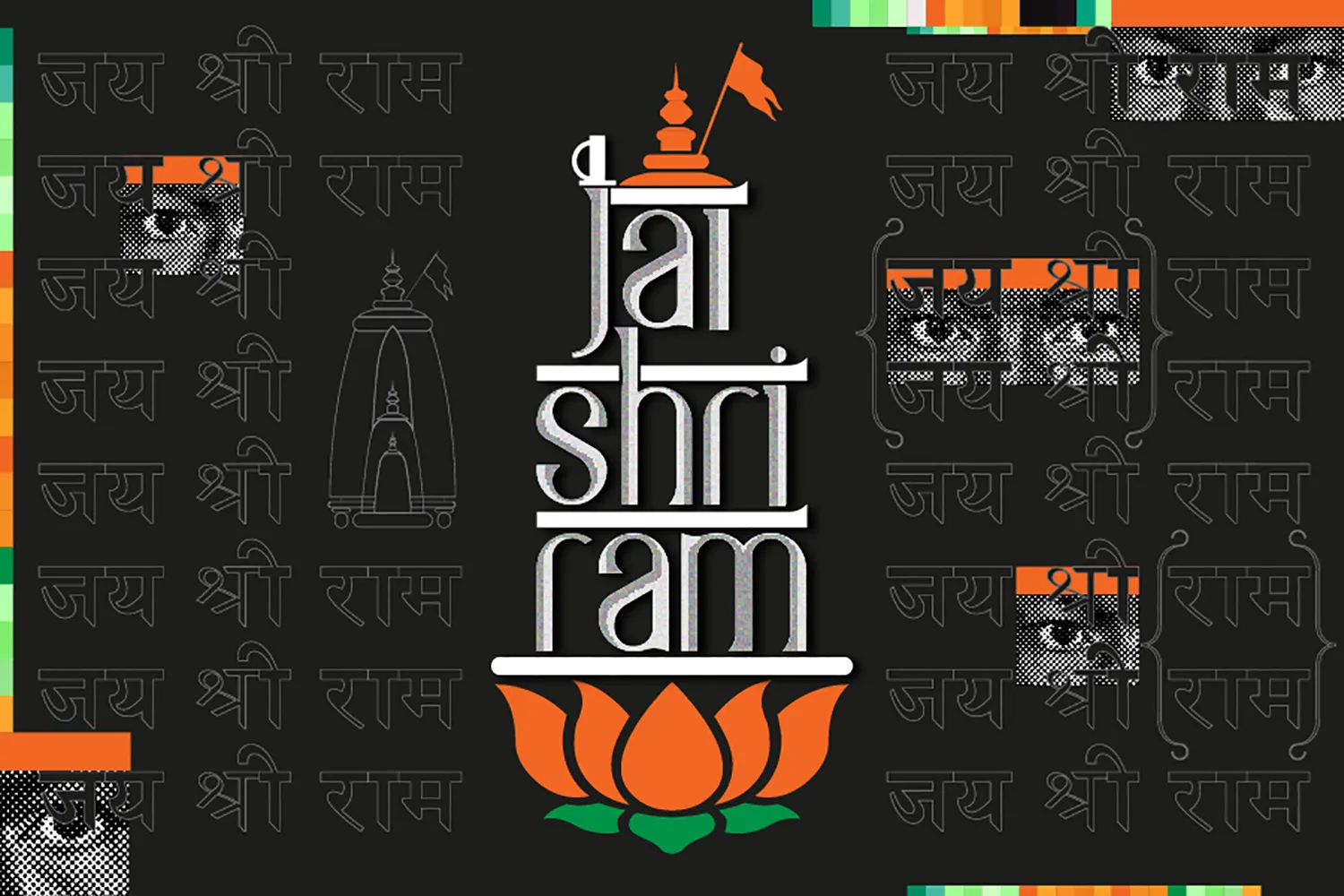
That Bengal now increasingly echoes with “Jai Shri Ram” is not merely a political shift. It is a civilisational and sociological transformation. It marks a profound reconfiguration of Bengali Hindu identity, one that is inseparable from anxiety, nationalism, electoral politics, demographic fears, and the collapse of older cultural certainties.
For generations, Bengal’s Hinduism was fundamentally different from the Hindi heartland’s Hinduism. North Indian religiosity often revolved around Ram, Hanuman and martial symbolism. Bengal’s spiritual universe, however, was soaked in Tantra, Shaktism and Bhakti infused with melancholy. Kali was not simply a goddess of destruction; she represented suffering, rage, maternal protection and cosmic truth. Durga was not merely a deity defeating evil; she was the daughter returning home every autumn. Bengali Hinduism was culturally softer, intellectually layered and deeply intertwined with art, literature and mysticism.
Even Bengal’s nationalism drew from this feminine symbolism. Bankim Chandra Chattopadhyay imagined the nation as “Vande Mataram”. Abanindranath Tagore painted Bharat Mata. Revolutionary nationalism in Bengal frequently invoked Kali. The goddess became both motherland and resistance. Ram, though respected, never occupied the emotional centre of Bengali Hindu consciousness in the way he did in Uttar Pradesh or Bihar.
That is why the rise of “Jai Shri Ram” in Bengal feels so culturally disruptive. It is not merely the arrival of a slogan; it is the arrival of a new political vocabulary.
This transformation did not happen overnight. It emerged from several overlapping currents. First came the long decline of Bengali exceptionalism.
For decades, Bengal viewed itself as intellectually superior to the cow-belt politics of North India. Bengali bhadralok culture prided itself on rationalism, literature, secularism and political sophistication. Religion existed, but often privately. Public religiosity was treated with suspicion by the Left-liberal establishment that dominated Bengal for nearly half a century.
The Left Front years institutionalised a certain cultural discomfort with overt Hindu assertion. Religious identity among Hindus was tolerated only when wrapped in cultural aesthetics. Durga Puja was acceptable because it was “culture”. Kali Puja was acceptable because it was “tradition”. But explicit Hindu political identity was often dismissed as communalism.
This created a peculiar imbalance. Minority identity politics continued to deepen quietly through electoral patronage, clerical influence and localised communal consolidation, while Hindu assertion remained socially delegitimised among Bengal’s elite circles. Over time, many Bengali Hindus began feeling that their religious identity was culturally tolerated but politically unrepresented.
That vacuum became fertile ground for the Bharatiya Janata Party. The BJP understood something crucial about Bengal: religion alone would not work unless tied to wounded identity. “Jai Shri Ram” entered Bengal not primarily as theology, but as political resistance. The slogan became a declaration against the perceived Muslim appeasement politics of the ruling establishment. It evolved into a protest cry against the Trinamool Congress as much as an invocation of Ram.
This is why the slogan acquired such explosive power in recent times in Bengal. When groups of young Bengali men began shouting “Jai Shri Ram” during political rallies or even at the sight of the outgoing Chief Minister Mamata Banerjee, they were not suddenly transformed into devotees shaped by the Ramcharitmanas tradition. Most had never belonged to the North Indian Ram bhakti culture. The slogan instead became shorthand for anger, assertion and political rebellion.
Ironically, the resistance of the Trinamool Congress amplified the slogan further. Every visible irritation against it made it more attractive to BJP supporters. The slogan became rebellious. Provocative. Defiant. A cultural weapon. The more it was condemned, the more it spread. But beneath electoral politics lies a deeper sociological shift: Bengal’s Hindu identity is becoming more homogenised with pan-Indian Hindu nationalism.
Historically, Bengali Hindu identity was region-first and religion-second. A Bengali Hindu often saw himself first as Bengali. Today, for many sections, especially younger urban and semi-urban Hindus, religious identity is increasingly overtaking linguistic-cultural identity. The rise of social media, Hindi television, nationalistic political messaging and digital homogenisation has eroded Bengal’s old cultural insulation.
A generation raised on WhatsApp forwards, YouTube political content and national television consumes religion differently from their grandparents. Their Hinduism is less literary and more slogan-driven. Less philosophical and more political. Less Tagore and more televised nationalism.
The Ram Mandir movement played a psychological role here as well. The consecration of the Ram Mandir transformed Ram from a regional deity into the central symbol of triumphant Hindu nationalism across India. Bengal could not remain untouched by that emotional wave.
At the same time, demographic anxieties have also influenced this shift. Border districts in Bengal have experienced intense debates around illegal immigration, identity insecurity and communal polarisation. For many Bengali Hindus, especially in regions with sharp demographic changes, “Jai Shri Ram” functions not merely as faith but as civilisational reassurance. Whether these fears are exaggerated or grounded is secondary. Politically, perceptions matter more than statistics.
Another crucial factor is the collapse of ideological alternatives. The Left once gave Bengal a class-based vocabulary. That framework has largely disintegrated. Economic frustration, unemployment and political violence created a vacuum that identity politics naturally filled. When class politics weakens, societies often return to civilisational identities. Bengal is no exception.
Yet this transformation carries profound contradictions. Bengal’s embrace of “Jai Shri Ram” also reflects a subtle surrender of cultural distinctiveness. The Bengal that once exported intellectual currents to the rest of India is now increasingly absorbing political idioms from elsewhere. The fear among many cultural observers is not about Ram himself, but about homogenisation. They fear that Bengal’s uniquely layered Hindu civilisation, shaped by Shaktism, mysticism and cultural nuance, may slowly be subsumed by a homogenised, North Indian majoritarian model of Hindu politics.
The question, therefore, is not whether Ram belongs to Bengal. Of course he does. Ram belongs to all of India’s civilisational memory. The real question is why Bengal suddenly needs Ram politically in a way it did not earlier. The answer lies in insecurity.
Societies turn towards muscular slogans when they feel culturally cornered, politically unheard or psychologically uncertain. “Jai Shri Ram” in Bengal is less a rejection of Kali and Durga than a symptom of deeper anxieties about identity, power and belonging in a rapidly changing political landscape.
And yet, something remarkable is happening simultaneously. Durga Puja pandals still dominate Bengal’s emotional life. Kali remains spiritually central to millions. The old Bengal has not disappeared. Rather, two identities are now coexisting uneasily: the original cultural Bengali Hindu and the newer politically assertive Hindu nationalist.
The tension between them will shape Bengal’s future. Will Bengal retain its syncretic and culturally nuanced Hinduism while participating in broader Hindu nationalism? Or will it gradually dissolve into a more uniform national political culture? That remains uncertain.
But one thing is undeniable: the rise of “Jai Shri Ram” in Bengal is not just about religion. It is about a civilisation renegotiating itself under the pressures of modern politics, demographic anxieties, national integration, wounded pride and ideological exhaustion. In many ways, the slogan is not merely changing Bengal’s politics. It is changing Bengal’s idea of itself.
(Bikash C Paul is a Delhi-based senior journalist and executive editor of ‘New Delhi Post’)