

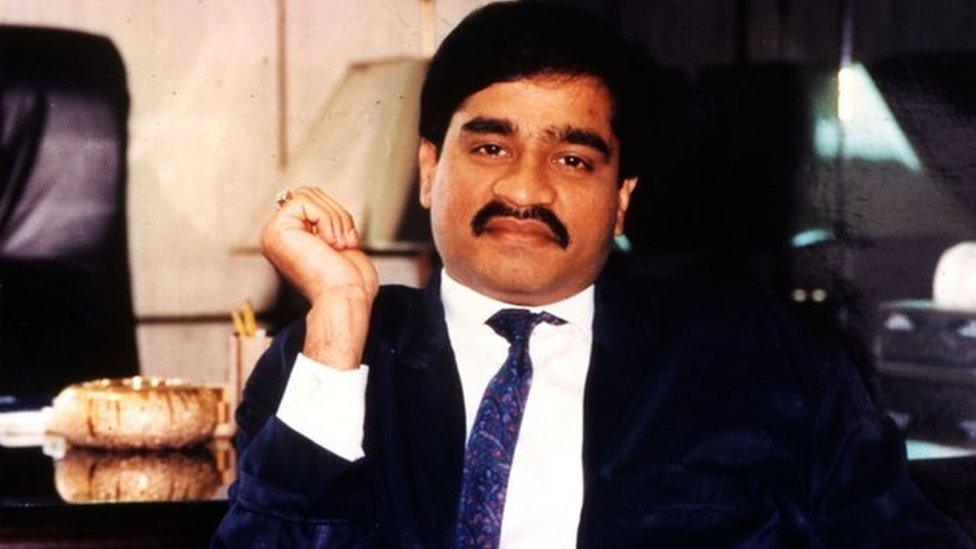
In October 2025, New Delhi Post carried an exclusive report titled “Dawood is Back”, which examined allegations that fugitive underworld don Dawood Ibrahim continued to wield influence through international networks, including links to cricket betting and match-fixing syndicates. The report argued that Dawood’s shadow had not disappeared from the game and that organised betting networks connected to the underworld continued to operate around international cricket.
Several months later, former Indian Premier League (IPL) Commissioner Lalit Modi has made a series of sensational allegations that appear to echo many of the concerns raised in New Delhi Post report. In an interview with ANI, the architect of the IPL claimed that Dawood Ibrahim not only maintained an interest in cricket betting and match-fixing but also sought to bring the IPL under his influence.
Whether Lalit Modi’s assertions can be independently verified remains a matter of debate. However, his remarks are significant because they come from a man who was at the centre of cricket’s biggest commercial revolution and who had direct exposure to the sport’s power structures. His allegations have once again pushed uncomfortable questions about cricket, betting syndicates and underworld influence into the spotlight.
The Phone Call That Changed Everything
Speaking to ANI from London, Lalit Modi recounted what he described as one of the most terrifying episodes of his life. According to Lalit, he ultimately left India because Dawood Ibrahim and his syndicate were continuously targeting him. He claims that the D-Company wanted him to become part of a cricket betting nexus and that his refusal placed him in direct conflict with the underworld network.
While narrating a chilling incident, Lalit Modi told ANI that at around 3:30 a.m. in 2010, he received a call from an individual allegedly linked to cricket match-fixing. He was asked to meet a man known as “Baba”, whom Lalit described as a major cricket betting kingpin, at a penthouse in London.
Lalit was frightened; driven by this fear, he went to Baba’s penthouse that very night. It was there that this man named “Baba” called Dawood on a satellite phone, with the speakerphone turned on. A voice boomed from the other end. Dawood shouted, “Your work is finished, right now.” With just those words, Dawood hung up. Lalit mentioned that British secret service agents (MI5) were deployed at the penthouse. “Yet, hearing Dawood’s voice made me wet my pants,” says Lalit.
IPL, South Africa and a Clash with Betting Syndicates
Lalit alleges that after this episode, members of the D-Company continued contacting him in London. According to him, the syndicate wanted control of an IPL franchise. The backdrop to this claim dates back to 2009. India was preparing for the Lok Sabha elections while the IPL schedule was also approaching. Concerns over security arrangements led to uncertainty over whether the tournament would be postponed.
Instead of cancelling the event, Lalit shifted the entire IPL tournament to South Africa. According to his account, betting operators had already taken substantial wagers based on the assumption that the IPL would be postponed or cancelled. In betting parlance, large sums had reportedly been committed to that outcome. But when the tournament proceeded in South Africa, those calculations collapsed. Lalit alleges that the D-Company’s betting and fixing network suffered significant financial losses as a result. He claims that this development pushed his name to the top of Dawood’s “hit list”.
However, it is a fact that cricket betting is officially legal in both South Africa and London, and numerous cases of betting and fixing have surfaced in these regions. Given this context, why did Lalit choose London as his place of asylum?
Lalit further states that the D-Gang lost a significant amount of money and wanted him to make up for that loss. But the question remained: why should Lalit Modi cover that deficit? Did he ever ask the D-Gang to place bets on the postponement of the IPL?
Two key points emerge from this interview: the roots of cricket betting and match-fixing extend all the way to the ICC and BCCI, a truth that can be sensed but not directly seen.
Lalit explains that during his association with the IPL in 2008 and 2010, he took several tough measures to curb spot-fixing, match-fixing, and betting in cricket. This angered the “cricket mafia” don Dawood Ibrahim, leading operatives of the D-Company to attempt to kill him.
Lalit even claims that these mafia figures tried to bribe him. Subsequently, there was an attempt to kidnap his son on London’s Sloane Street, and plots were hatched to attack or kidnap him in Mumbai, South Africa, Croatia, and London.
Lalit tells ANI that, fed up with the situation, he told Dawood he would retire from cricket. He further explains that he fully honoured the commitment made to D-Company and completely walked away from the sport.
A Controversial Figure Making Explosive Allegations
Lalit Modi’s claims inevitably come with baggage. The BCCI suspended him in 2010 over allegations relating to financial irregularities and administrative misconduct. In 2013, he was handed a lifetime ban by the Board. Nevertheless, his latest remarks have reignited debate over an issue that cricket has struggled to escape for decades: the persistent presence of betting syndicates and allegations of organised criminal influence.
Two observations emerge from the interview.
First, the ecosystem of cricket betting and match-fixing appears far deeper and more entrenched than is publicly acknowledged.
Second, the allegations suggest that the issue may extend beyond individual bookmakers and reach into powerful institutional structures associated with the sport.
Forgotten Match-Fixing Evidence
The controversy also revives memories of the match-fixing scandals that rocked cricket at the turn of the century. In 2000, Delhi Police reportedly forwarded call-recording tapes connected to cricket match-fixing investigations to the CBI’s Forensic Science Laboratory. The recordings were later transferred to another Delhi Police laboratory and remained in the custody of a police officer named Ishwar. The recordings reportedly contain nearly 100 hours of intercepted conversations involving Indian and foreign cricketers, bookmakers, members of the D-Company and their associates.
The India-South Africa match-fixing scandal of 2000 featured prominent bookmakers such as Sanjeev Chawla and Rajesh Kalra. The scandal also implicated South African captain Hansie Cronje, whose cricket career collapsed after the revelations emerged. Cronje later died in a plane crash on June 1, 2002.
Questions That Refuse to Go Away
Lalit Modi’s allegations do not, by themselves, constitute proof. However, they have revived questions that have lingered around cricket for decades and that New Delhi Post highlighted months ago in its report “Dawood is Back.” (Read the full story which appeared in the October, 2025 issue of ‘New Delhi Post’: https://newdelhipost.co.in/a-never-before-probe-into-the-fugitive-dons-new-age-business-empire-in-india/)
If Modi’s claims are taken seriously, two questions become difficult to ignore: Is underworld money linked, directly or indirectly, to any IPL franchises? And equally important: Was the 2023 Cricket World Cup conducted entirely free of manipulation, or do lingering suspicions warrant deeper scrutiny?
For now, those questions remain unanswered. But Lalit Modi’s interview has once again placed the relationship between cricket, betting syndicates and Dawood Ibrahim’s alleged network under the microscope.