

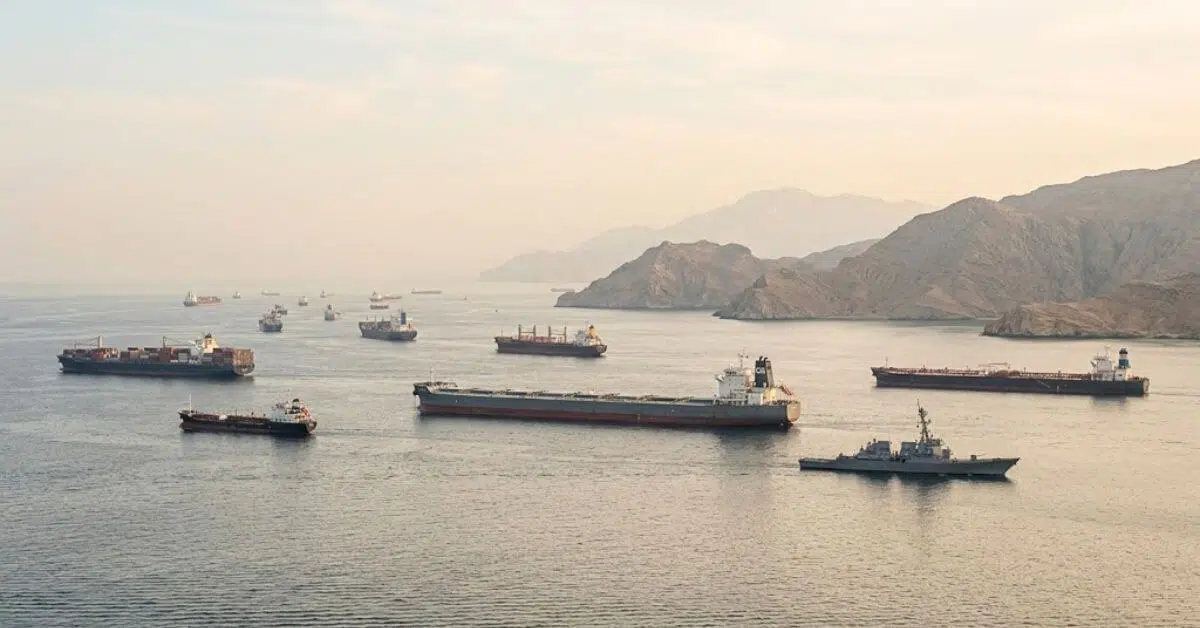
When the Strait of Hormuz is seized, Asia does not simply face an energy problem. It faces an existential reckoning with decades of structural choices that prioritised economic growth over supply security. The current crisis, unfolding in real time since late February 2026, is not a warning shot. It is the event that energy analysts feared and policymakers deferred addressing. And no region feels its gravity more acutely than Asia.
The geography of this crisis operates in concentric rings, and Asia sits dangerously close to the centre. South Asia takes the first blow. Tankers sailing from the Gulf reach Karachi or Mumbai in five to ten days, meaning that when flows stop, the physical bite arrives almost immediately. Pakistan and Bangladesh exemplify the most acute form of this vulnerability: heavily dependent on Qatari LNG with virtually no meaningful storage infrastructure to serve as a buffer. For these economies, there is no elegant adjustment mechanism. There is simply forced demand destruction: factories going dark, power grids shedding load, ordinary citizens absorbing the consequences of a strategic geography they had no hand in shaping.
India occupies a more complex position, but complexity should not be mistaken for insulation. Around fifty per cent of India’s seaborne crude imports pass through Hormuz. That is a profound structural exposure for an economy of 1.4 billion people, one whose industrial base, transport system and agricultural inputs are deeply intertwined with oil. When roughly half your imported crude supply faces interdiction, the margin for error evaporates quickly. Strategic petroleum reserves and commercial stockpiles provide some breathing room, measured in weeks and months rather than days, but that buffer runs out decisively if alternative Gulf Basin suppliers cannot fill the gap, and right now, they cannot.
What makes India’s position particularly instructive is the tension it embodies between energy transition rhetoric and energy reality. Coal supplies approximately 59 per cent of India’s total primary energy. Coal-fired power provides more than 70 per cent of its electricity, and roughly 75 per cent of its installed generation capacity runs on coal. New coal units are still being approved and built. In the language of the energy transition, India is a laggard. In the language of energy security, India made a choice perhaps not entirely consciously, perhaps under the pressure of development imperatives. That is now paying dividends in a crisis its Gulf-exposed neighbours cannot weather as easily.
Coal does not transit Hormuz. It moves by rail, barge and coastal shipping across geographically diversified routes. Global reserves cover well over a century of current consumption. This is not a minor technical distinction. It is the central strategic fact of the current crisis.
India’s coal dependence, long criticised in climate forums as a development-era hangover, turns out to be an inadvertent hedge against precisely the kind of shock now rolling through global energy markets. This does not vindicate coal as a long-term strategy. The emissions consequences of India’s coal system are real, serious and accumulating. But it does complicate the narrative that rapid decarbonisation and strategic security are simply aligned objectives. In the short run, for a developing economy with overwhelming energy demand, they are frequently in tension.
Northeast Asia tells a different version of the same story, but with higher stakes and less room to manoeuvre. Japan draws 72 per cent of its crude through Hormuz. South Korea draws 65 per cent. These are not marginal dependencies. They are the structural architecture of entire refinery systems, industrial complexes and power networks built around the assumption, held for decades without serious interrogation, that Gulf barrels would keep flowing. Voyage times from the Gulf to Yokohama or Busan run 15 to 20 days, giving Tokyo and Seoul a brief additional window as in-transit cargoes arrive. But grace is all it is. When the last pre-crisis tankers discharge, these economies face choices that their energy infrastructure was never designed to accommodate.
China’s situation is the most strategically layered of all. More than 80 per cent of China’s oil demand is imported, and more than half of those imports originate from Gulf producers exposed to Hormuz disruption. In LNG, the exposure is similarly acute, with roughly 90 per cent of Qatari cargoes, now largely halted, flowing to Asian buyers, China among them. The de facto cessation of LNG tanker transits since late February has already driven spot prices sharply higher across both Asian and European benchmarks. China faces higher import bills, refinery run cuts and likely rationing of refined products, particularly in coastal provinces.
Yet China enters this crisis with a structural buffer that Japan and South Korea simply do not possess: a vast, actively expanding domestic coal system. China alone consumed an estimated 4.9 billion tonnes of coal in 2024, more coal than the rest of the world put together. Its coal capacity stood at approximately 1,170 gigawatts in 2023, and in 2024 alone, 30.5 gigawatts were newly commissioned while 94.5 gigawatts broke ground. Chinese planners explicitly describe coal as the “ballast stone” of national energy security: cheap, storable and domestically abundant. Under Hormuz stress, the rational short-term response is to lean harder on this ballast.
Beyond power generation, China has constructed an entire coal-to-chemicals industrial complex precisely to reduce dependence on imported hydrocarbons. Coal constitutes 94 per cent of China’s proven fossil fuel resource base. The four major conversion clusters in Inner Mongolia, Shaanxi, Ningxia and Xinjiang can collectively consume around one billion tonnes of coal annually at full utilisation against actual usage of roughly 340 million tonnes in 2024. That headroom represents genuine strategic flexibility during an oil and LNG shock. It can replace some oil-derived fuels and petrochemical feedstocks at the margin, cushioning shortfalls in imported crude and naphtha in ways that Japan and South Korea simply cannot replicate.
There is an uncomfortable irony embedded in Asia’s current predicament. China and India together consume over 70 per cent of global coal, approximately 6.2 billion of the world’s 8.77 billion tonnes in 2024. A significant portion of this combustion is powering the manufacture of solar panels, batteries and electric vehicles that OECD countries install to meet their own net-zero commitments. The emissions embodied in the clean energy transition are, in substantial measure, Asian coal emissions. The continent most exposed to the physical consequences of fossil fuel dependence is simultaneously underwriting the decarbonisation of wealthier markets.
The Hormuz crisis lays bare a deeper truth that energy policy has long obscured. For Asia, energy security and energy transition are not the same project, and pretending otherwise has been a luxury that the current shock can no longer afford. The continent needs both, but it needs to be honest that getting from here to there will require burning more coal in the short run, managing Hormuz exposure through diversification and reserve-building, and resisting the temptation to let climate commitments substitute for the harder, more expensive work of structural energy independence.
The rings are tightening. Asia is at the centre. The time for deferral has passed.