

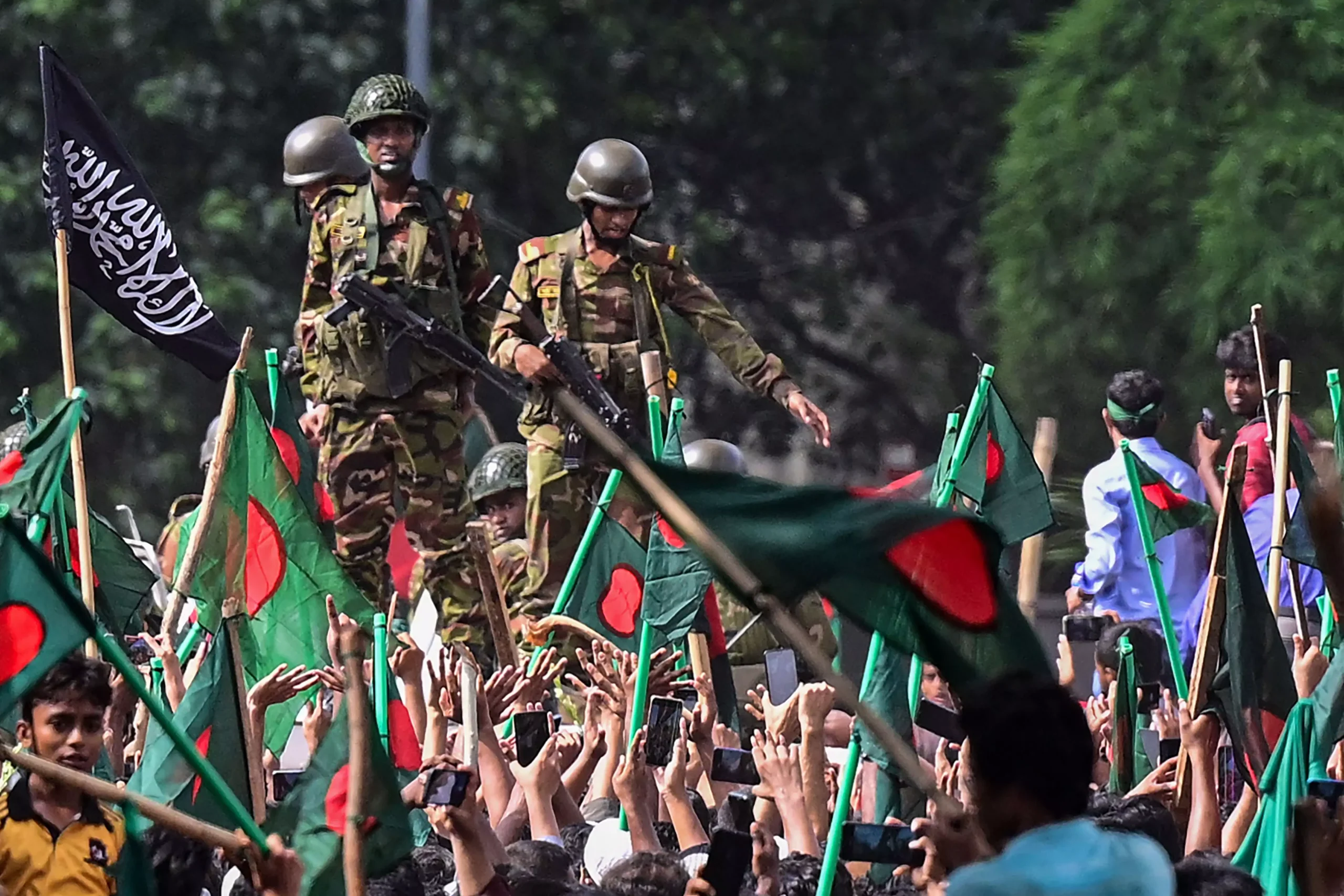
There was hope that Indo-Bangladesh relations would improve significantly after its most prominent political exile-in-waiting, Tarique Rahman, assumed power. Tarique and his party, the BNP, came to power in February this year. By now, however, it is clear that all talk of a reset in ties with Bangladesh was, at best, a figment of the eternal optimist’s imagination. The two countries remain at odds over several issues, and Bangladesh continues to sidestep India’s legitimate concerns on a range of sensitive matters.
The migraine list includes illegal migration, cattle and human smuggling, the military cosying up of Bangladesh to Pakistan and China, and the transformation of the Bay of Bengal into a hotbed of big-power military intervention. None of this bodes well for India. Equally troubling are the treatment of Bangladesh’s Hindu minority and the rise of radical Islam in that part of the world.
Tarique, however, has been far more restrained in his public pronouncements on India. Yet, in terms of delivery and confidence-building on the migraine list, he is virtually indistinguishable from his notorious predecessor, the Nobel laureate Mohammed Yunus.
During the 18 months Yunus was in office, his singular and ignoble agenda was to widen the gap between India and Bangladesh, a divide that now appears almost unbridgeable, at least in the short run. He deepened differences over territorial issues, even raising the comical spectre that Bangladesh could cut off India’s northeastern states from the rest of the country. Backed by the West, Yunus parachuted into Bangladesh to fill the vacuum created by Sheikh Hasina’s hasty retreat into exile. In remarkably little time, and with astonishing vigour, he aided and abetted the rise of the most virulent form of Islamism the country has witnessed. That wave of Islamism scarred Bangladesh’s Hindu minority and further strained relations with India. Geriatric in age, governance and forward-thinking, Yunus also neglected Bangladesh’s largest, yet struggling, export industry, the readymade garments sector, worth nearly $40 billion.
To revive this faltering export sector, it was incumbent upon Yunus to seek an accommodation with India, one that would have secured duty-free and quota-free access for Bangladeshi exporters through Indian seaports. But Yunus’s frail and king-size ego would not allow him that option. Instead, he rushed into the cloying embrace of Pakistan to forge a new military and sociological relationship, one directed primarily against India. It was a classic case of two beggars meeting on the street to compare the coats they were wearing, and deciding whose was more patched.
It did not stop there. More was to come. Yunus was the man who shepherded his country’s fanatical Islamic forces, bringing them out of the shadows and into the mainstream of Bangladeshi politics.
Presently, a clutch of Islamic parties led by the Jamaat-e-Islami holds 77 seats in the Bangladesh Parliament. That number may not be enough to challenge the ruling BNP in the immediate future, but the influence of these parties extends well beyond their parliamentary strength. Islamism is not only reshaping Bangladeshi society but also influencing domestic policy. It has begun to affect relations between the majority community and the Hindu minority, while simultaneously recasting Bangladesh’s global alliances and international relationships. India, of course, has little place in this emerging worldview. Yet, despite this cultural and societal shift, Bangladesh needs India more than ever.
What is particularly striking in this changing landscape are the assurances Tarique Rahman has offered the world about Bangladesh’s future. He has said he envisions Bangladesh as a secular country where all communities can live together in peace and harmony. Yet, in the same breath, he has also insisted that Bangladesh will never compromise on the fundamental beliefs of Islam. What exactly does that mean? Is it a carefully crafted formulation designed to appease every constituency? Perhaps. It certainly suggests, however, that the Bangladesh PM has neither the appetite nor the inclination to rein in the rampaging Islamists in his country and push them back into the shadows, as Sheikh Hasina sought to do. Live and let live appears to be Tarique’s governing credo.
This inevitably raises the question: what truly bedevils Indo-Bangladesh relations? There are two principal reasons from which most other problems flow. Over time, many Bangladeshis, both Islamists and others, have willingly distorted their own history and propagated falsehoods about both India and Pakistan. They have come to believe that India never wished Bangladesh well and used the Liberation War to keep the country dependent and underdeveloped. At the same time, they have largely whitewashed the genocidal atrocities, rapes and mass killings committed by Pakistani troops during the 1971 conflict. Today, a significant section of Bangladeshis feels ideologically, theologically and culturally closer to Pakistan than at any other point in the country’s history.
The other big issue is the widespread belief that, because of Bangladesh’s strategic position in the Bay of Bengal and its 270-km land border with Myanmar, the country is the gateway to Southeast Asia. At the same time, there is a growing belief within Bangladesh that Dacca, rather than Kolkata, will become the epicentre of this gateway to the East.
In India, there has also been a rethink on how best to engage with and manage Bangladesh. New Delhi is deliberately sending two contrasting messages. The bad-cop messaging comes from West Bengal’s new Chief Minister, Suvendu Adhikari. He has made it clear that the days of communal accommodation of Bangladesh by Mamata Banerjee’s Trinamool Congress are over. The focus in West Bengal will now be single-minded: fencing the border and completely curtailing cattle and human smuggling from across it. Incidentally, this is also the Union home ministry’s next major project. Amit Shah has fulfilled his promise of eradicating Naxalism. Stopping illegal migration altogether is next on his agenda.
This cannot be music to the ears of the Tarique Rahman government. Bangladesh is already resisting the move, and a flashpoint between the two countries could emerge sooner rather than later.
There is softer messaging too. This is being conveyed by Dinesh Trivedi, India’s new high commissioner to Bangladesh. Trivedi is a seasoned politician, a man of considerable charm and wit, and someone adept at striking deals. He recently extended a major concession to Bangladesh by giving the go-ahead for the resumption of visa services for Bangladeshi nationals travelling to India. This will allow those seeking medical treatment or engaged in trade to travel with greater ease. It is a classic carrot-and-stick approach.
In economic terms, relations between the two countries are presently “stagflating”. In other words, ties are neither healthy nor comatose. All it would take is a shootout along the border or an incident in the Siliguri Corridor for relations to go into free fall. One thing, however, appears increasingly evident: India is no longer prepared to treat Bangladesh with kid gloves. It will continue to accommodate its neighbour, but only to a point. India has strategic ambitions of its own in the east, extending to Myanmar and Southeast Asia, and it is unlikely to allow even Bangladesh to stand in their way. That, then, is the new strategic reality.