


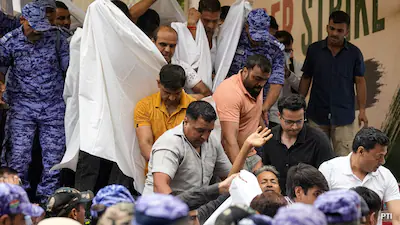
This morning, the protest at Jantar Mantar took a dramatic turn. Delhi Police shifted social activist Sonam Wangchuk to a hospital for medical care and dismantled the protest site of the Cockroach Janta Party (CJP), bringing an end to the physical demonstration. Yet, while the protest venue may have been cleared, the larger questions that gave rise to the agitation remain unanswered. The issues surrounding the integrity of the NEET-UG 2026 examination, the anxieties of lakhs of students, and the demand for greater transparency and accountability in the country’s examination system cannot be resolved merely by dispersing a protest. They continue to demand a serious institutional response.
By now, everyone is aware that Wangchuk has been on an indefinite hunger strike at Jantar Mantar. He joined the protest in solidarity with students demanding accountability and reforms following the alleged irregularities in the NEET-UG 2026 examination, including reports of paper leaks. Wangchuk has called for a transparent and fair examination system while also raising broader concerns about governance and the future of India’s education system. As his fast entered its third week, his health reportedly deteriorated, prompting the Delhi High Court to direct regular medical monitoring. Despite appeals from political leaders, civil society groups and members of the public to end his fast, Wangchuk continued the protest, emphasising the need for meaningful dialogue and systemic reforms.
In a democratic country like India, every citizen has the constitutional right to question the government and seek accountability, especially when concerns arise regarding examinations that determine the future of millions of students. Similar controversies surrounding the NEET examination have surfaced over the past few years, causing immense mental distress to lakhs of aspirants and their families. Sadly, some students have even taken their own lives because of the pressure created by uncertainty, repeated examinations and allegations of irregularities. During the 2026 examination cycle, several student suicides were reported, drawing national attention to the emotional burden borne by aspiring medical students.
Competitive examinations derive their legitimacy not merely from the questions they ask but from the confidence they inspire. The credibility of an examination system rests on the belief that every candidate competes on equal terms and that success is determined solely by merit. Once that confidence is weakened by allegations of malpractice or administrative lapses, the consequences extend far beyond a single examination. They erode public trust in institutions and leave students wondering whether years of hard work can be undone by factors beyond their control. Restoring that confidence, therefore, is not simply an administrative necessity but a democratic obligation.
For most students, NEET is not merely an entrance examination; it is the gateway to fulfilling their dream of becoming a doctor. Securing admission to a government medical college offers quality education at an affordable cost, an opportunity upon which many middle-class and economically weaker families depend. Not every family can afford the exorbitant fees charged by private medical colleges or the expenses associated with studying medicine abroad. For countless young aspirants, clearing NEET represents their only realistic opportunity to pursue a medical career and transform their lives.
It is deeply concerning that a respected education reformer feels compelled to undertake an indefinite hunger strike to draw attention to these issues. Many would argue that, in a vibrant democracy, citizens should not have to resort to such extreme measures merely to seek transparency, accountability and justice. Peaceful protest has always been a legitimate democratic means of expressing public concern. Equally, governments strengthen democratic institutions not by viewing criticism as confrontation but by engaging with legitimate public concerns through dialogue and responsive policymaking. Constructive engagement often does more to reinforce public confidence than prolonged silence.
It is also concerning that, so far, there has been no public response from the relevant government authorities regarding the issues raised through this protest. At a time when the government is planning to invite more foreign universities to establish campuses in India, equal attention must also be given to strengthening the existing education system. Allegations of examination irregularities, concerns expressed by students and their families, and calls for reform by social activists underscore the need to reinforce public confidence in the fairness, transparency and integrity of the country’s educational institutions. Building a world-class education system requires not only expanding educational opportunities but also ensuring that the existing system is credible, accountable and trusted by the millions of students whose futures depend on it.
Supporting an education reformer who is advocating a fair and transparent examination system should not be viewed through the lens of political or ideological labels. The demand for an honest, secure and credible examination process is a concern that transcends politics because it directly affects the future of millions of students and their families. Ultimately, every child deserves an equal opportunity to compete in a fair examination system, and every parent deserves the confidence that merit, not malpractice, will shape their child’s future.
(Dr Pyali Chatterjee is an associate professor and head of the department of law at MATS University, Raipur, Chhattisgarh)
