

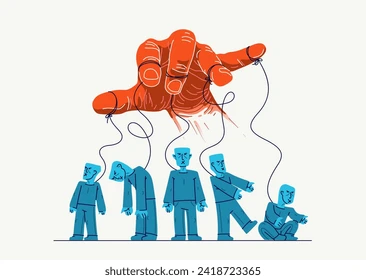
Terms such as toxic, narcissistic, gaslighting and emotional abuse have become part of everyday language. At the same time, aggression, misogyny, hate speech, cruelty towards animals and increasingly hostile public conversations seem more visible than before.
This raises an important question: Are toxicity and narcissistic behaviour actually increasing, or are we simply becoming more aware of behaviours that have always existed? From a psychological perspective, the answer may be a combination of both.
Narcissism and the Need for Validation
Narcissism exists on a spectrum. Wanting appreciation, recognition or admiration is a normal human tendency. The concern arises when entitlement, an excessive need for admiration, lack of empathy and exploitation of others become persistent patterns.
One noticeable psychological change is the increasing dependence on external validation. For some individuals, self-worth can become closely connected to how others perceive them. This may create a constant need to be noticed, appreciated or socially recognised.
A healthy sense of self-esteem, however, is more internally based. It allows a person to receive criticism, tolerate rejection and acknowledge mistakes without experiencing them as an attack on their identity.
Influence of Social Media
Social media has added a powerful new source of validation through likes, comments, followers, views and shares. These provide immediate social feedback, which can reinforce attention-seeking behaviour and the desire for instant gratification.
The issue is not social media itself, but the psychological dependence that may develop around it. Continuous comparison with carefully presented versions of other people’s lives can also contribute to insecurity, envy and dissatisfaction.
At the same time, social media has made mental-health concerns, abuse and previously ignored experiences more visible. Therefore, its psychological influence is not entirely negative; it largely depends on “how it is used and interpreted.”
From Disagreement to Hostility
Disagreement is a normal part of human interaction. However, an interesting shift can be observed when disagreement moves from challenging an idea to attacking the person expressing it.
Online communication may intensify this because physical distance reduces immediate emotional feedback. Sarcasm, humiliation, personal insults and aggressive language can escalate quickly.
Psychologically, this may reflect difficulties with emotional regulation, or the ability to experience anger or frustration without immediately acting on those emotions.
Increasingly, public conversations can appear less focused on understanding and more focused on winning, proving superiority or humiliating the other person.
Spectrum of Aggression
Aggression does not begin with physical violence. It exists on a spectrum, from irritation, sarcasm and hostile language to intimidation, threats, harassment, psychological abuse and eventually physical violence.
This spectrum is important because repeated exposure to lower levels of aggression can potentially contribute to desensitisation. Behaviour that would once have appeared shocking may gradually become normalised when encountered repeatedly.
The increasing visibility of online threats, abusive comments and aggressive public exchanges therefore deserves psychological attention, even when they do not develop into physical violence.
Violence Against Women and Animal Abuse
Violence against women extends beyond physical assault. Controlling behaviour, humiliation, intimidation, stalking, threats, financial control and persistent emotional degradation can also have serious psychological consequences.
Similarly, animal cruelty exists across a spectrum, from neglect and abandonment to deliberate physical harm. Psychological research associates cruelty with several possible factors, including learned behaviour, impulsivity, poor emotional regulation, desensitisation and deficits in empathy. It should not automatically be interpreted as evidence of a particular psychiatric disorder.
What is significant is the degree to which cruelty, misogyny or humiliation can sometimes become normalised in everyday conversations, entertainment and online spaces.
Are We Becoming Less ‘Empathetic’?
Perhaps the deeper psychological question is whether repeated exposure to hostility is affecting our capacity for empathy. Empathy requires us to pause and recognise another person’s emotional experience. Constant exposure to conflict, humiliation, violent imagery and hate-filled communication may contribute to emotional desensitisation in some individuals.
Yet the picture is not entirely negative. The same digital environment has created unprecedented opportunities for people to understand experiences different from their own, speak about abuse and mobilise support.
Therefore, it may be more accurate to say that both empathy and hostility have become more visible and more amplified.
What Can Be Done?
The remedy is not simply to label people as narcissistic or toxic. A psychologically healthier approach begins with self-awareness, emotional regulation, empathy and accountability.
Individuals can become more conscious of their dependence on external validation, learn to tolerate disagreement and develop the ability to pause before responding when emotionally activated. Healthy boundaries can protect individuals from repeated manipulation or abuse without requiring counter-aggression.
For children and adolescents especially, emotional literacy is important: learning to identify anger, jealousy, rejection, frustration and shame, and learning how to regulate these emotions, can become an important protective factor.
Perhaps the most useful question is not “Why has society become so toxic?” but “What behaviours are our present environment rewarding and reinforcing?”
Attention can reward narcissistic presentation; outrage can reward hostility; comparison can reinforce insecurity. But awareness, education and empathy can also be reinforced.
The goal is therefore not to create a society without anger, disagreement or strong emotions. It is to develop individuals capable of experiencing those emotions without turning them into cruelty.