

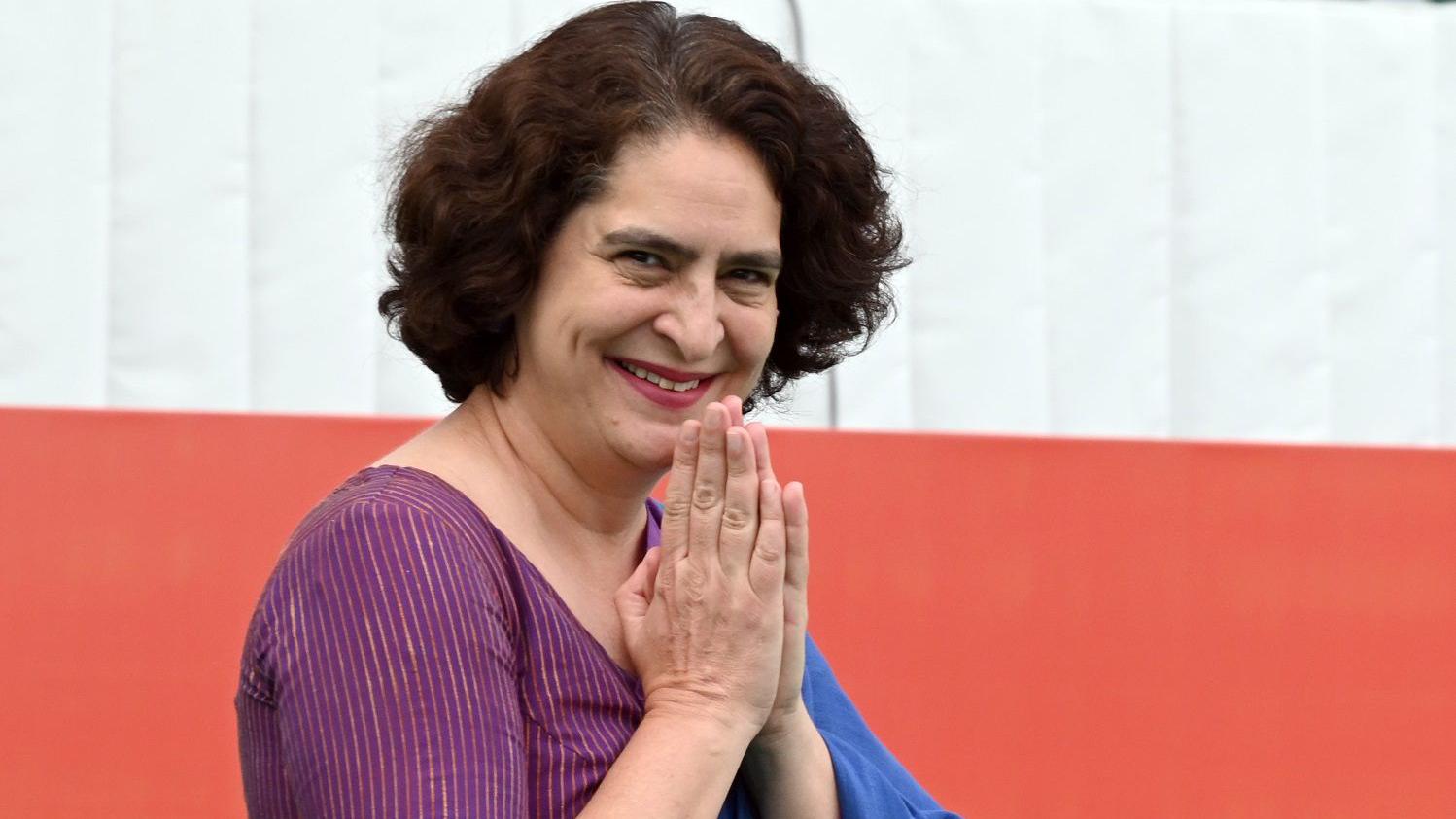
Politics has produced many reluctant heirs, but few have inherited a legacy as heavy as Priyanka Gandhi Vadra’s. Before she entered Parliament, addressed rallies or watched television cameras search her face for traces of Indira Gandhi, she had already encountered the darkest side of public life. At the age of twelve, she lost her grandmother, Prime Minister Indira Gandhi, to an assassin’s bullets. At nineteen, she lost her father, Rajiv Gandhi, to a suicide bomber. For Priyanka, politics arrived not with applause but with grief.
The privileges of political dynasties are rightly questioned, but their private burdens are sometimes overlooked. Priyanka and Rahul Gandhi grew up amid extraordinary security restrictions, public hostility and the knowledge that politics had twice entered their home with deadly consequences. Their surname opened doors, but it also denied them anything resembling an ordinary childhood.
Priyanka studied psychology and later pursued Buddhist studies. She married businessman Robert Vadra in 1997 and, for many years, appeared determined to remain outside formal politics. Although she campaigned for Sonia Gandhi, Rahul Gandhi and the Congress, she avoided contesting elections or accepting a sustained public role. She formally entered party politics as a Congress general secretary in 2019 and made her electoral debut from Wayanad in 2024, subsequently entering the Lok Sabha.
For years, the Congress treated her rather like an emergency exit on an aircraft: clearly marked, carefully guarded and mentioned most often whenever the flight encountered turbulence. That turbulence eventually became permanent for the Congress Party. Priyanka appeared willing to play second fiddle, first to her mother and then to her brother. She met party workers, mediated local disputes and campaigned energetically, while the formal burden of leadership rested with Rahul Gandhi. Many within the Congress nevertheless seemed to regard her as the more instinctive communicator.
One cannot miss the irony. Rahul Gandhi has been repeatedly relaunched as a leader, only for familiar doubts to return. Priyanka, meanwhile, remained in the background even as many in the Congress appeared more confident in her political instincts. The party promoted the reluctant sibling while endlessly repackaging the willing one. Neither strategy has worked particularly well.
Her resemblance to Indira Gandhi has inevitably shaped her public image. The physical likeness, cotton saris, composed manner and ease with crowds encourage the comparison. Yet resemblance should not be mistaken for equivalence.
Indira Gandhi inherited a powerful Congress organisation and eventually concentrated enormous authority in her own hands. She led India through war and the creation of Bangladesh, but she also imposed the Emergency and inflicted lasting damage on democratic institutions. Priyanka enters politics in almost the reverse circumstances. She has inherited not a dominant party but a diminished one, confronting a formidable BJP, assertive regional parties and an electorate increasingly impatient with inherited entitlement.
In temperament, Priyanka appears less confrontational than Indira and more conversational. Even her critics often acknowledge her composure, courtesy and accessibility. The Congress should remember how crude attacks on Atal Bihari Vajpayee often made the attacking siblings appear smaller than their target. Priyanka’s preference for measured criticism may reflect temperament, calculation or both. Either way, civility remains an asset in an age when television politics frequently resembles a quarrel conducted with microphones.
But voters do not elect good manners. They elect governments. Her life invites comparison with women leaders who entered politics under the shadow of family tragedy. Sirimavo Bandaranaike rose after her husband’s assassination. Corazon Aquino became the face of democratic resistance after the murder of her husband. Benazir Bhutto inherited both her father’s charisma and his enemies. Sheikh Hasina rebuilt her political position after losing almost her entire family. None survived merely because tragedy introduced them to politics. Each had to acquire an identity independent of grief and inheritance. That is the test before Priyanka.
First, she must resist being marketed as Indira reborn. India needs no imitation of a leader from the 1970s, but rather someone capable of addressing the anxieties of the present: employment, education, healthcare, agriculture, economic mobility, social cohesion and institutional credibility. Crowds and applause may create momentum, but they cannot rebuild district committees, resolve factional rivalries or prepare credible candidates.
The Congress’s record in the states offers both warnings and lessons. In Madhya Pradesh, the rivalry between Kamal Nath and Jyotiraditya Scindia culminated in Scindia’s departure and the fall of the Congress government. In Punjab, the Amarinder Singh–Navjot Singh Sidhu feud became a prolonged public spectacle before the party’s electoral collapse. Rajasthan repeatedly lurched towards crisis as tensions between Ashok Gehlot and Sachin Pilot remained unresolved.
Telangana and Karnataka demonstrated the opposite. Revanth Reddy was given sufficient room to organise, campaign and lead the Congress to power in Telangana before becoming Chief Minister in December 2023. D. K. Shivakumar similarly strengthened the Karnataka unit and helped convert grassroots mobilisation into electoral victory. These examples suggest that the Congress does not lack capable regional leaders; it often lacks the confidence to allow them to become powerful.
Priyanka must help end the old high-command habit of encouraging state leaders until they become influential enough to make Delhi uncomfortable. A national party is strengthened, not threatened, by leaders who can win in their own states. A party that promises to defend democracy must first practise it within its own organisation.
She must also confront the political liabilities accompanying her personal circumstances. Being married to Robert Vadra has hardly made her journey simpler. In democratic politics, spouses do not formally contest elections together, but their controversies frequently arrive as unofficial running mates. Questions concerning Vadra’s business dealings have repeatedly been used by political opponents. Allegations against a husband cannot automatically establish wrongdoing by his wife, but public life rarely offers such tidy separations.
The 2010 sale of an M F Husain portrait of Rajiv Gandhi to Yes Bank co-founder Rana Kapoor for ₹2 crore later attracted controversy when Kapoor alleged that Congress intermediaries had pressured him to buy it. The Congress maintained that the transaction was lawful and properly tax-declared, and while the episode raised questions about political access and private dealings, it did not amount to a judicial finding of guilt against Priyanka Gandhi. However, if Priyanka demands accountability from those in power, she must be prepared to meet the same standard through openness rather than defensive silence.
The BJP cannot be defeated merely by cataloguing its failures or treating every government action as disastrous. Priyanka must accompany criticism with credible alternatives while possessing the confidence to acknowledge policies that work. Fairness does not weaken an opposition leader’s credibility; it strengthens it.
The ongoing agitation over the alleged NEET paper leak has given her an opportunity to stand with students whose faith in the examination system has been badly shaken. Demonstrations at Jantar Mantar and elsewhere are intensifying, drawing opposition support and increasing pressure on the government over examination security and accountability. Priyanka has publicly supported the students and criticised the government’s handling of the protests.
Her intervention gains moral force because she has acknowledged that paper leaks also occurred under Ashok Gehlot’s Congress government in Rajasthan. That candour should become a habit, not the exception. Priyanka must turn outrage into reform by demanding secure examinations, independent investigations, swift prosecution, institutional accountability and meaningful relief for affected candidates. Voters increasingly value leaders who do more than amplify anger; they want leaders who can convert it into change.
Nor should opposition politics become a permanent referendum on Narendra Modi. Priyanka must explain not only what she opposes but also what she proposes. On employment, education, agriculture, healthcare, national security and economic growth, criticism must be matched by credible alternatives. She must also speak more about India’s future than the Congress’s past. The achievements of Nehru, Indira and Rajiv belong to history. Younger Indians are less interested in inherited memories than in employment, education, enterprise, technology and security.
Her greatest political opponent may therefore not be Narendra Modi. It may be nostalgia. Much of her future will naturally depend on the BJP’s performance. If the ruling party continues to deliver visible development, welfare, stability and administrative confidence, the Congress will struggle to displace it. But no political dominance is permanent. If unemployment, inflation, educational failures, agrarian anxiety, social tensions or institutional distrust deepen, political space will inevitably open.
But that opening will not fall by inheritance to the Congress, still less to Priyanka Gandhi. Regional parties, ambitious state leaders and new political forces will all claim it. Disillusionment with one party is not an endorsement of another; it is merely an invitation to be persuaded. Priyanka must therefore prove that she is more than the custodian of a surname or the more electable member of a famous sibling partnership. She must demonstrate political courage, administrative understanding and the ability to rebuild an organisation beyond the family circle.
Priyanka Gandhi may be the Congress’s last chance to prove that inheritance can be transformed into merit. If she succeeds, she will not merely preserve a dynasty; she will establish an identity beyond it. If she fails, she may become the clearest evidence that a famous surname can no longer substitute for political achievement.
India has already accepted powerful women leaders. The question is whether Priyanka can persuade the country that she deserves authority not because she is the last Gandhi standing, but because she possesses the vision, courage and competence to stand on her own. Ultimately, it is not whether India is ready for Priyanka Gandhi, but whether Priyanka Gandhi is ready to earn India’s trust.