


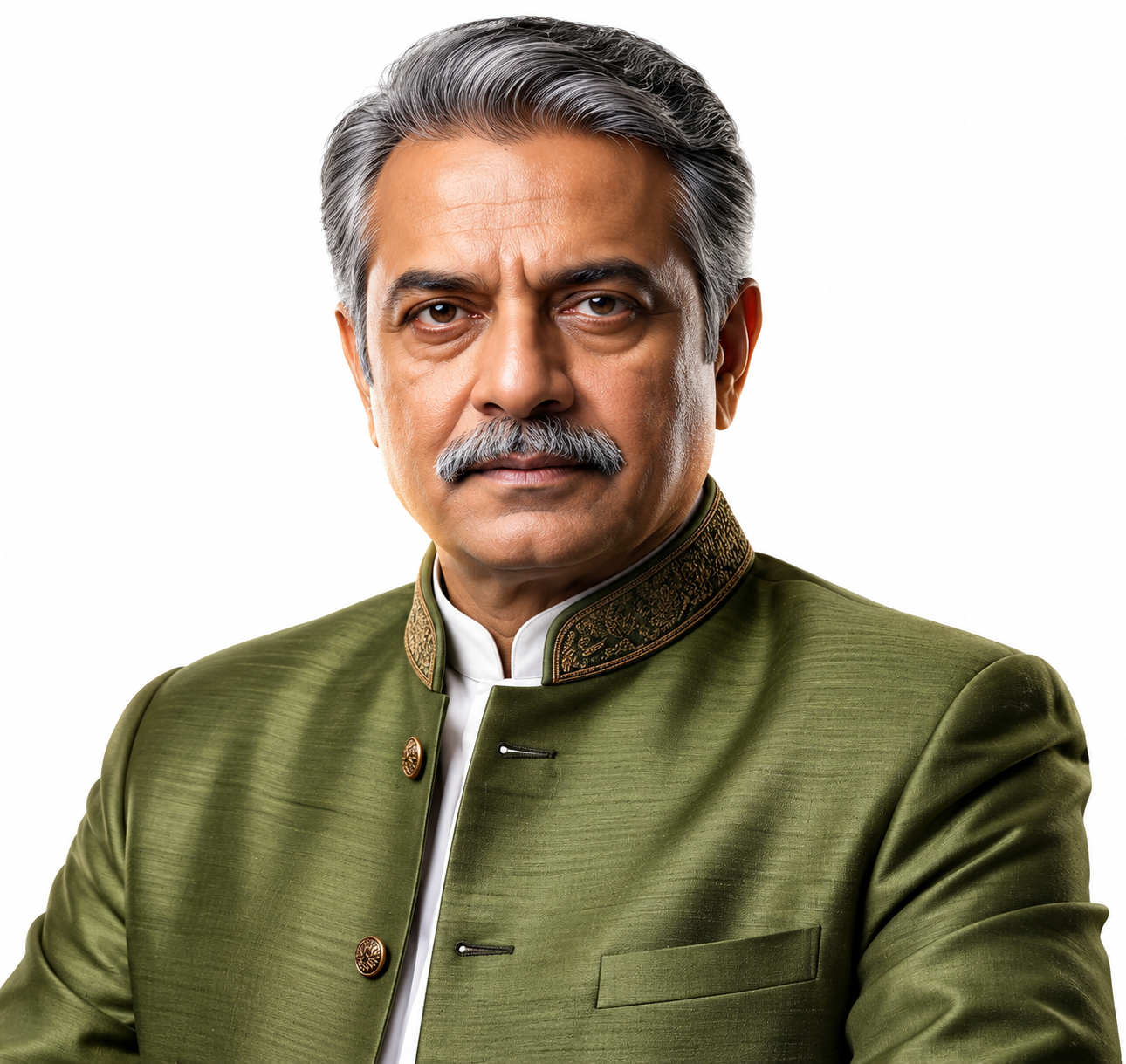
Former Directorate General of GST Intelligence (DGGI) official Ravinder Singh Sangwan set up three LLPs within 23 days of retirement; one became an intermediary in ₹278.29 crore of licensing transactions involving entities associated with the Kamla Pasand Group, while his family accumulated properties worth ₹50.87 crore
Barely two weeks after retiring from government service, Ravinder Singh Sangwan entered the world of private business with remarkable speed. On May 6, 2022, just six days after he retired from the DGGI, Indus FMCG Goods LLP was incorporated. Two more LLPs followed within the next 17 days: Indus Prompt Legals LLP on May 19 and Ramo Homes LLP on May 23. Within four years, two of these firms had recorded transactions amounting to more than ₹313 crore, while the Sangwan family had accumulated 17 immovable properties worth ₹50.87 crore, according to an analysis of audited financial statements, Ministry of Corporate Affairs filings, partnership deeds, property records and other documents by Cobrapost.
The timing becomes significant because Sangwan was not an ordinary government employee. Before his retirement on April 30, 2022, he was a Group B Superintendent with the DGGI in Delhi, an agency of the central tax administration responsible for investigating tax evasion and empowered under the GST regime to summon, search, seize and arrest in appropriate cases. The documents examined for this investigation show that the first of his new LLPs soon became involved in a financial arrangement with entities associated with the Kamla Pasand Group, through which ₹278.29 crore moved between 2022–23 and 2025–26. Indus Prompt Legals LLP, meanwhile, received ₹22.30 crore in professional fees from eight corporate entities during the same four-year period. The transactions themselves are documented in the companies’ filings; what remains to be established is the commercial rationale behind the structures and whether there was any connection between Sangwan’s official position before retirement and his subsequent business relationships.
The Fortnight That Created 3 LLPs
The three LLPs were created within a fortnight of one another, all with a paid-up capital of ₹1 lakh. Indus FMCG Goods LLP and Indus Prompt Legals LLP shared the registered address C-2/51, Safdarjung Development Area, Hauz Khas, New Delhi, while all three used the same email address. The speed with which the firms were incorporated would be unremarkable on its own, but the nature and scale of the business that followed make the chronology significant. Indus FMCG Goods LLP, incorporated on May 6, 2022, began handling substantial sums almost immediately, even though its partnership deed described a business involving tobacconists, agents, brokers, contractors, stockists and distributors dealing in tobacco, cigarettes, zarda, pan masala and gutkha.
The financial statements tell a different story. Instead of showing a conventional trading operation involving the purchase and sale of goods, Indus FMCG Goods LLP’s accounts show a single principal revenue stream described as “Licensing Services Receipts” and a corresponding cost described as “Purchase of Licensing Services”. The LLP purchased licensing services from Kamla Kant & Company LLP and then sold those services to nine related entities. In effect, it occupied an intermediary position between the brand-owning entity and the nine companies, with Kamla Kant & Company LLP recorded as its trade creditor and the nine companies as trade debtors. The arrangement generated ₹45.66 crore in 2022–23, ₹83.20 crore in 2023–24, ₹75.66 crore in 2024–25 and ₹73.78 crore in 2025–26, taking the total to ₹278.29 crore.
Kamla Kant & Company LLP is identified in the records as the Chaurasia family partnership that owns the Kamla Pasand and Rajshree brands of pan masala, gutkha and other chewable products. The nine entities that paid Indus FMCG Goods LLP for the licensing services were Kaipan Pan Products Pvt. Ltd., Bhopal; Kay Flavours Pvt. Ltd., Lucknow; Kaipal Pouches Pvt. Ltd., Lucknow; Kaizen Pan Products Pvt. Ltd., Faridabad; Kay Flavours Pvt. Ltd., Ghaziabad; KP Tobacco Manufacturing Pvt. Ltd.; Kapishwar Pan Product Pvt. Ltd.; Kay Pee Organics Pvt. Ltd.; and KVN FMCG Pvt. Ltd. The records cited in the investigation also include an Income Tax Appellate Tribunal order dated February 28, 2020, which indicates that before Indus FMCG Goods LLP entered the picture, Kamla Kant & Company LLP had been directly receiving income from these entities.
₹278.29 CR Through a Licensing Chain
The financial pattern is particularly striking because the amount retained by Indus FMCG Goods LLP remained remarkably consistent. Against ₹278.29 crore received from the nine group entities, the LLP paid ₹251.79 crore to Kamla Kant & Company LLP and retained ₹26.50 crore. The difference worked out at roughly 9.5 per cent of the amount passing through the LLP in each of the four years. Cobrapost’s analysis describes the recurring percentage as resembling an agreed commission rather than a conventional trading margin, although that interpretation would ultimately have to be tested against the underlying contracts, services actually rendered and the parties’ tax and accounting records.
There is another aspect that deserves attention. The business described in the LLP deed and the business reflected in its accounts are materially different. The deed authorises the firm to operate as a tobacconist, agent, broker, contractor, stockist or distributor, yet the revenue recorded in the financial statements comes through licensing services. The partnership deed also contains a restriction preventing a designated partner from engaging in another business directly or indirectly without the consent of all partners. Despite this, Sangwan became a 50 per cent partner in Shiv Shakti Construction from 2023–24 onwards. The same deed states that neither partner shall receive a salary, while the two active LLPs recorded partners’ remuneration of ₹28.50 lakh and ₹31 lakh in 2024–25.
The four-year money trail becomes even more substantial when Indus Prompt Legals LLP is brought into the picture. The firm recorded total revenue of ₹35.65 crore between 2022–23 and 2025–26, including ₹22.30 crore in professional fees from eight corporate entities. Those eight entities accounted for nearly 63 per cent of the firm’s total revenue during the period, with the investigation noting sharp increases in receipts in at least three instances. The two firms together therefore generated approximately ₹313.93 crore during the four years, while the financial summary cited in the investigation records ₹251.79 crore passed to the brand owner, ₹19.52 crore in other expenses, ₹14.91 crore in taxes and ₹36.73 crore retained between them.
THEN CAME THE ₹15-CRORE HOUSE
The business expansion coincided with a rapid accumulation of family property. On May 18, 2022, only 18 days after Sangwan retired, he and his wife, Sunil Choudhary, acquired a residential property at B-5/7, Africa Avenue Road, Safdarjung Enclave, Delhi, for ₹15 crore. The property is a three-storey residential building with a basement and parking and is located in one of the capital’s most expensive residential areas. According to the property records examined, half of the purchase price, ₹7.50 crore, was recorded in Choudhary’s name, although her total income over the ten years to 2025–26 was ₹2.22 crore. The other half was initially held by Teena Chhabra, a family member of Mohit Chhabra, the owner of HM Buildtech; in 2023–24, Sangwan acquired Teena Chhabra’s share for ₹7.90 crore.
The Safdarjung Enclave property was not merely an acquisition. Three years later, it became part of another transaction involving Sangwan’s own business. On January 14, 2025, the property was leased to Indus Prompt Legals LLP for ₹6 lakh a month, with a ₹6 lakh deposit and a five per cent annual increase. The lease deed names Sunil Choudhary and Ravinder Singh Sangwan as the lessors, while the tenant is Indus Prompt Legals LLP, represented by its authorised signatory, Ravinder Singh Sangwan. The same individual therefore signed the instrument as one of the owners on the landlord’s side and as the authorised representative of the partnership on the tenant’s side. The arrangement is documented in the lease deed; its commercial implications are a matter for examination.
The LLP subsequently spent substantially on the premises. In 2024–25, Indus Prompt Legals LLP added ₹1.13 crore of fixed assets, including ₹1.12 crore in furniture and fixtures. Its rent expenditure rose from nil in 2022–23 to ₹6 lakh in 2023–24 and ₹22.50 lakh in 2024–25. Of the latter amount, ₹18 lakh went to the two owners under the new lease, while ₹4.50 lakh went to another landlord from whom the firm had rented premises since 2022–23. Over 2024–25 and 2025–26, the partnership paid ₹91.20 lakh in rent to the two Sangwan family members who owned the Safdarjung Enclave building.
₹50.87 CRORE ACROSS FOUR STATES
The Safdarjung Enclave property was only one element of a larger portfolio. Records examined by Cobrapost indicate that the four members of the Sangwan family acquired 17 immovable properties worth ₹50.87 crore between 2019 and 2026. Of that amount, ₹5.25 crore was acquired while Sangwan was still employed with DGGI, while properties worth ₹45.62 crore were acquired in the four years following his retirement. The properties are spread across Delhi, Haryana, Gujarat and Maharashtra.
Sangwan himself owns at least nine properties in Delhi, according to the state land records cited in the investigation. His wife owns two properties in Delhi, while his son Shantnu Singh owns properties in Delhi and Mumbai, including a property reportedly gifted by his grandmother in 2023–24. His daughter Simran Singh owns one property in Delhi jointly with Megha Chhabra and another independently in Faridabad. One Delhi property worth ₹4.25 crore was acquired in 2021–22, when Sangwan was still working with DGGI, with Simran Singh’s recorded share standing at ₹2.13 crore.
The property trail is particularly notable in the case of Shantnu Singh Sangwan. The records reportedly show four properties worth about ₹21.60 crore acquired within three years, including an Ahmedabad property worth ₹1 crore that was gifted by his grandmother. His properties include assets in Delhi and Mumbai’s Andheri worth ₹7.50 crore and ₹6.60 crore respectively, acquired in a single year. The investigation puts his reported income at around ₹4,000 in 2021–22 and about ₹50 lakh in 2024–25, when he acquired a property worth ₹6.50 crore in Safdarjung Enclave.
Across the family, the documentary record places total declared income at ₹37.60 crore against immovable property worth ₹50.87 crore. Of the income, ₹8.22 crore was taxable income and ₹29.38 crore represented exempt shares of profit in partnership firms, much of it arising after April 2022. The comparison does not by itself establish that any property was improperly acquired, because income is not the only possible source of funding for property purchases. It does, however, provide a financial question that can be tested through bank records, tax filings, loan documents, gifts, capital accounts and other source-of-funds records.
Property Disclosure Question
The most consequential issue arising from the records concerns the ₹5.25 crore of property acquired while Sangwan was still a government servant. Rule 18(1)(ii) of the Central Civil Services (Conduct) Rules, 1964, requires Group A and Group B government servants to submit annual returns concerning immovable property inherited, owned or acquired by them or held in the name of family members. Rule 18(2) further provides that a government servant cannot acquire or dispose of immovable property in his own name or that of a family member except with the previous knowledge of the prescribed authority; where the transaction is with a person having official dealings with the government servant, previous sanction is required. For a Group B officer, the prescribed authority is the head of department.
A Central Administrative Tribunal order dated May 31, 2019, identifies Sangwan as a Group B Superintendent posted with the Directorate General of GST Intelligence. The investigation says the family acquired property worth ₹1 crore in his wife’s name in 2020–21 and another property worth ₹4.25 crore in his daughter’s name in 2021–22, while Sangwan was still serving with DGGI. Cobrapost’s analysis states that these acquisitions were not disclosed as required under the applicable service rules. Whether the prescribed disclosures were in fact made, and whether the relevant permissions or prior knowledge existed, is ultimately a matter for the competent government records to establish.
Other Companies in the Network
The investigation also traces three other entities associated with Sangwan and his family: HM Buildtech Pvt. Ltd., the Institute of Economic & Market Research Pvt. Ltd. and Aeterna Wealth Pvt. Ltd. HM Buildtech was incorporated in 2012 but had been dormant since 2015–16, with nil turnover apart from a ₹2.40 lakh receipt in 2018–19. Its entire equity subsequently passed from its founders to Mohit Chhabra and Meenakshi in April 2021, with Sangwan joining its board on May 18, 2022, twelve days after Indus FMCG Goods LLP was incorporated. The company recorded ₹7.58 crore of immovable property in 2021–22, with the acquisition funded by an unsecured, interest-free loan of ₹8.50 crore from Chhabra, according to its audited financial statements.
The Institute of Economic & Market Research, incorporated on August 22, 1972, had remained dormant since July 2019. On April 17, 2024, its directorship and entire equity changed hands, with Sangwan and Choudhary becoming directors and 800 shares transferred to Sangwan and 200 to his wife. The MCA filings cited in the investigation record no consideration for the transfer. In its first year under the new board, IEMR reported income of ₹5.71 lakh, of which ₹5.70 lakh was described as other non-operating income, while it paid ₹4.80 lakh in director remuneration despite reporting zero turnover. Its net worth was reported at negative ₹4.23 lakh.
Aeterna Wealth Pvt. Ltd. was incorporated on December 18, 2024, with stated objectives that include managing mutual funds, distributing portfolio management schemes, alternative investment funds and insurance. Shantnu Singh holds 50 per cent. Its registered office is the Safdarjung Enclave property owned by his parents, and its financial statements state that no rent is paid because the premises belong to them. Cobrapost says its filings contain no evidence of registration with SEBI, AMFI, IRDAI or the Reserve Bank of India, although the company earned distribution commission in its first year. The regulatory status and nature of the company’s activities would require verification with the relevant regulators.
Ramo Homes LLP, the third LLP established after Sangwan’s retirement, is different from the other two in one important respect: according to the records examined, it never traded. Its Form 8 filings contain zero entries and no audited accounts have been filed. Its stamp duty was paid by Mohit Chhabra. The firm therefore exists in the corporate record, but the investigation found no evidence of trading activity.
What the Documents Do Not Answer
The significance of the investigation lies less in any single transaction than in the sequence formed by the records. A DGGI Group B Superintendent retires on April 30, 2022; three LLPs are incorporated within the following 23 days; one of them begins handling substantial licensing transactions involving nine entities associated with the Kamla Pasand Group; another receives ₹22.30 crore in professional fees; and the family accumulates ₹45.62 crore worth of additional immovable property during the four years after retirement.
The documents establish these transactions and associations, but they do not, on their own, establish that the money flows were unlawful, that the LLPs were sham entities or that Sangwan’s earlier government position influenced the subsequent transactions. Those are precisely the questions that would require examination of the underlying contracts, invoices, bank statements, tax assessments, service records, property-funding trails and communications between the parties. The investigation itself asks whether there was any association between Sangwan and the pan masala manufacturer while he was with DGGI and whether his official position had any bearing on the group’s dealings with him after retirement.
There is also a question about the economics of the arrangement. The two active LLPs received ₹313.93 crore over four years, passed ₹251.79 crore to the brand owner, incurred ₹19.52 crore in other expenses, paid ₹14.91 crore in taxes and retained ₹36.73 crore. In 2024–25 alone, the partners withdrew ₹18,07,19,337 against combined profit after tax of ₹9.03 crore, while the summary forms filed with the Registrar of Companies reported “Profit transferred to Partners’ account: 0” for every year examined. These figures warrant reconciliation with the partnership capital accounts and the underlying financial statements.
The final question is one of accountability. The records show a former tax-intelligence official moving almost immediately into a network of private entities, one of which became a financial intermediary in transactions worth ₹278.29 crore, while his family acquired substantial property both during his government service and after retirement. Whether this represents legitimate post-retirement entrepreneurship, an unusually structured business model or something requiring regulatory action cannot be determined merely from the corporate filings. That determination belongs to the tax authorities, regulators and other competent agencies with access to the complete underlying records.
Detailed questionnaires were sent to the Sangwan family, Mohit Chhabra and the companies involved before publication. According to the material examined for this report, the questionnaires remained unanswered. That leaves the principal subjects of the investigation yet to provide their explanations for the transactions, property acquisitions, corporate structures and relationships documented in the records.
