


On January 26, 2010, a woman named Boa Senior died in the Andaman Islands. She was the last person alive who spoke Bo, one of the world’s oldest languages, dating back to pre-Neolithic times. More than 65,000 years of continuous human speech ended in a single afternoon.
Today, technology promises that such disappearances need not happen again. Artificial intelligence can record voices, build dictionaries, translate speech and preserve oral traditions. Governments, researchers and technology companies are racing to document languages before their last speakers fall silent. Yet a crucial question remains: can technology alone save India’s vanishing languages?
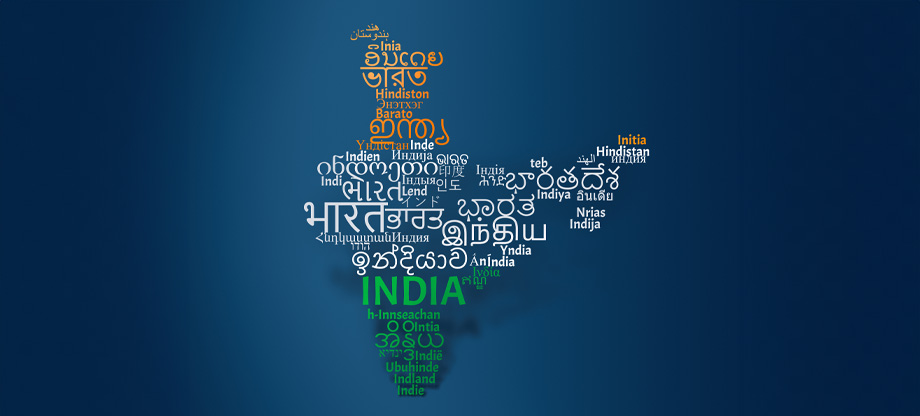
India is home to extraordinary linguistic diversity, but many of its voices are fading. According to UNESCO’s Atlas of the World’s Languages in Danger, India has around 197 endangered languages, the highest number for any country. Linguist G.N. Devy’s People’s Linguistic Survey of India counted 780 living languages, while India may already have lost more than 200 languages since 1961. Hundreds of smaller languages remain outside formal education, administration and digital communication.
Among the most endangered are the Great Andamanese, Onge, Shompen, Toda, Nihali, Koraga, Toto and Birhor. Some are spoken by only a few hundred people, while others survive with fewer than a hundred fluent speakers. In many cases, the youngest speakers are elderly. Once they pass away, an entire linguistic universe may disappear with them.
Recognising the threat, governments and institutions have turned to technology. The Government of India’s Scheme for Protection and Preservation of Endangered Languages (SPPEL), implemented through the Central Institute of Indian Languages (CIIL), has identified 117 endangered languages for documentation. Linguists are recording grammar, vocabulary, folklore and oral traditions before they vanish.
Meanwhile, Bhashini is crowdsourcing voice recordings to develop speech-recognition and translation systems, while BharatGen is building multilingual AI tools for India’s diverse linguistic landscape. The Sanchika archive preserves oral histories, dictionaries and folk traditions, creating digital resources for future generations. In 2024-25, a BITS Pilani-IIT-Bhashini collaboration received funding to develop AI translation tools for tribal languages. Projects such as Adi-Vaani are adapting speech-recognition technologies for languages including Santali, Mundari, Bhili and Gondi. Civil-society initiatives and researchers are also creating digital dictionaries, archives and language-learning resources.
These efforts are important. Technology can preserve pronunciation, archive stories, document songs and create educational tools at a scale unimaginable a decade ago.
But preservation is not the same as survival. A language can be recorded perfectly and still die because languages do not live in databases. They live in homes, playgrounds, markets and community gatherings. They survive because parents speak them to children and communities continue to use them in everyday life. Technology can document a language, but it cannot, by itself, create a speech community.
The reasons behind language decline are social and economic. Younger generations often shift towards dominant languages such as Hindi and English in pursuit of education and employment. Urban migration weakens traditional networks. Many indigenous languages lack textbooks, institutional support and economic value in public life. Once intergenerational transmission breaks down, even the most sophisticated technology can do little more than record the loss.
As G.N. Devy observed, “A language disappears when the livelihood options of the speech community disappear.” Technology is therefore a powerful tool, not a complete solution. Mother-tongue education, community-led preservation, public recognition and economic opportunities for speakers remain essential. Artificial intelligence may help save the record of a language. Only people can keep it alive when they speak their language every day.
(Pratishruti Bandyopadhyay is a researcher and a graduate of IIT-Jodhpur. Her work examines the intersections of technology, labour, language and society)
