

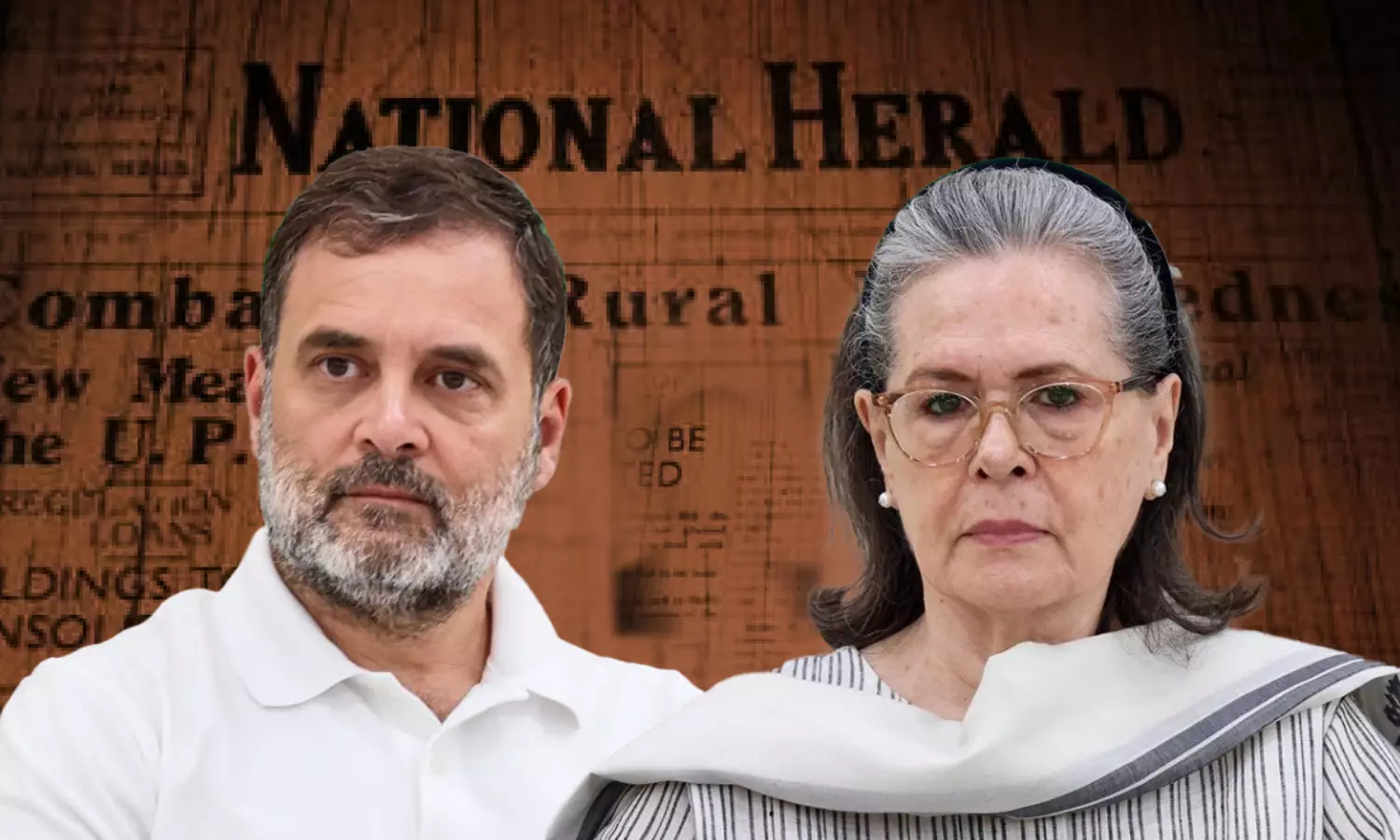
By almost every measurable indicator, India’s federal investigative machinery has never been more visible. Agencies such as the Enforcement Directorate (ED) and the Central Bureau of Investigation (CBI), once confined largely to the specialised pages of legal reporting, now occupy the centre of the country’s political theatre. Over the past decade, some of India’s most powerful political figures have found themselves under the scrutiny of probe agencies. Congress leaders Sonia Gandhi and Rahul Gandhi are in the National Herald case. Former Union finance minister P Chidambaram in the INX Media and Aircel-Maxis investigations. Rashtriya Janata Dal patriarch Lalu Prasad Yadav is in the sprawling fodder scam prosecutions. Trinamool Congress leader Abhishek Banerjee in the coal and recruitment scam probes. The list is quite long, for sure. From Delhi to Patna, Kolkata to Mumbai, the ED and the CBI have repeatedly stepped into the centre of political life. Raids on senior politicians are broadcast live. Arrests trigger instant political upheaval.
But when the spectacle of enforcement fades and cases move into the slower machinery of the courts, the narrative often changes. Trials stretch across years. Legal challenges proliferate. And final judgments remain elusive. Legal scholars increasingly refer to this phenomenon as an “arrest economy”, a system in which the agencies fail to deliver results in most cases.
Few recent cases, like former Delhi Chief Minister Arvind Kejriwal’s acquittal, illustrate the phenomenon more vividly. The controversy began in 2022 when the CBI registered a corruption case concerning the liquor policy introduced by the Kejriwal government. The ED launched a parallel investigation under the Prevention of Money Laundering Act (PMLA), alleging that illicit proceeds from the policy were routed through intermediaries and political channels.
Within months, the investigation had escalated into one of the most politically explosive prosecutions in contemporary India. Senior leaders of the Aam Aadmi Party (AAP) faced arrest. Former Deputy Chief Minister Manish Sisodia spent more than a year in custody. Rajya Sabha MP Sanjay Singh and minister Satyendar Jain were also detained in related proceedings.
The case reached its political peak when Kejriwal himself was arrested in 2024, making him one of the rare sitting chief ministers to be taken into custody by a federal investigative agency. But the legal trajectory shifted in February 2026. A special CBI court at Delhi’s Rouse Avenue complex discharged Kejriwal and Sisodia in the corruption case, ruling that the evidence presented did not justify proceeding to trial. “The material placed on record is insufficient to frame charges,” the court noted in its order, effectively halting the primary corruption prosecution.
Few investigations capture the political intensity of federal probes more clearly than the National Herald case involving Sonia Gandhi and Rahul Gandhi. The case traces its origins to a complaint filed in 2012 by BJP leader Subramanian Swamy, alleging financial irregularities in the acquisition of Associated Journals Limited, the publisher of the historic National Herald newspaper. The ED later opened a money-laundering investigation under the PMLA.
In 2025, the ED filed a prosecution complaint accusing the Gandhis and others of laundering funds linked to properties controlled by the company Young Indian. According to investigators, the transaction allowed the transfer of valuable real estate assets linked to the newspaper group.
The case encountered a significant legal setback in December 2025 when a Delhi special court declined to take cognisance of the ED’s complaint. Special judge Vishal Gogne held that the investigation was “impermissible in law” because it was not based on a proper FIR connected to a scheduled offence under the PMLA.
The ED challenged the ruling before the Delhi High Court, arguing that the trial court had “erroneously declined” to recognise the money-laundering offence. For now, the proceedings remain unresolved. Sonia and Rahul have consistently denied wrongdoing, while the Congress party has described the case as politically motivated.
The investigations involving former Union Finance Minister P Chidambaram present another example of the slow movement of politically sensitive prosecutions. The INX Media and Aircel-Maxis cases stem from foreign investment approvals granted during the United Progressive Alliance government. The CBI and ED opened formal investigations more than a decade later. Chidambaram was arrested in August 2019 after a dramatic evening operation by the CBI at his Delhi residence. The arrest followed months of legal battles over anticipatory bail and interrogation requests.
Although the case generated enormous political attention, its judicial progress has been slow. Procedural disputes over the sanction to prosecute public servants and the admissibility of evidence have repeatedly delayed the trial.
Chidambaram has rejected the allegations as baseless. Investigators insist the financial trail will support their charges once the trial proceeds.
In January 2024, the ED arrested Jharkhand Chief Minister Hemant Soren in connection with a land-related investigation. The arrest was unusual not only because it involved a sitting chief minister but also because it triggered a constitutional confrontation between the state government and the federal agency. Soren resigned from office shortly before his arrest and later secured bail after several months in custody. Legal proceedings continue, and the case remains under judicial consideration.
In West Bengal, the federal crackdown on alleged corruption has focused on several figures linked to the ruling Trinamool Congress. Among them is Abhishek Banerjee, the party’s national general secretary and nephew of Chief Minister Mamata Banerjee. Banerjee has been questioned repeatedly by the ED and CBI in connection with two major investigations: the coal smuggling case and the school recruitment scam.
In 2023, the Supreme Court declined to halt the ED’s probe into Banerjee in the teacher recruitment case, stating that stopping the investigation at that stage could “stifle the investigation”.
The ED has also referred to his name in the charge-sheet material relating to the recruitment scam, although Banerjee has denied all allegations. His lawyers have dismissed the claims as politically motivated, describing the investigation as “a fishing expedition aimed at harassing my client”. The cases remain under investigation, and no conviction has been recorded.
In Maharashtra, federal investigations have also intersected with turbulent political developments. Former state Home Minister Anil Deshmukh was arrested in 2021 following allegations that police officials were instructed to collect money from businesses in Mumbai.
Another prominent politician, Nawab Malik, was arrested in 2022 under PMLA provisions related to property transactions allegedly linked to money-laundering networks. Both secured bail after extended custody. Trials are still in progress.
The arrests occurred during a period of intense political realignment in Maharashtra, fuelling allegations from opposition parties that investigative agencies were being used to influence the political landscape. Federal agencies have consistently rejected those claims.
India’s longest-running political corruption prosecutions can be traced to Bihar. The fodder scam investigations involving former chief minister Lalu Prasad Yadav began in the mid-1990s after irregularities were discovered in the state’s animal husbandry department. Convictions were eventually secured in multiple cases between 2013 and 2018. Yet appeals, bail orders and fresh investigations have ensured that the legal narrative continues decades later. More recently, investigators opened the “land-for-jobs” case concerning appointments made during Yadav’s tenure as railway minister. Few prosecutions illustrate more clearly how political corruption cases in India can extend across generations.
Official statistics offer partial insight into the scale of enforcement activity. Government disclosures in Parliament indicate that the ED registers hundreds of investigations under the PMLA every year. Court filings in several cases have suggested that a significant number involve politically exposed persons. Yet the number of final convictions under the PMLA remains relatively modest compared with the number of registered investigations.
The CBI frequently cites its overall conviction rate, which in some years has exceeded 60 per cent. But this figure aggregates a wide variety of cases, from routine criminal prosecutions to complex financial investigations involving politicians. Disaggregated data specifically for political corruption cases is rarely published. The absence of such transparency has fuelled persistent political debate.
Several structural factors explain the long timelines. Financial investigations often involve complicated networks of shell companies and cross-border transactions that require detailed forensic analysis. Procedural requirements, such as prosecution sanctions for public servants, can delay the filing of charges. Many cases also involve parallel proceedings under different laws, including the PMLA, the Prevention of Corruption Act and the Income Tax Act.
Finally, judicial backlog remains a persistent challenge for special courts handling economic offences. Former Supreme Court judge Madan B. Lokur once noted during a discussion on delays in criminal trials that “the issue is not merely investigation but the capacity of the entire judicial system to process complex cases”.
Whatever the institutional reasons for delay, the political consequences of arrest are immediate. The detention of a senior politician disrupts party structures, shapes media narratives and influences electoral calculations. The outcome of the case, whether an acquittal or a conviction, may not be determined for years.
Legal scholars sometimes describe this phenomenon as “process as punishment”. The Supreme Court itself has repeatedly emphasised the need to protect personal liberty. In a 2023 ruling on bail jurisprudence, the court observed that prolonged incarceration without trial raises serious constitutional concerns.
India’s federal investigative agencies now demonstrate a reach that would have been difficult to imagine in earlier decades. Chief ministers, cabinet ministers and party leaders have all faced scrutiny. That marks a major shift in the country’s political accountability framework.
But scrutiny is not the same as guilt. In a constitutional democracy, allegations mature into accountability only when courts test evidence and deliver reasoned judgments.
Until convictions consistently follow arrests, or weak cases are swiftly dismissed, India’s political corruption prosecutions will remain suspended between spectacle and settlement. The spectacle of raids may dominate the headlines. The ultimate measure of the rule of law lies elsewhere. In the courtroom, where evidence must survive scrutiny and verdicts must eventually arrive.
(Bikash C Paul is a senior Delhi-based journalist and executive editor of ‘New Delhi Post’)