


By Pyali Chatterjee & Maitreyee Tembhekar
Beneath rapidly expanding cities and seemingly quiet villages, a largely invisible tragedy is unfolding. There are no alarms, no sirens and no warnings, only the slow and silent betrayal of the water people drink. Water flowing through handpumps, wells and household taps, assumed to be cold, clear and safe, often carries arsenic, fluoride, industrial chemicals and agricultural runoff. None of these contaminants can be detected by taste, colour or smell. This absence of sensory warning is precisely what makes groundwater contamination so lethal. For millions, alternatives do not exist, and by the time symptoms appear, bones have stiffened, skin has darkened and organs have begun to fail.
Once a symbol of resilience and survival, India’s groundwater has become a threat to life itself. It harms communities long before they realise that something has gone terribly wrong.
A 12-year-old girl from Bhojpur district in Bihar once ran barefoot through fields chasing her younger brother. Today, she walks slowly and painfully. Her father, a marginal farmer, recalls her saying that “her legs hurt constantly”. The family assumed it was because she played too much. Soon, however, she stopped playing altogether. They never imagined that the handpump installed during a drought as a sign of hope was drawing water with dangerously high levels of fluoride.
For rural India, groundwater is the primary, and often the only, source of daily survival. Yet, in the name of development, these communities’ rights are routinely overlooked. More accurately, violations remain invisible until a human tragedy forces attention. History offers painful reminders of this pattern, most notably the Bhopal gas disaster, where years of regulatory neglect culminated in irreversible suffering. The environmental harm tolerated today shapes both our present and our future. Air and water are humanity’s most basic lifelines, and contaminating them is not merely environmental degradation; it is a direct threat to human survival.
India’s dependence on groundwater is extraordinary in scale. Nearly 85 per cent of rural households rely on it for drinking water, around half of urban Indians depend on it, and almost 60 per cent of the country’s agriculture is sustained by it. India is the world’s largest extractor of groundwater, drawing over 245 billion cubic metres every year. It is the nation whose people, farms and future depend on a fragile and increasingly poisoned reservoir beneath the ground.
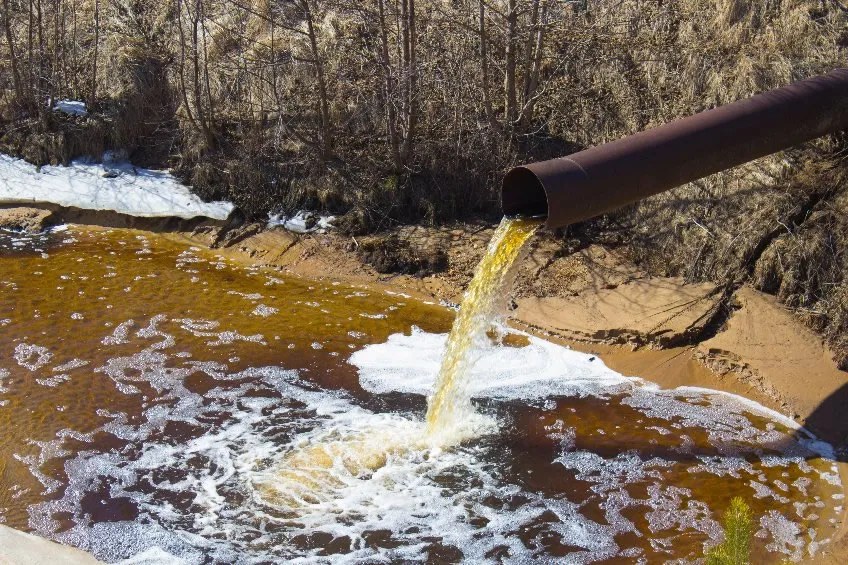
Groundwater contamination in India occurs both naturally and through human activity. Excessive use of fertilisers and sewage leakage drives nitrate contamination, triggering blue baby syndrome. Fluoride causes dental and skeletal fluorosis. Arsenic, dominant in West Bengal, Bihar and Uttar Pradesh, leads to cancer and severe skin lesions. Uranium contamination is prevalent in Punjab, Haryana and Jharkhand, where its radioactive and chemical toxicity has intensified due to over-extraction. Industrial effluents, landfill leachate and mining discharge heavy metals into aquifers. Polluted groundwater degrades soil quality, reduces crop yields and threatens food security, while rising healthcare costs, productivity losses and the search for alternative water sources impose crippling economic burdens. Aquatic ecosystems suffocate as contaminated groundwater seeps into rivers and lakes.
Industrial discharge worsens the crisis. Tanneries in Kanpur, Vellore, Tripura and Kolkata release hexavalent chromium, a Group-1 carcinogen, which scars skin and damages organs. Textile hubs in Tripura and Surat flush azo dyes, lead, cadmium and mercury, leaving children with brain damage, kidney failure and developmental disorders. Chemical clusters in Vapi, Ankleshwar, Panipat and Navi Mumbai release benzene, toluene, xylene, phenols and volatile organic compounds, linked to liver toxicity, reproductive harm and immune disorders. Mining belts in Jharkhand, Odisha and Chhattisgarh add arsenic and cadmium, causing cardiovascular disease and bone deformities.
Few stories are as chilling as that of Jadugoda in Jharkhand, home to India’s first and largest uranium mines, operational since 1951. While the mines fuel India’s nuclear programme, local communities pay the price. Radioactive waste lies in uncovered and unlined ponds, dangerously close to homes. Children play there, people bathe there, and families wash utensils in the same water. During dry months, radioactive dust blows directly into houses and lungs. Scientific studies confirm that uranium has seeped deep underground, and residents consume 41.8 to 44.4 becquerels of uranium annually through drinking water alone. The consequences include birth defects, cancer, chronic illness, bone deformities and reproductive disorders, many of them trans-generational.
For pregnant women in Jadugoda, pregnancy is not a time of joy but of quiet terror. Fear is rooted not in superstition, but in lived experience: stillbirths, deformities and families shattered by illness. Expectant mothers carry pregnancies without radiation monitoring, specialised care or assurance that their water, food or air is safe. This is not an isolated tragedy; it is a long-running disaster quietly stealing futures.
India’s environmental laws appear formidable on paper, but their greatest weakness lies in enforcement. Pollution is prohibited, penalties are prescribed and consent is required, yet implementation lags behind bureaucratic inertia and informal compromise. Pollution control boards at the states are powerful in statute but weak in practice. They are underfunded, understaffed and often overly accommodating to industry. Consent orders become rubber stamps, inspections mere formalities, and illegal extraction continues as long as the right palms are greased. The framework is strong; enforcement is a leaky bucket trying to save a sinking well.
Ultimately, the government is not alone in bearing responsibility. We, the citizens of India, are equally complicit. This crisis is the cumulative result of millions of small silences and daily indifference. Every time we ignore violations, we become part of the problem. The guilt is uncomfortable, but necessary. Only by recognising our role can change begin.
This story need not end in despair. Groundwater can recover, aquifers can heal, and communities can rebuild their relationship with the water beneath their feet. The science exists. The solutions exist. What remains is the collective will to demand accountability, conserve responsibly and protect what remains.
(Pyali Chatterjee is an associate professor and head of the Faculty of Law, ICFAI University, Raipur, Chhattisgarh and Maitreyee Tembhekar is a law student in the same institution)
