

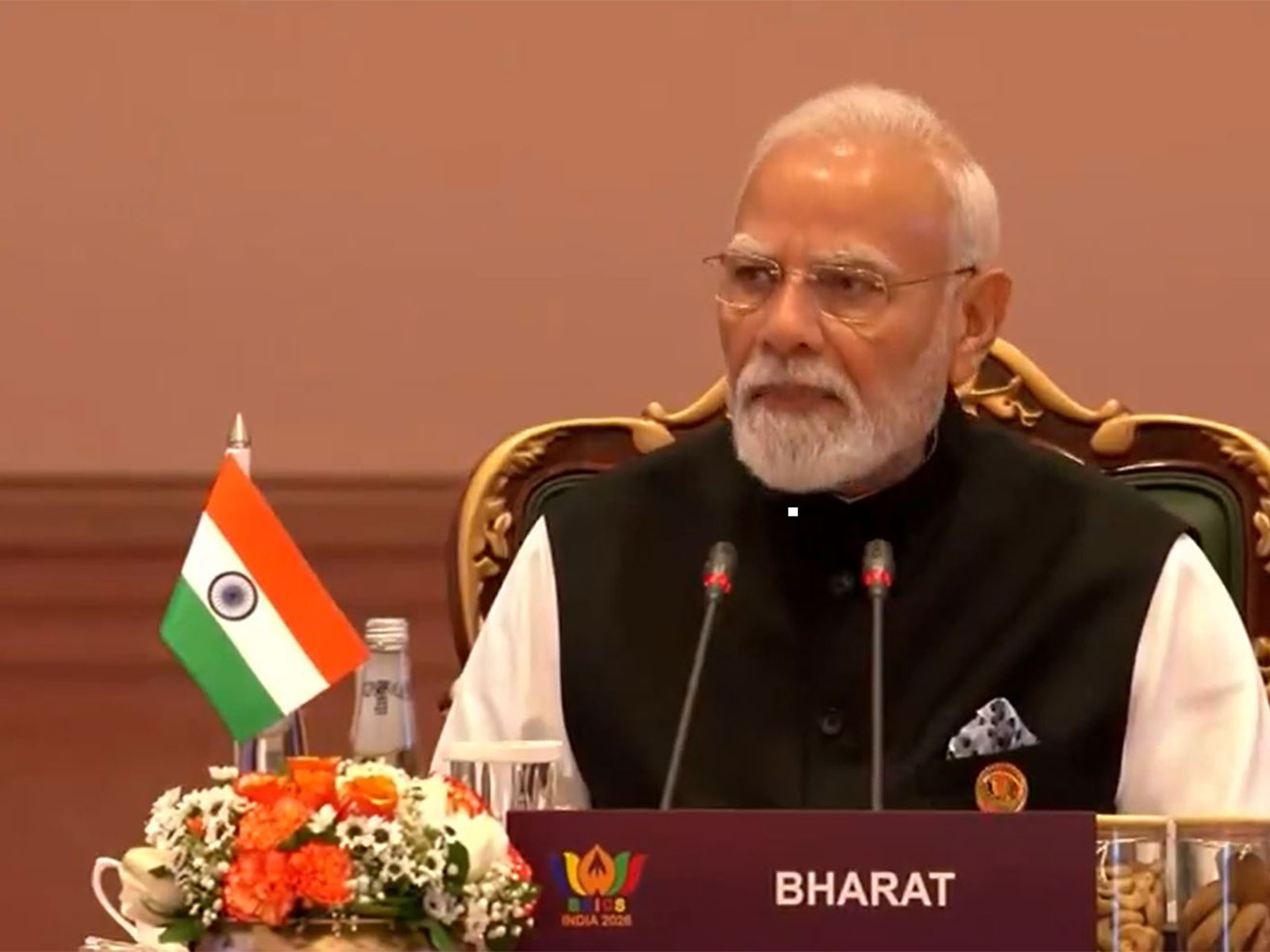
Prime Minister Narendra Modi turned the first day of the 18th BRICS Summit into a hectic round of diplomacy, holding a string of bilateral meetings with leaders from Africa, Southeast Asia and the Gulf as India sought to use its BRICS presidency to deepen strategic partnerships well beyond the grouping itself.
With the BRICS summit bringing together leaders and senior representatives from 11 member countries and partner nations, Modi’s meetings with Ethiopian Prime Minister Abiy Ahmed Ali, Malaysian Prime Minister Anwar Ibrahim, Vietnamese Prime Minister Le Minh Hung and Abu Dhabi Crown Prince Sheikh Khaled bin Mohamed bin Zayed Al Nahyan underlined the breadth of India’s diplomatic outreach.
The day’s most closely watched engagement, however, was the scheduled meeting between Modi and Chinese President Xi Jinping, who arrived in New Delhi on Saturday for his first visit to India in seven years. The meeting comes as the two countries attempt to stabilise ties following years of military tensions along the Line of Actual Control.
The series of meetings also offered a window into what New Delhi wants its BRICS presidency to achieve: stronger economic and strategic partnerships, a larger voice for the Global South and greater Indian influence across the institutions and regions represented at the summit.
Africa, Southeast Asia and Gulf on Modi’s agenda
Modi began the day with a meeting with Ethiopian Prime Minister Abiy Ahmed Ali, with the two leaders reviewing progress in the India-Ethiopia Strategic Partnership.
Their discussions covered economic cooperation, defence and security, capacity building and regional and international developments. Modi also referred to Ethiopia’s participation in the BRICS summit as strengthening the collective voice of the Global South.
The meeting built on Modi’s visit to Addis Ababa in December 2025 and reflected India’s growing effort to deepen its engagement with Africa through both bilateral partnerships and multilateral platforms.
Malaysia was another important stop on Modi’s diplomatic schedule. In his meeting with Prime Minister Anwar Ibrahim, Modi reviewed bilateral cooperation in trade and investment, defence and security and people-to-people ties. The two leaders also took stock of the outcomes of Modi’s visit to Malaysia in February.
Modi’s emphasis on Malaysia carries significance beyond the bilateral relationship. He appreciated Kuala Lumpur’s continued support in strengthening ASEAN-India relations and the two sides reaffirmed their commitment to advancing the India-Malaysia Comprehensive Strategic Partnership.
Vietnam, too, figured prominently in India’s outreach to Southeast Asia. Meeting Vietnamese Prime Minister Le Minh Hung, Modi welcomed Vietnam’s participation in the BRICS summit as a partner country. The two leaders reviewed progress in bilateral relations, which were elevated to an Enhanced Comprehensive Strategic Partnership during Vietnamese President To Lam’s state visit to India in May.
For New Delhi, Vietnam is an important pillar of the Act East policy and a key partner in its wider engagement with Southeast Asia. The India-Vietnam relationship has acquired added significance as New Delhi seeks to strengthen economic, strategic and security partnerships across the Indo-Pacific.
A Gulf partnership with strategic weight
Modi also met Sheikh Khaled bin Mohamed bin Zayed Al Nahyan, Crown Prince of Abu Dhabi, with India and the UAE exploring new areas of cooperation.
The discussions come as the two countries deepen their strategic partnership in energy, investment and connectivity. The UAE is also central to India’s wider effort to build stronger links with the Gulf and Europe, including through the India-Middle East-Europe Economic Corridor.
The meeting assumes added importance against the backdrop of the continuing conflict and instability in West Asia. India has consistently called for dialogue and diplomacy, while stressing the need to protect freedom of navigation, commerce and the safety of seafarers. Modi reiterated these concerns in his meeting with Iranian President Masoud Pezeshkian on Friday.
Xi meeting becomes the summit’s biggest bilateral
The Modi-Xi meeting is likely to overshadow all other bilateral engagements in terms of geopolitical significance.
Xi’s arrival marked his first visit to India in seven years and comes after a gradual thaw in relations following the 2020 Galwan clash. The two sides have since taken steps towards stabilising the border situation, restoring some connectivity and rebuilding engagement, although substantial differences remain.
For Modi, the meeting presents a delicate balancing act. China is India’s largest neighbour and an important trading partner, but the unresolved boundary question, trade imbalance and strategic competition remain major concerns. At the same time, both countries are members of BRICS and share an interest in giving greater weight to developing countries in global institutions.
Beijing has indicated that it wants to handle bilateral relations from a “strategic height and long-term perspective”, raising expectations that the meeting could give another push to the cautious rapprochement.
BRICS seeks common ground despite deep divisions
The bilateral diplomacy is unfolding against a difficult backdrop for the grouping itself.
BRICS has agreed on a joint declaration, according to sources, after negotiations sought to bridge differences among members, particularly over the conflict involving Iran and the UAE. The declaration is expected to condemn unilateral war without naming a particular country.
That consensus is important for India. New Delhi has sought to keep BRICS focused on cooperation among emerging economies rather than allowing it to turn into an explicitly anti-Western political bloc. The grouping’s internal differences — over wars, security, trade and the future of the global order — make consensus difficult.
India’s approach has been to emphasise issues on which the enlarged grouping can find common ground: economic cooperation, resilience of supply chains, technology, investment, energy security, reform of multilateral institutions and a greater voice for developing countries.
Modi’s broader BRICS strategy
The summit therefore represents more than an annual meeting of heads of government for India.
BRICS now represents nearly half the world’s population and around 40% of global GDP, giving the grouping considerable economic and political weight. Modi has repeatedly argued that its members must translate that weight into practical cooperation.
At the BRICS Business Forum, he highlighted the grouping’s economic scale and called for greater trade, investment and innovation cooperation. Initiatives under discussion include a BRICS incubator network, a startup innovation fund and a logistics and supply-chain cooperation framework.
For India, the agenda dovetails with its own economic priorities — attracting investment, building resilient supply chains, expanding markets for Indian companies and positioning the country as a manufacturing and technology hub.
A summit, and a showcase of Indian diplomacy
The sheer range of Modi’s engagements on the sidelines of the summit is itself revealing. From Ethiopia in Africa to Malaysia and Vietnam in Southeast Asia, from the UAE and Iran in West Asia to Russia and China, India is attempting to maintain relationships across competing geopolitical camps.
Modi’s meeting with Russian President Vladimir Putin on Friday had already covered political, economic, defence, energy, space and skills cooperation. His engagement with Pezeshkian focused in part on West Asian developments and India’s call for diplomacy, peace, freedom of navigation and protection of seafarers.
The diplomatic choreography is deliberate. India wants BRICS to become a stronger platform for the Global South without being reduced to an instrument of confrontation with the West. It wants closer ties with China without compromising on its security interests. It wants to retain its longstanding relationship with Russia while expanding strategic ties with the US, Europe and the Gulf.
That makes New Delhi’s role at this BRICS summit unusually consequential. The message India is sending from the summit is clear: New Delhi does not want to choose between competing power centres. It wants to be influential enough to engage all of them, and to shape the conversation among them.
The success of that strategy will ultimately be judged not by the number of bilateral meetings Modi holds, but by whether India can convert the diplomatic capital accumulated during its BRICS presidency into concrete gains in trade, investment, technology, connectivity and global governance.