


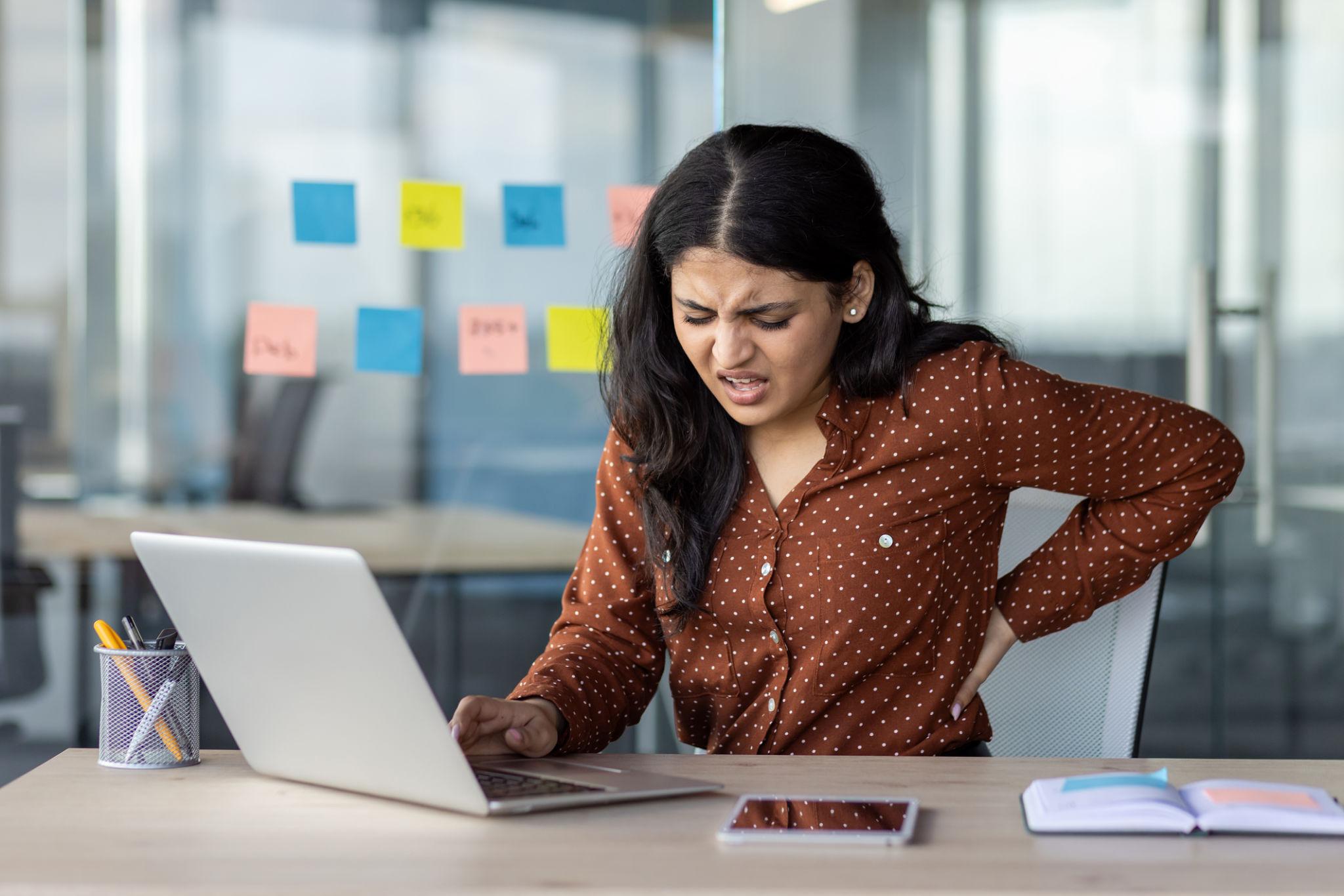
At 8:45 every morning, Rohan, 34, walks into his Mumbai office with his laptop bag over one shoulder and coffee in the other hand. His first meeting begins at 9. By 11:30, he has attended three video calls. By 1:30, lunch is eaten at his desk. The afternoon disappears between spreadsheets, presentations, emails and another series of meetings.
At around 4 pm, Rohan shifts uneasily in his chair. His lower back is aching again. He stands up, stretches for a few seconds and sits down. At 7 pm, he finally closes his laptop. When he gets up, his back feels stiff. On the way home, he stops at a pharmacy and buys a painkiller. The next morning, the cycle begins again.
Rohan’s story may sound familiar to millions of India’s corporate employees. Increasingly, low back pain is becoming more than an individual health complaint. It is becoming a workplace health challenge.
The numbers are difficult to ignore
Low back pain is already the leading cause of disability worldwide. The World Health Organization (WHO) estimates that 619 million people experienced low back pain in 2020, with the number projected to reach 843 million by 2050.
India has a substantial burden of its own. A systematic review and meta-analysis covering 97 Indian studies estimated the prevalence of low back pain at 48 per cent at a given point in time, 51 per cent over one year and 66 per cent over a lifetime.
That means that roughly one in two Indians may experience low back pain within a year, while about two in three may experience it during their lifetime.
A separate systematic review of work-related musculoskeletal disorders across occupational groups in India found a pooled 12-month prevalence of low back pain of approximately 60 per cent.
These figures are not specific to corporate employees, and that distinction matters. India’s occupational evidence includes healthcare, agriculture, mining, construction and other sectors. However, they demonstrate the scale of the broader occupational musculoskeletal burden.
For India’s rapidly expanding desk-based workforce, another set of risks is becoming increasingly relevant: long hours of sitting, limited movement, laptop-based work, commuting, stress, poor ergonomics and physical deconditioning.
The problem isn’t simply ‘bad posture’
For years, employees have been told: “Sit straight”. But low back pain is rarely that simple. Around 90 per cent of low back pain is classified as non-specific, meaning that a single structural cause cannot usually be identified. WHO identifies low physical activity, obesity, smoking and high physical stress at work among important risk factors.
For a corporate employee, the problem can be cumulative. Eight hours of sitting. Minimal movement between meetings. A laptop positioned too low. An unsupported chair. A long commute. Little exercise. Poor sleep. High work pressure. And perhaps increasing body weight.
Individually, each factor may appear insignificant. Together, they can create an environment in which recurrent back pain becomes more likely.
Corporate paradox
Rohan may spend eight hours sitting at work and then feel too tired to exercise in the evening. The next day, the same thing happens. Over time, less movement can contribute to reduced conditioning, more discomfort, less activity and greater deconditioning.
Pain can then affect sleep, mood, concentration and confidence in movement. And this is where the corporate impact becomes much larger than the pain itself.
An employee doesn’t necessarily need to take sick leave. They may continue working despite pain. They attend the meeting. They answer the email. They complete the presentation. But they are not functioning at their best.
This is presenteeism: being physically present at work while health problems reduce productivity and performance. WHO specifically recognises low back pain as a major contributor to work loss, reduced participation and economic burden.
The answer isn’t another painkiller
When the back hurts, the easiest response is often medication. But a tablet does not correct eight hours of uninterrupted sitting. It does not strengthen weak muscles. It does not improve sleep. It does not change workstation ergonomics. And it does not address the behavioural and occupational factors contributing to recurrent symptoms.
Medication can have an appropriate role in selected patients, but WHO emphasises that management of low back pain should be broader, with non-pharmacological approaches receiving an important role.
For chronic primary low back pain, WHO recommends a holistic, person-centred approach that can include education, exercise, selected physical therapies and psychological interventions, with treatment tailored to the individual.
Prevention needs to enter the workplace
The traditional corporate wellness model often focuses on annual health checks, occasional webinars and gym memberships. Back health needs something more practical.
Make movement part of the workday. Not every meeting needs to be seated. Encourage short movement breaks, walking during suitable calls, standing during selected meetings and avoiding prolonged uninterrupted sitting. The objective is simple: break up sitting.
Make ergonomics personal. A workstation should not simply be ‘ergonomic’ on paper. Employees need guidance on chair height, lumbar support, screen position, keyboard and mouse placement, foot support, laptop use and desk height. Ergonomic education should be accompanied by individual assessment where needed.
Build physical capacity. Back health is not about avoiding movement. It is about becoming capable of movement. Regular aerobic activity, strengthening and mobility exercises can help improve physical function and reduce the impact of recurrent symptoms.
Address the whole employee. Back pain doesn’t exist in isolation. Weight management, sleep, physical activity, mental well-being and smoking cessation are all relevant components of healthier living. WHO specifically includes physical activity, healthy weight, good sleep and workplace ergonomic adjustments among measures that can help prevent and manage non-specific low back pain.
Create an early-intervention pathway. Employees shouldn’t wait until pain becomes disabling. A corporate programme can provide access to appropriate clinical assessment, physiotherapy, exercise guidance and referral when required. Importantly, not every episode of back pain needs imaging or specialist intervention. But persistent, severe, recurrent or neurologically complicated symptoms deserve appropriate clinical evaluation. From employee wellness to workforce health
A shift in thinking required
Instead of asking, “How do we treat employees after they develop back pain?”, corporate leaders should ask, “How do we design work so that employees can move, function and remain healthy?”
That means moving from reactive healthcare to preventive workforce health.
A comprehensive corporate back-health programme could combine ergonomic assessment, employee education, movement strategies, exercise or physiotherapy support, early clinical triage, digital follow-up and measurable outcomes.
The goal should not simply be fewer complaints. It should be fewer lost workdays, less presenteeism, better physical function, higher productivity and better quality of life.
For the corporate sector, this means recognising back health as part of workplace health rather than leaving it entirely to employees to manage after symptoms appear on their own.
Rohan’s back pain may have started with a chair. But the solution is not simply a better chair. It requires us to rethink the modern workday.
Because the healthiest workplace is not one where employees can sit comfortably for eight hours. It is one that makes movement, prevention and health part of the way work gets done.
