

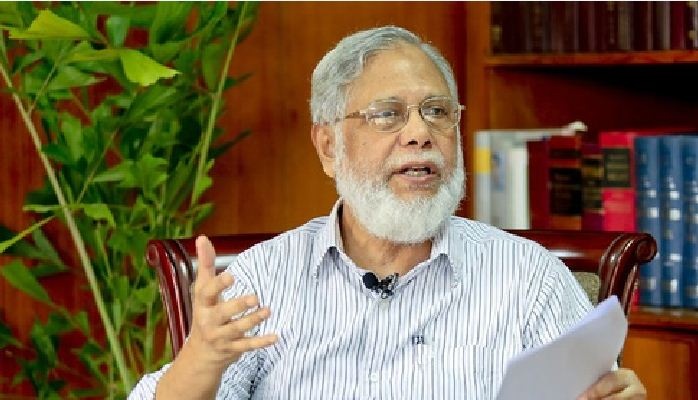
The continued detention of former Bangladesh Chief Justice ABM Khairul Haque, 82, has sparked growing concerns among legal observers and human rights advocates over judicial independence and the treatment of elderly detainees. Former Chief Justice Haque has remained in custody since his arrest on July 24, 2025, despite securing bail from the Appellate Division in several cases on April 28, 2026. He continues to face two murder cases pending before lower courts.
Supporters of the former chief justice say his health has deteriorated significantly during nearly a year in detention. Family members and lawyers have sought his release on humanitarian grounds, citing age-related ailments and the need for specialised medical care.
The controversy surrounding Haque’s detention is closely linked to his role in the landmark judgment on Bangladesh’s 13th Constitutional Amendment, which dealt with the caretaker government system. After hearing submissions from nine amici curiae, the Appellate Division bench was evenly split, leaving Haque to cast the deciding vote. While declaring the caretaker system unconstitutional, he recommended that two subsequent elections be conducted under the arrangement. He argued that judges should be excluded from heading caretaker administrations to safeguard judicial independence.
Before the full judgment was published, Parliament enacted the 15th Amendment, abolishing the caretaker system. Critics of his detention contend that Haque later became a target of political controversy stemming from the constitutional change.
Squarely condemning the episode, former Bangladesh Education Minister Mohibul Hassan Chowdhury described it as a travesty of justice. “Md Yunus’s government crossed all limits and curtailed judicial independence in every possible way. Yunus and his deep-state agents forced the judiciary to toe their line. The judiciary in Bangladesh lost all independence during the Yunus regime.”
“Unfortunately, the present government led by Tarique Rahman has continued the same policy. By keeping an 82-year-old former chief justice in jail, the government is sending a clear message to the entire judicial fraternity that it has no option but to follow the official line.”
“There is not an iota of judicial independence left in Bangladesh. The system is highly compromised,” Chowdhury added.
During a decades-long judicial career, Haque delivered several landmark rulings. He struck down the 5th and 7th Constitutional Amendments, removing legal protections for past military regimes, and issued judgments on gender equality, environmental protection and the legal status of religious fatwas. He also served as a commissioner on the Rana Plaza Claims Commission, overseeing compensation for victims of the 2013 industrial disaster.
The case has drawn attention because of what legal observers describe as a pattern of successive criminal proceedings that have kept the former chief justice in custody despite obtaining relief at the appellate level. Human rights groups and legal commentators argue that the matter has become a significant test of Bangladesh’s commitment to judicial independence, due process and the rule of law.