

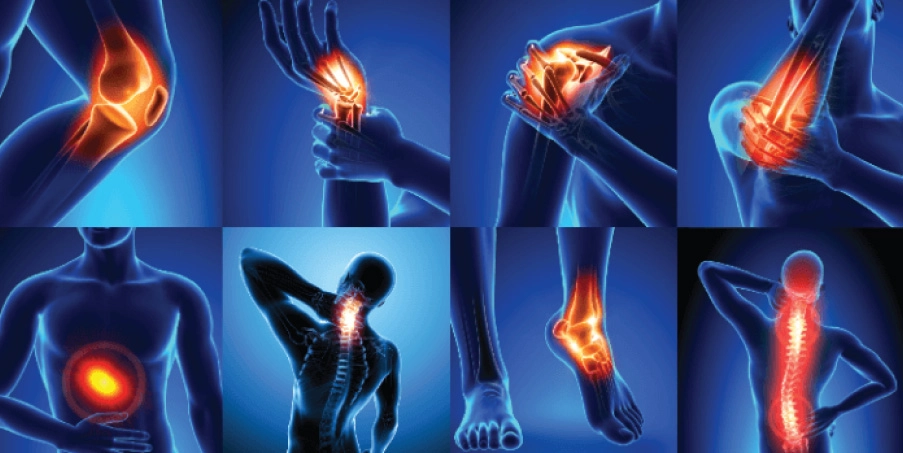
Back pain, neck pain, shoulder stiffness, and joint aches have become everyday complaints across India. What was once considered a problem of old age is now affecting people in their 20s and 30s. Doctors increasingly observe that pain is no longer an occasional symptom but a chronic condition for millions. This raises an important question: Is India facing a pain epidemic?
WHY IS BODY PAIN SO WIDESPREAD IN INDIA TODAY?
- Sedentary lifestyle and prolonged sitting
Over 60-70 per cent of urban working adults spend more than 7-8 hours a day sitting. Prolonged sitting weakens core muscles, increases spinal disc pressure, and leads to chronic low back pain. - Excessive mobile phone and screen use
India has over 750 million smartphone users. Average daily screen time exceeds 4-5 hours. Forward neck bending increases cervical spine load from about 5 kg to nearly 25-30 kg, accelerating neck degeneration. - Physical inactivity
Nearly 50 per cent of Indian adults do not meet the recommended physical activity levels. Among adolescents, inactivity exceeds 70 per cent in urban areas. - Obesity and metabolic disease
India has over 135 million people who are overweight or obese. Obesity increases knee osteoarthritis risk by 3-4 times.
CAN THIS BE CALLED ‘PAIN ENDEMIC’?
Low Back Pain (LBP – Low Back Pain) is the leading cause of disability worldwide. WHO-COPCORD (World Health Organization-Community Oriented Program for Control of Rheumatic Diseases) surveys show musculoskeletal pain affects 16-20 per cent of Indians. This means over 200 million Indians live with chronic pain.
Common Pain-related Conditions in India
Low Back Pain
Lifetime prevalence is 60-80 per cent
Neck and Shoulder Pain
Affects 30-50 per cent of students and office professionals.
Osteoarthritis (OA – Osteoarthritis)
Affects over 62 million Indians.
Nearly 1 in 4 adults over 45 years has knee osteoarthritis.
Inflammatory Arthritis
Rheumatoid Arthritis (RA–Rheumatoid Arthritis) affects 0.5–0.7 per cent of adults.
WHO SUFFERS THE MOST?
Women
60-65 per cent of arthritis and chronic pain patients are women.
Older adults
Over 50 per cent of Indians above 60 years report chronic pain.
Teenagers
20-30 per cent report neck or back pain due to screen use and poor posture.
WHAT ARE THE REMEDIES?
- Regular physical activity – at least 150 minutes per week.
- Posture correction and ergonomic screen use.
- Weight loss of 5–10 per cent significantly reduces joint pain.
- Early physiotherapy reduces chronic pain risk by 30-40 per cent.
- Rational use of pain medicines under medical supervision.
- Adequate sleep and stress management.
TAKE-HOME MESSAGE
India is facing a silent pain epidemic driven by lifestyle changes. Most pain is preventable and reversible. Early action, movement, posture awareness and timely medical care can significantly improve quality of life.
(Dr Anish Desai is a healthcare entrepreneur. He is leading IntelliMed Healthcare Solutions)