


India seeks to push practical cooperation as an expanded grouping grapples with divergent geopolitical interests
The 18th BRICS summit in New Delhi this weekend will bring together leaders of an expanded grouping that has acquired considerable economic weight since its enlargement, but whose members remain divided on several geopolitical issues confronting the world.
India, which assumed the BRICS chair for 2026 on January 1, will host the summit on September 12 and 13. The year also marks two decades of BRICS cooperation.
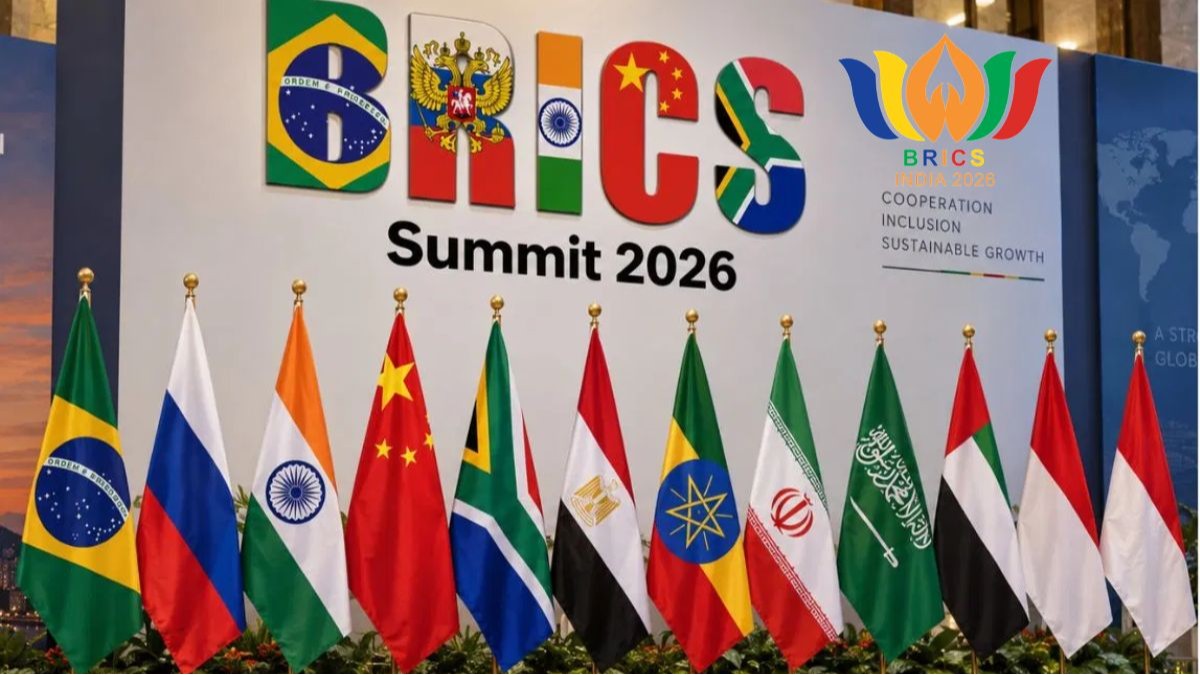
The grouping, which began in 2006 with Brazil, Russia, India and China, now has 11 members — Brazil, Russia, India, China, South Africa, Egypt, Ethiopia, Iran, the United Arab Emirates, Saudi Arabia and Indonesia. Its expansion has given it a substantially larger economic and geographic footprint, taking in major energy producers as well as some of the world’s largest developing economies.
According to the Indian government, the 11 BRICS countries together account for nearly half of the world’s population, around 40 per cent of global GDP and more than a quarter of global trade. But the larger membership has also made it more difficult to arrive at common positions.
The summit is taking place against the backdrop of the conflict involving Iran, a BRICS member, and continuing tensions in West Asia. Differences among members over the conflict have already affected the group’s ability to arrive at consensus. A meeting of BRICS foreign ministers in New Delhi earlier this year ended without a joint statement after disagreements over the wording on Iran and the UAE.
The issue is likely to remain one of the more difficult items at the leaders’ meeting.
BRICS decisions are generally reached through consensus, and the expansion of the grouping has brought together countries whose strategic interests and relationships with the major powers are markedly different. Russia and China have sought a larger role for BRICS in reshaping the existing international order, while India has consistently argued for reform of multilateral institutions without turning BRICS into an alliance directed against any particular country.
This distinction is important for New Delhi. India has sought to keep the focus of its chairship on areas where the enlarged membership can work together, including trade and investment, technology and innovation, food and energy security, health, disaster resilience and supply-chain cooperation.
The official theme of India’s presidency is “Building for Resilience, Innovation, Cooperation and Sustainability”.
During the year, India has held more than 350 BRICS-related meetings and engagements across the country. The emphasis has been on three broad areas that have traditionally defined BRICS cooperation: political and security issues, economic and financial cooperation, and people-to-people exchanges.
Several economic initiatives are expected to figure in the summit discussions. These include proposals relating to start-ups, innovation, logistics and supply chains. India has also pushed for progress on the BRICS Economic Partnership Strategy 2030, greater cooperation in services and measures to make global supply chains less vulnerable to disruption.
For India, the economic component is particularly significant. BRICS provides a platform through which New Delhi can engage simultaneously with some of its largest trading partners and with major energy-producing countries. It also offers a forum to pursue the broader Indian objective of giving developing countries a greater role in international economic decision-making.
The financial side of that agenda, however, remains more complicated. BRICS has the New Development Bank, based in Shanghai, and members have discussed increasing the use of local currencies in trade and financial transactions. But the creation of an alternative financial architecture capable of substantially reducing dependence on existing global institutions remains a much longer-term proposition.
The presence of Chinese President Xi Jinping and Russian President Vladimir Putin will give the Delhi summit an additional diplomatic dimension. Xi’s visit will be closely watched in India, particularly against the backdrop of the effort by the two countries to stabilise ties following the military confrontation along the Line of Actual Control. The bilateral relationship has improved from the acute tensions of the past few years, but the border question remains unresolved and strategic competition between the two countries continues.
Putin’s presence will also underline the importance Russia attaches to BRICS at a time when its relations with the West remain severely strained.
For India, the challenge will be to manage these competing interests without allowing them to overwhelm the broader BRICS agenda. New Delhi has avoided describing BRICS as an anti-Western grouping. Its stated position has been that the organisation should complement, rather than replace, existing multilateral institutions and should contribute to a more representative international system.
That approach also reflects India’s wider foreign policy. New Delhi is simultaneously a member of BRICS, the Quad and the Shanghai Cooperation Organisation and maintains extensive economic and strategic relationships with the United States, Europe, Russia, Japan and the Gulf countries.
The Delhi summit will therefore be watched not only for what the leaders say about global conflicts, but also for whether the expanded BRICS can make progress on issues where its members have a direct common interest.
For India, a successful summit would mean keeping the focus on areas where cooperation is possible while preventing geopolitical differences from paralysing the grouping.
The test is particularly relevant after the expansion. BRICS is now larger and more representative of the developing world than it was when India last held the chair. Whether that has made it more effective remains an open question. The New Delhi summit is the first major opportunity for India to demonstrate what the expanded grouping can deliver.
