

A Traveller’s Guide to Money, Motors and Mayhem
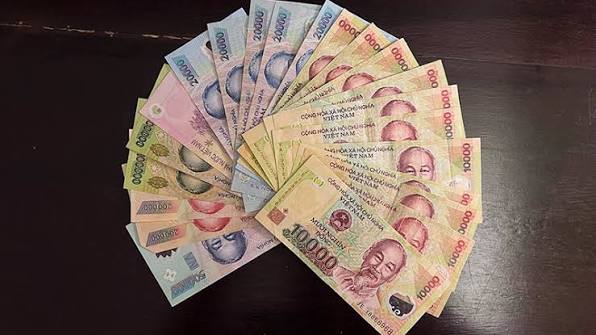
Some countries welcome travellers with immigration stamps and polite airport signs. Vietnam makes them millionaires. One ordinary ATM withdrawal produces several million dong, and for a few glorious seconds the visitor feels like a financial genius.
Then comes the first bánh mì (Vietnamese baguette sandwich). The millionaire soon discovers that this fortune buys lunch, coffee and, if one is feeling reckless, a taxi ride. Every purchase becomes an accounting exam: was that 25,000 or 250,000? How many zeroes were there? Why does buying bread now require the solemn concentration usually reserved for filing income tax or pretending to understand pensions?
Vietnam’s blue polymer notes add an element of jeopardy. To the untrained eye, 20,000 and 500,000 dong can appear to be close cousins, which is unfortunate because one buys a snack and the other becomes an involuntary act of philanthropy. Thus begins Blue Note Russian Roulette: hold it to the light, count the zeroes, recount them, lose confidence in formal education, and finally hand it over while a nearby grandmother has identified it from 20 metres away.
Cambodia changes the subject without simplifying it. Dollars circulate with riel, but US notes face stricter entry requirements than tourists. A tiny tear, suspicious crease or imperfect corner can get a bill rejected after an inspection worthy of forensic science.
The rejected dollar returns in disgrace. The change, meanwhile, may arrive in riel notes that look as if they have survived a monsoon, three washing machines and a period beneath somebody’s refrigerator. Apparently, the dollar must appear freshly ironed and ready to meet the President; the riel may look as though it has survived a shipwreck, a monsoon and several previous owners.
Coffee then becomes mathematics class. Pay in dollars, receive change in riel, and suddenly 4,000-to-one arithmetic must be performed under pressure while the cashier waits with the calm of a person who has seen foreigners unravel before.
Coins are mostly absent from tourist life, so wallets become paper accordions: dong, riel and carefully protected dollars swelling sideways until one looks like a gangster while possessing just enough money for dinner.
Money, however, is only the induction programme. Then comes the road.
Where Traffic Becomes Philosophy
In Ho Chi Minh City, the new pedestrian assumes there will eventually be a gap in the traffic. This is touching. Scooters arrive from every direction, including several apparently unknown to geometry.
The method is not to wait, but to walk slowly and steadily while motorcycles flow around you. The first successful crossing feels less like transport and more like receiving a minor military decoration.
The horn helps, once translated correctly. Elsewhere it means, “You idiot.” In Vietnam it often means, “Hello, I continue to exist”, repeated by several thousand engines conducting a lively group discussion.
Scooters themselves appear to reject the limits of physics. One carries a family, another flowers for a wedding, another half a hardware store. The family car suddenly seems less like a necessity and more like a rather bulky opinion.
Conversation can be just as direct. Where are you from? How old are you? Married? Children? Within minutes, a friendly stranger may know enough to complete a census form and begin matrimonial negotiations.
Age and family questions have social logic in Vietnam, but to outsiders they can still land with comic force, especially the efficient follow-up to “Are you married?”: “Why not?” There is no polite answer to this, beyond examining one’s shoes and hoping a scooter intervenes.
At night, beer becomes a team sport. “Một, hai, ba, dô!” (“One, two, three, cheers!”) rings out, glasses rise, and the visitor discovers that even taking an independent sip can trigger another toast. What began as one drink becomes synchronised beverage drill, with consequences best reviewed quietly the next morning.
Vietnamese tones provide the final lesson in humility. One misplaced pitch can turn an innocent request into something mysterious. The word is tried, raised, lowered, repeated, mimed and finally surrendered to Google Translate. Sunscreen is located. The language wins.
When the Banknotes Become the Guidebook
By now the money itself becomes a guidebook. Vietnamese and Cambodian notes show landmarks, inviting travellers to hold the banknote before the real thing and create the perfect photograph.
Reality objects. The bridge or temple is there, the note is ready, the angle is almost right; and then come umbrellas, tour groups, selfie sticks and one immovable gentleman. The version printed on the currency is usually the only one guaranteed to be tourist-free.
That confusion is the pleasure. Vietnam and Cambodia demand adjustment. Their currencies require concentration, their roads courage, their languages humility and their customs a willingness to laugh at one’s own assumptions. A sandwich can make a millionaire feel poor; a ten-dollar note can fail a character assessment; and crossing the road can improve one’s relationship with the Almighty, assuming negotiations are still open.
Eventually the wallet remains fat, the calculator stays handy and “Một, hai, ba, dô!” still makes the hand reach for a glass. But the traveller stops asking why everything works differently and starts enjoying the fact that it does.
And that, unlike the three million dong sitting magnificently in the wallet, is wealth that survives the currency conversion.