

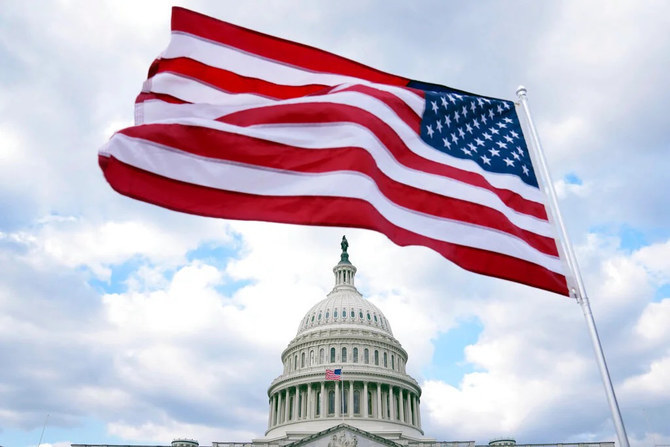
The most dangerous illusion in international politics today is the belief that the world’s instability is being driven primarily by China, Russia, Iran or artificial intelligence. Those are symptoms of a much deeper transformation. The central geopolitical story of this era is far more uncomfortable: the global order is fragmenting because the United States no longer wants to sustain the system it once built.
For nearly eighty years, the international system rested on a simple premise. America was not always consistent, rational or morally coherent, but it remained the indispensable stabilising force in global affairs. Washington guaranteed trade routes, protected alliances, underwrote financial institutions, enforced security architecture and projected enough predictability for markets and governments to organise around American power. That era is ending.
Not because the United States has been militarily defeated. Not because China has already overtaken it. And not because liberal democracy collapsed under foreign pressure. The post-war order is weakening because America itself is losing faith in the burdens of leadership.
That shift changes the geopolitical equation everywhere. When smaller powers become unstable, regions suffer. When the United States becomes internally polarised and strategically inconsistent, the entire world absorbs the shock. Energy markets react. Supply chains fracture. Military alliances weaken. Financial volatility spreads instantly. Every major actor, from Beijing to Brussels, from Riyadh to Taipei, begins recalculating its assumptions about the future. It is a structural transition, and the world should not treat this as a temporary political cycle.
The return of Donald Trump accelerated that transition dramatically. Trump understood something many elites had ignored for decades. A large part of the American population no longer views globalisation as a success story. Entire industrial communities felt abandoned. Economic inequality widened. Institutional trust collapsed. Cultural polarisation deepened. The promise that liberal democracy and open markets would automatically produce shared prosperity began to look fraudulent to millions of Americans.
Trump correctly identified the anger. But identifying social decay is not the same as governing effectively. What emerged instead was a foreign policy increasingly shaped by impulse, spectacle and short-term political calculation. The administration’s worldview reduced complex geopolitical realities into transactional contests driven by dominance, media narratives and domestic optics. That approach may work in electoral politics. It is considerably more dangerous in global strategy.
Nowhere has this been more evident than in the Middle East. The administration appeared to believe that overwhelming pressure on Iran could produce rapid strategic victories without prolonged consequences. But geopolitics does not operate according to television logic. States do not simply collapse because they are threatened loudly enough.
Iran’s resilience exposed the limits of American coercive power. Despite sanctions, military pressure and internal strain, Tehran retained strategic leverage through regional proxies, energy chokepoints and asymmetric capabilities. The Strait of Hormuz alone remains one of the most critical arteries in the global economy. Even limited instability there immediately affects oil prices, inflation, shipping costs and political stability across multiple continents.
That creates a paradox for the United States. Militarily, America remains unrivalled. Politically, however, it has become increasingly fragile. Democratic systems absorb economic pain rapidly, and American voters have little tolerance for prolonged geopolitical uncertainty. Washington’s adversaries understand this.
China understands this especially well. One of the greatest analytical failures in the West has been the persistent underestimation of China’s strategic patience. Western democracies often think in election cycles, quarterly earnings and short-term public sentiment. Beijing thinks in decades.
Over the past twenty years, China quietly positioned itself at the centre of the industries that will define future global power: electric vehicles, advanced batteries, renewable infrastructure, critical minerals, rare earth processing, artificial intelligence, industrial automation and strategic manufacturing.
The West debated ideology. China built supply chains. That distinction matters more than many policymakers still realise. Control over critical minerals is no longer an obscure industrial issue. It is geopolitical power in its purest form. Modern economies depend on rare earths and strategic resources for semiconductors, satellites, missiles, electric grids, data centres and consumer technology. Beijing recognised this long before Washington or Brussels did.
Today, China does not need to replace the United States outright to reshape the global order. It merely needs to become indispensable in sectors that others cannot function without. That process is already underway.
Meanwhile, Europe remains trapped inside the psychological architecture of the post-Cold War era. Much of the continent assumed history had permanently evolved toward economic integration, declining military threats and expanding liberal norms. Defence spending declined. Energy dependence deepened. Strategic industries weakened. Bureaucratic integration was mistaken for geopolitical strength.
The result is a Europe that remains wealthy and sophisticated but increasingly reactive rather than decisive. The European Union possesses institutional legitimacy but lacks a unified strategic direction. In an era defined by power competition, fragmented governance becomes a vulnerability. Europe now faces simultaneous pressure from Russian aggression, Chinese economic leverage, American unpredictability and domestic political fragmentation.
The assumptions that shaped the post-1991 order have collapsed one by one. Economic integration did not liberalise China. Trade interdependence did not moderate Russia. Globalisation did not reduce populism inside Western democracies. And the United States itself became more polarised, more distrustful and more internally unstable despite decades of unprecedented prosperity.
The world is therefore drifting toward what I have long described as a “G-Zero” order: a system without effective global leadership. No coalition possesses the legitimacy, unity or capability to manage global crises consistently. The G7 lacks cohesion. The G20 lacks strategic alignment. The United Nations lacks enforcement authority. Regional alliances increasingly operate through transactional interests rather than shared values.
In such a system, rules become optional. Powerful states obey international norms selectively, reinterpret them opportunistically and ignore them whenever strategic interests demand it. The result is not immediate global collapse. It is something more dangerous: persistent systemic instability.
And yet geopolitics is only part of the story. Another revolution is unfolding simultaneously — one that could ultimately become even more transformative than the rise and fall of states themselves. Artificial intelligence is creating a new category of power that transcends national borders.
For centuries, governments monopolised strategic influence. States controlled militaries, currencies, borders and infrastructure. That monopoly is eroding rapidly. Technology companies now possess capabilities once associated exclusively with sovereign power.
The war in Ukraine offered an early preview of this transformation. Private-sector technologies became integral to national survival. Cybersecurity, satellite communications, cloud infrastructure and AI-driven intelligence increasingly depend not on governments, but on corporations.
That trend is accelerating. Some advanced AI systems are already considered too dangerous for unrestricted public release because of their potential implications for cyber warfare, disinformation, financial disruption and infrastructure sabotage. This is not speculative futurism anymore. It is an emerging geopolitical reality.
The next superpower may not resemble a traditional nation-state at all. It may instead be an ecosystem of AI laboratories, cloud infrastructure giants, semiconductor firms and digital platforms capable of shaping economies, conflicts and information systems more directly than governments themselves.
That should concern policymakers profoundly. Technology companies are not designed to preserve democratic legitimacy, social stability or geopolitical equilibrium. Their incentives are fundamentally different. They optimise for growth, scale, market dominance and shareholder value. The concentration of such power inside largely unregulated technological ecosystems introduces systemic risks that the world is only beginning to understand.
The collision now underway is therefore historically unprecedented. Weakening democratic consensus. Rising authoritarian confidence. Fragmented global governance. Economic nationalism. Supply-chain militarisation. AI acceleration. Information warfare. Climate pressure. Energy insecurity. Nuclear deterrence. Digital surveillance.
All of these forces are intensifying simultaneously. This does not guarantee a catastrophe. History is not deterministic. Great powers can adapt. Institutions can reform. Political systems can recover strategic coherence. But avoiding deeper disorder will require something increasingly rare in modern politics: long-term thinking.
The fundamental danger facing the world today is not that one nation becomes overwhelmingly dominant. It is that no actor remains willing or capable of stabilising the system as fragmentation accelerates.
For decades, the world feared American power. Now it fears American unpredictability. And that may prove far more destabilising than multipolarity itself.
(Ian Bremmer is an American political scientist, author and entrepreneur. He is the founder and president of Eurasia Group)