

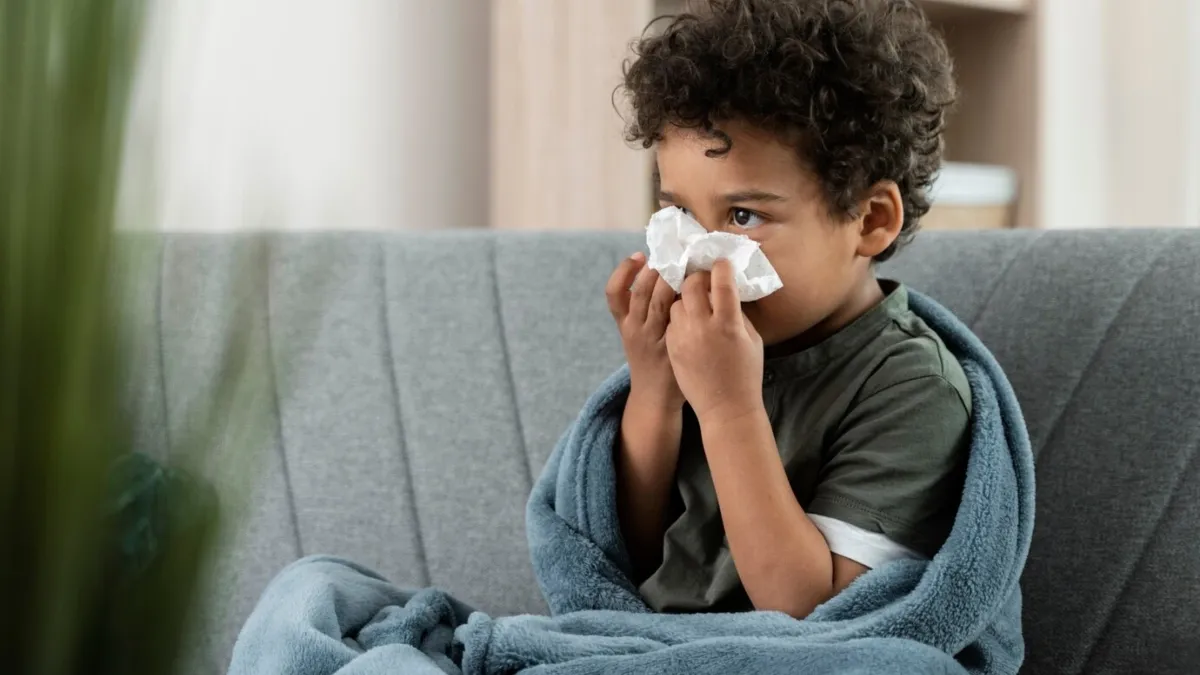
Winter is associated with a seasonal rise in childhood illnesses due to cold temperatures, dry air, indoor crowding, and the development of immunity. Most winter illnesses are viral and self-limiting, but early recognition and appropriate care are essential to prevent complications.
1. MOST AFFECTED AGE GROUP: INFANTS, TODDLERS, PRESCHOOL CHILDREN
Scientific background: The common cold is caused by respiratory viruses such as rhinoviruses, RSV, adenoviruses, and seasonal coronaviruses. Cold air reduces nasal mucosal defence and mucociliary clearance, allowing viral entry.
Symptoms: Runny or blocked nose, sneezing, cough, mild fever, irritability, and feeding difficulty in infants.
Prevention: Hand hygiene, saline nasal care, avoiding sick contacts, and breastfeeding.
Management: Supportive care with saline drops, fluids, continued feeding, and paracetamol. Antibiotics are not indicated.
When to seek care: Fever lasting more than three days, poor feeding, breathing difficulty, or ear pain.
2. ACUTE LOWER RESPIRATORY TRACT INFECTIONS (BRONCHIOLITIS AND PNEUMONIA)
Most affected age group: Infants and children under five years.
Scientific background: Bronchiolitis (commonly caused by RSV) leads to inflammation of the small airways. Pneumonia involves lung tissue and may be viral or bacterial.
Symptoms: Fast breathing, chest retractions, fever, cough, and lethargy.
Prevention: Warm clothing, avoidance of smoke exposure, and routine immunisation.
Management: Early medical evaluation, hydration, oxygen therapy if required, and antibiotics only when bacterial infection is suspected.
Emergency signs: Bluish lips, inability to feed, or severe respiratory distress.
3. VIRAL FEVER AND INFLUENZA
Most affected age group: School-going children (5–12 years).
Scientific background: Influenza spreads efficiently in winter due to low humidity and indoor crowding.
Symptoms: High fever, body aches, headache, sore throat, and fatigue.
Prevention: Annual influenza vaccination, respiratory etiquette, and adequate rest.
Management: Rest, fluids, and paracetamol. Antivirals are used only in select cases.
4. ASTHMA EXACERBATIONS AND VIRAL-INDUCED WHEEZE
Most affected age group: Children aged 2–12 years with asthma or allergies.
Scientific background: Cold air induces bronchoconstriction, and viral infections increase airway inflammation.
Symptoms: Wheezing, shortness of breath, and cough at night.
Prevention: Avoidance of cold exposure, regular use of controller inhalers, and maintaining clean indoor air.
Management: Reliever inhalers during symptoms, continued preventive therapy, and adherence to an asthma action plan.
Emergency signs: Poor response to inhaler therapy, rapid breathing, or chest retractions.
5. ACUTE GASTROINTESTINAL INFECTIONS (Winter Vomiting and Diarrhoea)
Most affected age group: Infants and toddlers
Scientific background: Rotavirus and norovirus damage the intestinal lining, leading to fluid loss.
Symptoms:
Vomiting, watery stools, fever, and dehydration.
Prevention: Hand hygiene, safe drinking water, and rotavirus vaccination.
Management: Oral rehydration solution (ORS), continued feeding and breastfeeding, zinc supplementation, and hospitalisation in cases of severe dehydration.
General Winter Health Advice
Dress children in layers, ensure balanced nutrition, provide warm fluids, encourage adequate sleep, avoid unnecessary use of antibiotics, and consult a doctor early if concerned.
Final Takeaway
Winter illnesses in children are common but largely preventable and manageable. Scientific awareness and timely care empower mothers to protect their children safely and effectively.
(Dr Anish Desai is a healthcare entrepreneur. He is leading IntelliMed Healthcare Solutions)