

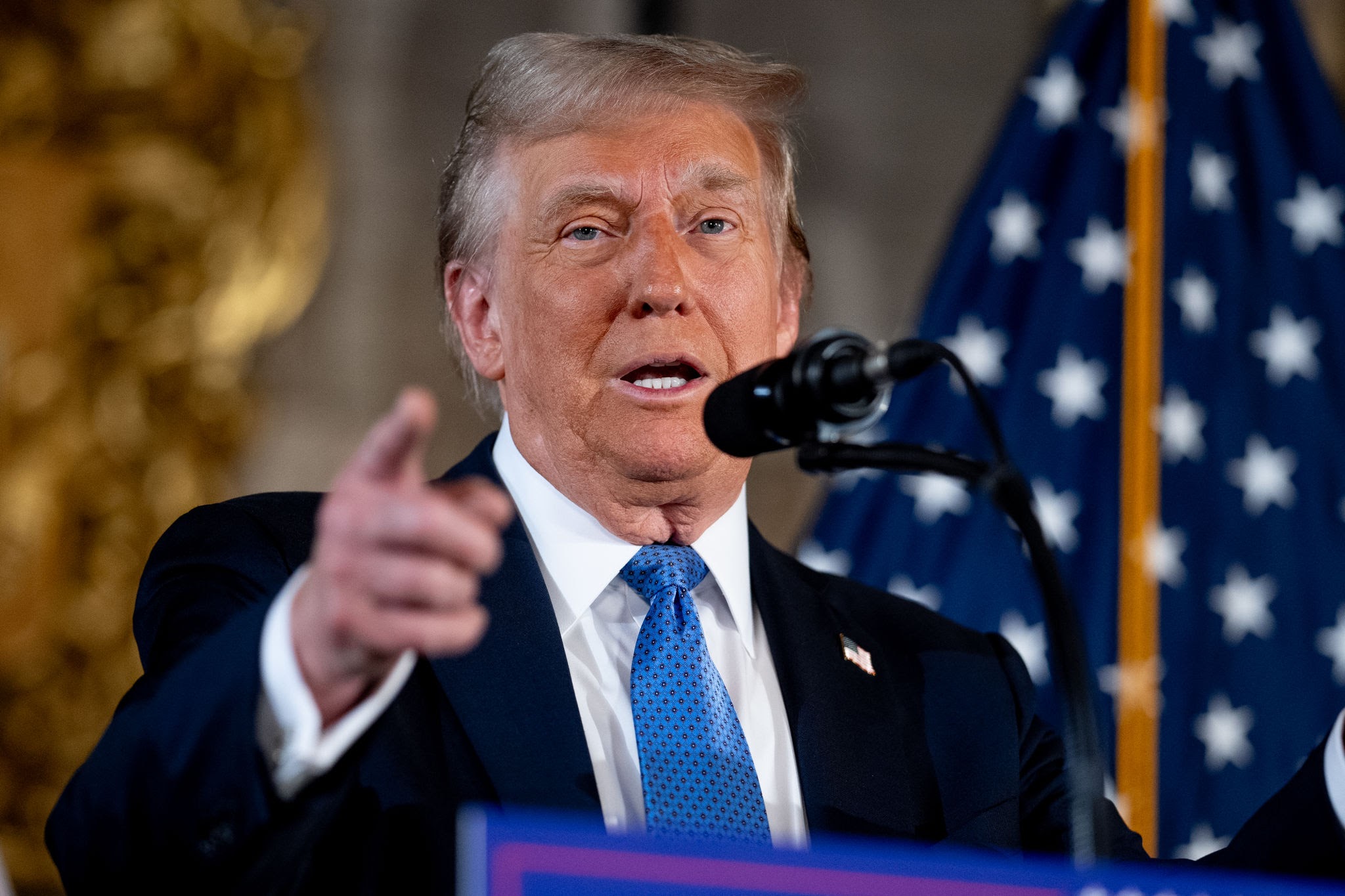
Donald Trump’s Nuclear Temptation and Collapse of Wisdom
There is a psychological truth behind Donald Trump’s conviction that America must never tremble before its rivals. His politics thrives on confrontation, not as a by-product of policy, but as performance. Nuclear testing, to him, is never about the science of destruction; it is about the spectacle of dominance. What he seeks is not military necessity but a symbolic blast: a reminder to Moscow, Beijing, and Tehran that America’s firepower is no relic but a living force. It is shock and awe reborn, wrapped in nationalist nostalgia.
Yet the implications run far deeper. Reviving nuclear tests unravels decades of fragile trust built through arms-control frameworks such as the Comprehensive Nuclear Test Ban Treaty (CTBT), a pact unsigned by Washington but honoured by most major powers as a moral boundary. Breaking that restraint triggers a chain reaction: Russia resumes underground detonations, China accelerates warhead expansion, and regional rivals scramble to follow suit. The world, once again, orbits around fear. Trump’s proposal, therefore, is not merely a defence strategy but a statement about civilisation’s direction.
The shock of his nuclear ambition erupts not only abroad but also within Washington itself. In the corridors of power, a quiet civil war brews. The US Department of Energy, guardian of nuclear laboratories, unexpectedly takes centre stage. Trump’s own energy secretary, once a loyalist, becomes a reluctant dissenter. To approve a return to testing means tearing apart thirty years of restraint and the moral order underpinning it.
The energy secretary warns that a test could shatter the CTBT, alienate allies and invite retaliation. Trump dismisses such fears as weakness. “They fear the image of power more than the loss of peace,” he scoffs. Behind this defiance lies a deeper impulse: Trump views restraint as surrender.
Within the Pentagon, the calculus grows colder. Some generals understand his instinct but fear his timing. Restarting tests, they caution, does not intimidate China, it emboldens Beijing. It does not humble Moscow, it justifies its defiance. Even America’s allies in Europe express alarm. Diplomatic cables speak of betrayal; adversaries prepare countermeasures. Yet Trump remains unmoved.
Trump’s pursuit of nuclear testing is never just about defence. It is a theatre that is performed in the language of apocalypse. A detonation in the Nevada desert does not merely test plutonium; it tests perception. It projects cinematic dominance and provides a psychological thrill to his base. The blast becomes the ultimate act of political theatre: the stage light of empire reigniting in a darkened world.
Behind closed doors, advisers recognise that this is not military logic but political choreography. Polls show declining confidence in America’s global standing: China rises, Russia defies, Europe grows restless. Trump needs a spectacle large enough to reset the narrative, something that proclaims, “America is not in decline; America is still the storm.”
Wrapped in nationalist rhetoric, nuclear testing becomes the perfect emblem. It promises to resurrect the Cold War’s golden myth: peace through fear, leadership through intimidation. His speeches echo this theme. “Peace comes from strength,” he tells cheering crowds. But to his critics, those words are not reassurance, they are provocation.
What Trump sees as strength, much of the world sees as regression. Nuclear testing, once abandoned as barbarism, is rebranded as courage. It becomes an ideological declaration that deterrence must be visible, that power must perform. This instinct places Trump in direct opposition to the technocrats who govern through caution. While scientists speak in treaties and equations, Trump speaks in headlines and camera angles. He understands that the image of a mushroom cloud, broadcast live and saturated with patriotic sound bites, electrifies his base. It turns nuclear testing into a campaign emblem and a promise of restored greatness.
Yet behind the spectacle lurks a darker truth: power built on fear must constantly feed itself. Once the curtain rises on such theatre, it demands encore after encore. Trump’s calculus does not end with one test. It hints at a cycle of provocation and chaos. In his vision, the world must see America’s might to respect it. But as history shows, nations that wield power often lose sight of wisdom. The theatre Trump builds is not only for the world, it is for America’s soul. And the ticket to that show, as his critics warn, may one day be paid in fallout.
Every empire eventually faces a question it cannot answer with force: what is the purpose of its power? Trump’s nuclear impulse exposes that question in its rawest form. Beneath the political noise lies a crisis of moral direction. America, once the architect of restraint, now flirts with the very logic it has sworn to bury. To Trump, testing is proof of vitality. To his critics, it reveals the return of fear as a governing principle.
His reading of history is primal: peace through fear, dominance through display. He cites Reagan’s strength but ignores Reagan’s restraint.
Outside Washington, the reaction is visceral. Veterans of the Cold War warn that moral decay begins when nations mistake provocation for pride. Religious leaders denounce the idea as a betrayal of humanity’s survival covenant. Even Wall Street flinches. Investors understand that nuclear theatre produces only volatility. Yet Trump’s loyalists hail him as a truth-teller unafraid to shatter diplomatic illusions.
The divide is not merely political; it is civilisational. The tragedy of the moment lies not in Trump’s defiance but in America’s uncertainty. The nation once seen as the moral compass of deterrence is now split between two faiths: one in conscience, the other in spectacle. The nuclear debate becomes a mirror reflecting a civilisation that can no longer distinguish between power and wisdom, fear and respect, deterrence and delusion.
In that mirror, the bomb ceases to be a weapon. It becomes a symbol of how far democracy can drift when conscience yields to performance. And as the world watches, one question burns through the smoke: if America must prove its power by lighting the sky again, what light remains to guide its soul?
(Jeffrey Sachs is a world-renowned economics professor, bestselling author and innovative educator. He is also a global leader in sustainable development)