


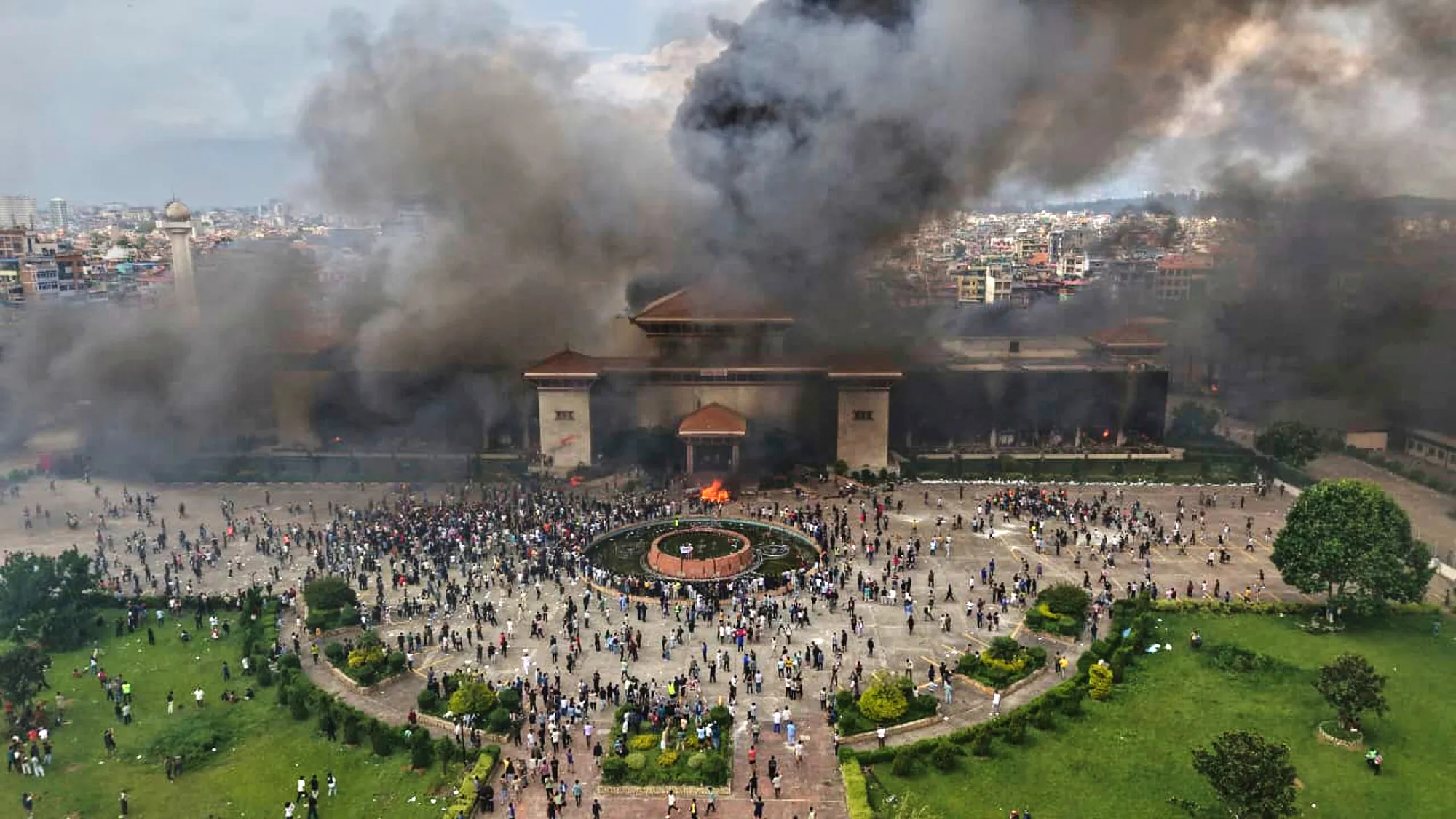
The level and intensity of protests in Nepal have prompted speculation that the protests are a chance for monarchists or Hindu state advocates. There seems to be, however, a misplaced concern. The monarchist parties gained only barely 5 per cent of the vote in the last election. The present movement is in no way concerned with monarchy versus republic or secular versus Hindu state. It is essentially a reaction against corruption, collusion and inefficient leadership.
Nepal’s Constitution of 2015, forged amidst a flurry of insurgency and ethnic mobilisation, entrenched republicanism, federalism and secularism as the pillars of its fragile democracy. Political leaders who promised stability, jobs and development have delivered infighting, stalled reforms and rampant corruption. The fall of the government illustrates a simple truth: political power survives only when it has credibility.
So what Nepal is witnessing is neither a call for a royal comeback nor a dalliance with fundamentalism. Nor is it against abstract ideology. It is against hard realities: unemployment, inequality and political impunity. It is the cry of a generation that demands honesty, accountability and fairness from the government without any condition. The mobilisation is a reminder that democracy has to produce results and not just slogans.
Why the rebellion in Nepal is different lies in its demography. It is a rebellion of the youth who are computer-literate, globally aware and hungry for action. Social networking has been both the trigger and the tool of mobilisation. The subcontinental region has a history of protests spearheaded by youth. Bangladeshi students rebelled on a mass scale through the Internet; Sri Lankan youth livestreamed their protests to the world. The present generation judges leaders’ commitments instantaneously against ground reality. They see ministers’ children on vacation in Europe while their own generation cleans toilets in Qatar. The hypocrisy gets exposed in the live feed.
This episode in Nepal echoes throughout South Asia. In Sri Lanka, the Rajapaksa clan held on to power until mass protests against economic failure forced them out. In Bangladesh, Sheikh Hasina’s administration was toppled amidst claims of election tampering and mass anger. In all three, the leaders overrated their grip, underestimated the ire of citizens and disregarded discontent. Nepal’s tumult is therefore part of a regional malaise that is striking democracies, rather than a one-time convulsion.
South Asian leaders who ignore this reality are doing so at their own peril. In fact, Nepal’s insurrection is a call to action for the entire region. Democracies on speeches alone are unsustainable. Governments that treat power as a private fiefdom and that breed corruption and nepotism are likely to be challenged by citizens who are young. Better educated, better connected and less willing to look away from hypocrisy than their elders, young people these days insist that democracy deliver on dignity, justice and opportunity—not just for the high and mighty who are in office but for every citizen.
For India, the tumult in Nepal has immediate implications. The two countries share an open border, cultural similarities and deep economic interdependence. Security voids in Kathmandu are likely to stoke migration pressure. Indian policy must therefore remain unchanged: support democratic aspirations, encourage inclusive governance and forsake any appearance of interference. A stable and democratic Nepal is a boon for Nepalis and a necessity for Indian security and prosperity.
(The author is a former Indian ambassador to Hungary, Vietnam and Nepal)
