

Shubhranshu Choudhary
After decades of insurgency, displacement, and deep-rooted mistrust, there is a growing sense that Chhattisgarh’s Maoist chapter is nearing its end. The killing of Maoist chief Nambala Kesava Rao last month, followed closely by the retreat of his deputy, Venugopal, from Bastar, marks not only a significant strategic win for the government but also a potential turning point for the region’s embattled tribal communities–particularly those living in the dense forests of Bastar.
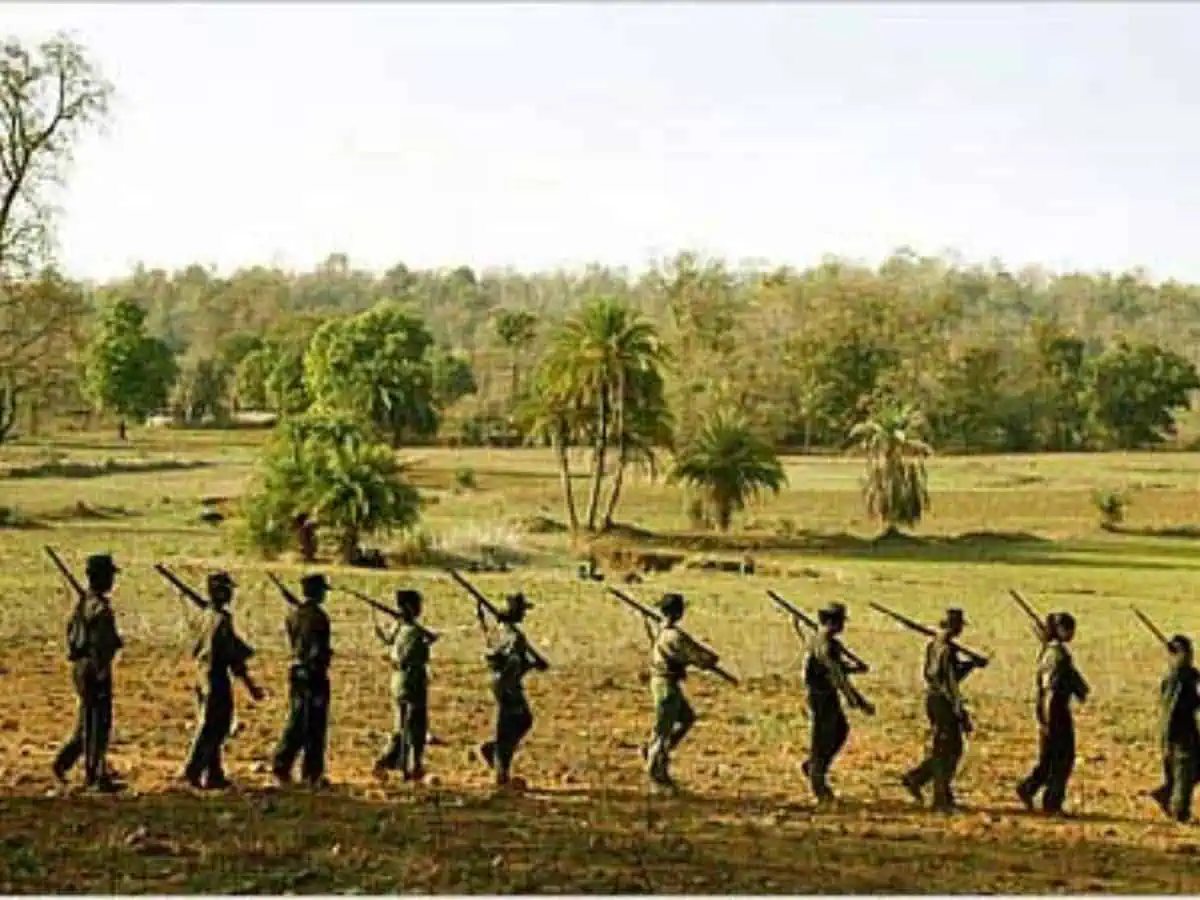
The Maoist movement, once a formidable insurgency entrenched in the dense jungles of Dandakaranya — with Bastar as its epicentre — is now in visible decline. Reports from remote villages across Bastar, long considered the core of Maoist activity, indicate that senior leaders such as Venugopal, the group’s second-in-command, have fled, underscoring the erosion of their operational control.
But is this truly the end? And if so, what next? Three crucial, unresolved questions loom over Bastar:
- How to facilitate the collective surrender of the remaining predominantly Adivasi Maoist fighters?
- How to ensure justice for victims of over half a century of conflict?
- What should a sensitive, meaningful roadmap for development look like for these long-isolated communities?
Unlike West Bengal, Andhra Pradesh (now Telangana), or Bihar—where revolutionary literature and popular movements had deep foundations—Bastar’s brush with the Maoist ideology is unique. Maoist leaders never considered Bastar a fertile ground for true revolution. Instead, following the collapse of their movement in West Bengal by the late 1970s, Maoist strategists identified Dandakaranya as a safe haven to bide their time. The plan was never to launch a revolution in Bastar; it was to lie low till conditions elsewhere improved.
Yet, in this liminal space, the state’s missteps transformed the region into a Maoist stronghold. In the 1990s, under BJP chief minister Sundarlal Patwa, the government in undivided Madhya Pradesh, acknowledging its lack of grassroots presence in Bastar, collaborated with local Congress and CPI leaders for a “Jan Jagran Abhiyan”—an awareness campaign that quickly degenerated into a state-sanctioned witch hunt. The police, acting on political cues, began harassing tribals suspected of Maoist sympathies. Ironically, the tribal communities, who had benefited from the Maoists’ low-key resistance against forest officials and local exploitation in the prior decade, were now pushed fully into the rebels’ embrace.
This was, in effect, the genesis of Maoism in Bastar—not as a purely indigenous uprising, but as an unintended outcome of misguided and heavy-handed state intervention.
The second wave of intervention proved even more destructive. In 2005, five years after Chhattisgarh had been formed, Salwa Judum—framed as a grassroots uprising against Maoist influence but widely criticised for its excesses—further militarized and polarized Bastar. Backed by the state, this vigilante-style campaign led to widespread violence, forced displacement, and deepening mistrust within tribal communities. Far from weakening the insurgency, it fractured the local society and inadvertently bolstered Maoist legitimacy as state brutality made their resistance appear more justified in the eyes of many villagers.
But in their third, more strategic campaign against Maoist insurgency, personified by Union Home Minister Amit Shah’s stated objective of ending the left-wing insurgency, the BJP has succeeded, largely due to shifting sentiments among Bastar’s native Adivasi leaders. Over time, tribal elders realized that, while Maoists may have spoken their language and lived among them, their struggle had ceased to bring any true
long-term benefit to the society. Tired of endless conflict and mounting casualties, the region’s leaders became open advocates for peace, eroding the Maoists’ popular base.
Indeed, in the war for legitimacy—like all revolutions, ultimately a social drama—it is the people who decide. As safety and hope began to return, so too did a growing scepticism toward the ‘revolutionaries’ who had long promised change but failed to deliver it.
Today, it is the tribals who have borne the brunt of the conflict, left as casualties by both the state and the Maoists. The police, the rebels, and those accused of being informants for either side have all been predominantly Adivasi. Now, as the guns fall silent and the Maoist leadership retreats into obscurity, the future of Bastar hinges on how the state navigates the twin imperatives of justice and development.
A possible blueprint lies in the past. In 1980, acting on the advice of state planners, Prime Minister Indira Gandhi ordered the drafting of a Bastar Development Plan that emphasized just two priorities: ensuring fair prices for forest produce and supporting tribals in cultivating a second crop. The rationale was clear—unlike in land-scarce West Bengal or Bihar, the
well-being of Bastar’s tribals is rooted in sustainable livelihoods, not political manoeuvring or land disputes.
Yet, this plan was sidelined—first by Indira Gandhi’s assassination, and later by successive Congress and BJP governments. Now, as peace tentatively returns, the question is whether today’s policymakers will honour Indira’s vision. Or, will they defer instead to “MOU-ism”—where development is synonymous with opaque mining contracts, often riding roughshod over local opposition and risk inflicting fresh injustices on a population already exhausted by decades of conflict?
The defeat of Maoist militancy in Bastar is both a victory and a test. If justice takes a back seat to extractive deals and broken promises, memories of violence will fester. Disenfranchised youth, denied redress, may again fall prey to another wave of insurrection.
But if this moment is seized—with respect for local livelihoods, cultural autonomy, and genuine justice for victims—then this remote heart of India has a chance to emerge as a model for post-conflict reconciliation and indigenous-led development.
The writing on the trees in Bastar is clear: True endings are best measured not by victory, but by the depth of our healing.