

Close Menu
New Delhi PostNew Delhi Post
    What's Hot

    Dawood in Cricket: Lalit Modi’s Claims Revive Questions Raised by ‘New Delhi Post’ Months Ago

    USA Immigration Policy: How Trump Has Turned Border Politics into State Power

    Police Reform at 20: What Has Changed, and What Has Not

    Facebook X (Twitter) Instagram YouTube
    Facebook X (Twitter) Instagram YouTube
    New Delhi PostNew Delhi Post
    Subscribe Saturday, June 6
    • HOME
    • EXCLUSIVE
    • STATECRAFT
      • CENTRE
      • EAST
      • WEST
      • NORTH
      • SOUTH
      • NORTHEAST
    • WORLDVIEW
    • PERSPECTIVE
    • CONVERSATION
    • LIFE & STYLE
      • BOOK
      • FOODIE
      • ART & CULTURE
      • GLAMOUR
      • HEALTH
      • RELATIONSHIP
      • TREND
      • TRAVEL
    • MISC.
      • BEYOND FILTERS
      • DIASPORA
      • EARTH
      • ECONOMY
      • EXPLAINED
      • FUTURE
      • NEWSMAKER
      • OFFBEAT
      • PLAYING TO THE GALLERY
      • SPORTS
      • SCIENCE & TECH
    • Magazine
    New Delhi PostNew Delhi Post
    Home»Exclusive

    India’s ‘Brahmastra’: A Thermonuclear Edge 1000 Times Deadlier Than Atomic Bombs

    AuthorBy Author
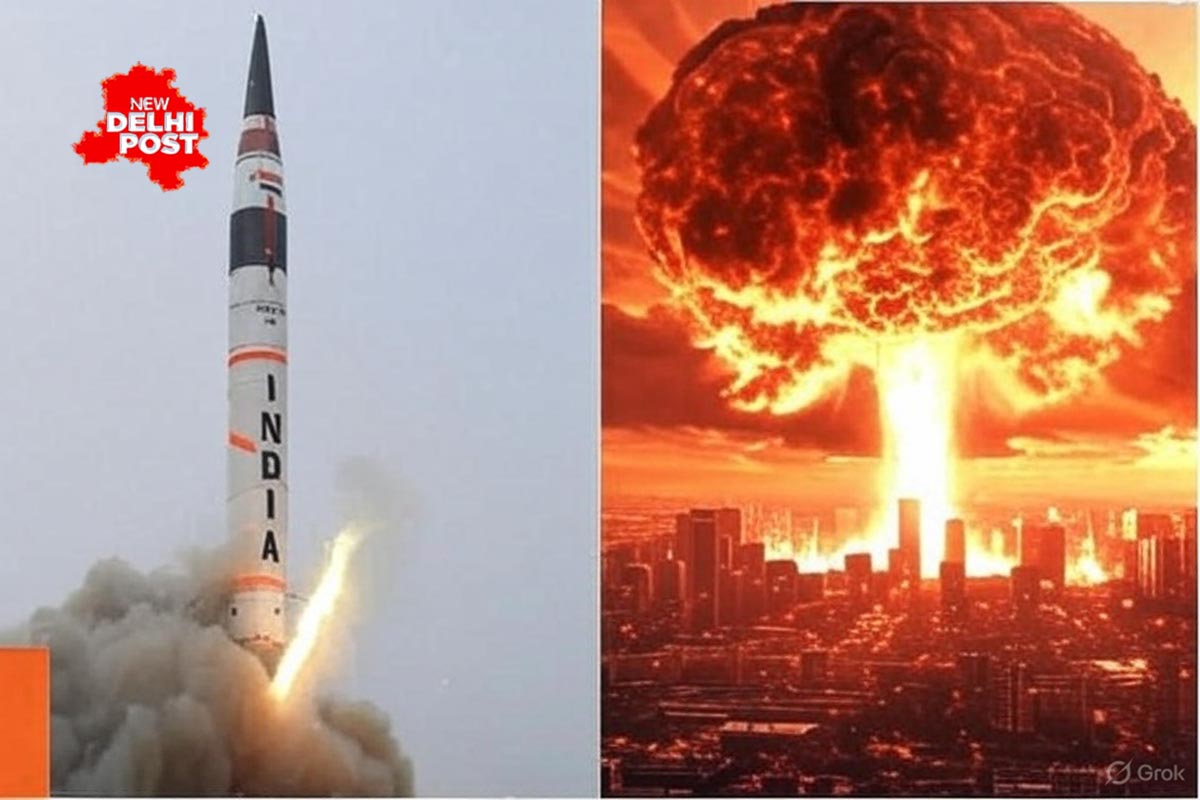
    The hydrogen bomb’s two-stage process involves initial nuclear fission of plutonium or uranium
    Share
    Facebook Twitter LinkedIn Pinterest Email WhatsApp

    India’s advanced hydrogen bombs outmatch Pakistan’s arsenal, raising stakes after recent military tensions and the Pahalgam terror attack.

    New Delhi – On June 9, 2025, the specter of a nuclear conflict looms large between India and Pakistan following the April 22 Pahalgam terror attack and India’s retaliatory Operation Sindoor. While Pakistan brandished its nuclear bluff, asserting it would use such weapons if its existence were threatened, reports highlight India’s superior thermonuclear arsenal, potentially 1000 times more destructive than Pakistan’s atomic bombs, reshaping the regional power balance.

    Thermonuclear Superiority
    India and Pakistan possess roughly similar nuclear stockpiles—180 and 170 warheads, respectively—but India’s arsenal includes thermonuclear or hydrogen bombs, far surpassing Pakistan’s conventional atomic weapons. The hydrogen bomb’s two-stage process involves initial nuclear fission of plutonium or uranium, followed by a fusion reaction triggered by hydrogen gas, releasing exponentially greater energy. This makes India’s weapons, tested in 1998, a formidable deterrent compared to Pakistan’s reportedly less advanced stockpile.

    Science Behind the Destruction
    Unlike atomic bombs, which devastated Hiroshima and Nagasaki in 1945 with fission-based blasts of 15 and 21 kilotons, hydrogen bombs like the U.S.’s Castle Bravo (15 megatons) or Russia’s Tsar Bomba (50 megatons) amplify destruction over 1000-fold. Professor Alex Wellerstein of the Stevens Institute of Technology notes that building hydrogen bombs requires complex fusion technology, a feat achieved by only six nations—India, the U.S., UK, Russia, China, and France—limiting their global proliferation.

    Strategic Implications
    The recent military standoff, sparked by the Pahalgam attack, saw India’s precision strikes test Pakistan’s resolve, with Islamabad’s nuclear threats met by India’s advanced capabilities. While Pakistan’s arsenal relies on simpler fission-based designs, India’s thermonuclear edge, including its “Brahmastra” moniker, could theoretically obliterate Pakistan in moments. Analysts warn this disparity may deter aggression but heightens the risk of escalation if miscalculated.

    Global Context and Limitations
    The U.S. spent $39 billion (2023 estimate) developing its first hydrogen bomb in 1952, a milestone India replicated in 1998. The exclusivity of thermonuclear technology underscores its strategic value, with nations guarding such secrets tightly. Pakistan’s lack of confirmed thermonuclear weapons remains speculative, fueling debates over its true nuclear strength amid heightened tensions.

    Hydrogen Bomb India Nuclear Weapons Pahalgam Attack Pakistan Conflict
    Author
    Author

    Keep Reading

    MPLADS Reform Freeze: How Modi govt resisted attempts to fix flaws

    AI Jobquake: India’s employment model faces biggest tech disruption

    Behind Peace Spectacle: Mumbai Event Under Intel Scanner

    India’s Uncounted Exodus: Climate Migration Haunts the Sundarbans

    Opaque Oversight, Idle Funds — MPLADS in Disarray

    Is This Mamata Banerjee’s Last Hurrah? Bengal at a Crossroads

    Add A Comment
    Leave A Reply Cancel Reply

    Subscribe to News

    Get the latest sports news from NewsSite about world, sports and politics.

    Advertisement
    Demo
    Facebook X (Twitter) Instagram YouTube
    • About Us
    • Exclusive
    • statecraft
    • worldview
    • perspective
    • conversation
    • Life & Style
    • Misc.
    • Magazine
    • Get In Touch
    • About Us
    • Exclusive
    • statecraft
    • worldview
    • perspective
    • conversation
    • Life & Style
    • Misc.
    • Magazine
    • Get In Touch
    © 2026 New Delhi Post. Designed by Rynow Infotech . All rights reserved.
    • Privacy Policy
    • Terms & Conditions

    Type above and press Enter to search. Press Esc to cancel.