

The new drug pipeline
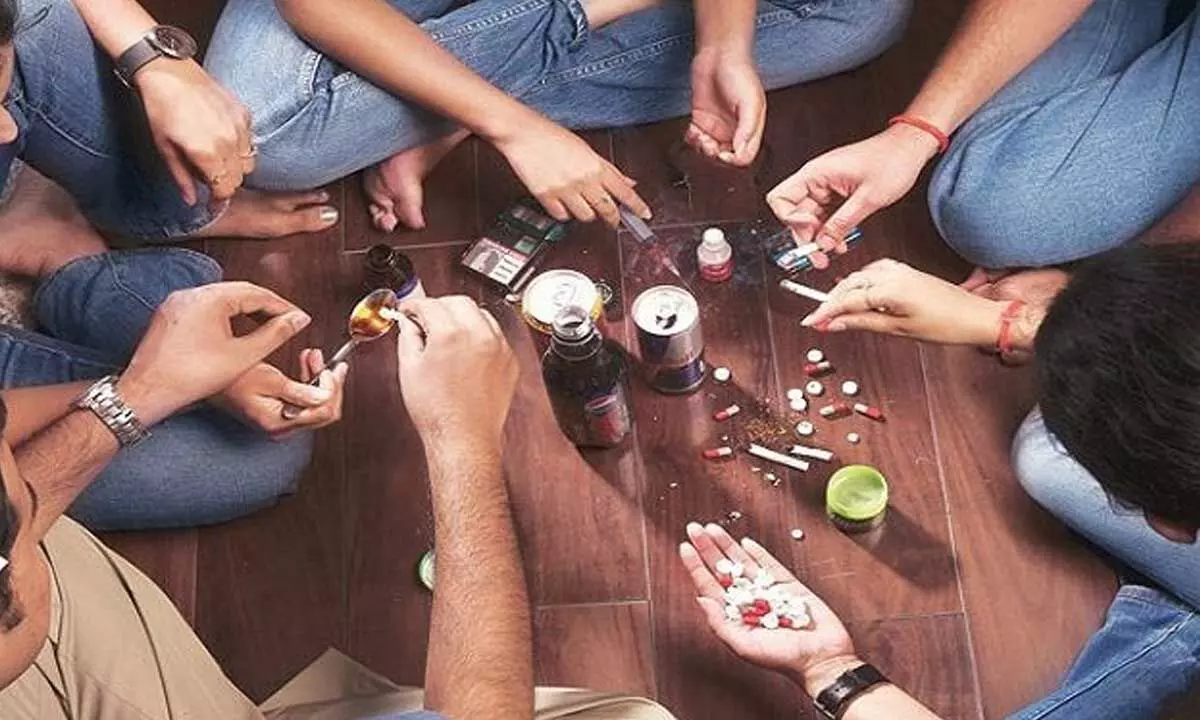
India is facing an emerging dimension of its narcotics problem, with pharmaceutical medicines increasingly finding a market among minors and young adults. An independent investigation, alongside warnings issued by the United Nations Office on Drugs and Crime (UNODC) and Interpol, points to a worrying shift in patterns of drug consumption. Prescription medicines, some of them readily available through pharmacies, are reportedly being misused for recreational highs, often at a fraction of the cost of conventional narcotics.
The findings assume significance against the backdrop of the Centre’s intensified campaign against drug trafficking. Union Home Minister Amit Shah recently met state police chiefs and other law enforcement officials to review the country’s anti-narcotics efforts. However, the emerging pharmaceutical drug abuse trend presents a different challenge for enforcement agencies: unlike conventional narcotics, many of the substances involved are legitimate medicines, making their identification and regulation considerably more complicated.
The investigation, based on information relating to narcotics seizures, arrests, consumption cases and health data available on government websites, found indications of growing pharmaceutical drug misuse among young people. It also examined the reported relationship between drug abuse and risky sexual behaviour, including chemsex, as well as concerns about the spread of HIV/AIDS.
“The real challenge is not MD but more easily accessible over-the-counter pharmaceutical medications which, mixed in the right proportions and combinations, produce the same psychotropic high as other NDPS drugs at a fraction of the cost. Police checking cannot differentiate the tablets or capsules from regular antacid tablets or paracetamol,” a senior Narcotics Control Bureau (NCB) official admitted.
The investigation also found that restricted pharmaceutical medicines could be purchased without prescriptions from reputed chemist chains. Investigators were able to purchase several such medicines without producing a prescription, raising questions about the enforcement of existing controls on the sale of scheduled drugs.
A senior counsellor associated with an international school chain confirmed that students from leading international schools were purchasing these medicines. According to the counsellor, their consumption was also contributing to risky sexual behaviour described as chemsex.
“Kids from top international schools are purchasing them, which is leading to risky sexual behaviour termed as chemsex,” the counsellor said.
One of the pharmaceutical substances reportedly gaining popularity among Gen Z users is a central nervous system relaxant. According to the information gathered during the investigation, two capsules are opened, and their powder is mixed with the energy drink Sting to produce an immediate high. The effects reportedly include impaired motor reflexes, delusional symptoms, heightened feelings of energy and an unusual emotional connection with strangers. This pattern of consumption has also been associated with the emerging chemsex culture.
The misuse of pregabalin has also emerged as a significant concern. Intelligence inputs have flagged its use, including during the Cockroach Janata Party (CJP) student protests across India. The investigation found that pregabalin is being used in combination with other pharmaceutical substances to produce intoxication and euphoria. “Pregabalin in combination with another drug, tapentadol, is a lethal combination to get high intoxication and a feeling of euphoria,” the counsellor explained.
Another medicine reportedly gaining popularity in Gen Z circles is immediate-release oxycodone, which is being consumed mixed with Diet Coke. Cyclorphine, a newer opioid, is also emerging as a substance of concern around educational hubs, campuses and hostels. Intelligence agencies have reportedly placed its emergence under close watch.
The problem extends beyond individual consumption patterns to the changing geography of drug trafficking. Sustained action by Mumbai Police against methamphetamine trafficking and peddling has reportedly led several networks to shift their base to Gujarat and Goa. Intelligence inputs also indicate that some traffickers have reportedly partnered with banned terrorist outfits in Mizoram to obtain supplies from Myanmar.
The changing pattern has raised concerns in Maharashtra, where a senior police official acknowledged that the state government was seriously concerned about pharmaceutical drug abuse. The state is setting up a new Anti-Narcotics Front to curb the supply and sale of narcotics.
“Drug trafficking has destroyed Punjab. Now the menace is spreading fast in Maharashtra,” the counsellor observed.
The UNODC Warning
The concerns emerging from the investigation are accompanied by an earlier UNODC study that identified amphetamine-type stimulants (ATS) as an emerging drug-use trend in India.
Popularly known as ice, meth, speed, ecstasy and W, these drugs are psychostimulants available in pill and powder form. They are generally swallowed, snorted or smoked and, in some cases, injected. Their growing appeal among young people is linked to perceptions that they are fashionable and provide an energetic high.
The UNODC noted that ATS drugs can be manufactured in clandestine laboratories using readily available and inexpensive chemicals. Across South Asia, there is mounting evidence that the region is increasingly being used for illicit ATS manufacture and consumption. In India, seizures of these stimulants are particularly prominent in the north-eastern states bordering Myanmar.
To understand consumption patterns and the associated health consequences, UNODC conducted an exploratory study across five Indian states: Manipur, Mizoram, Punjab, Tamil Nadu and West Bengal.
The study found that methamphetamine pills and powder were the most commonly used forms of ATS. Most users were in their early twenties. Participants described experiencing euphoria and happiness after consumption, making the drugs attractive and difficult to resist. Several users said the substances made them feel more confident and energetic, unlike heroin, which is associated with a different pattern of effects.
The study also found disturbing levels of dependence and adverse mental health consequences. Nearly half the participants were found to be dependent users, while a quarter reported mental health problems following ATS consumption. These included paranoia, hallucinations, depression and panic attacks.
The study further established an association between ATS use and crime. Eighteen per cent of participants said they had been apprehended by the police after using the drugs.
An ATS user from Kolkata, West Bengal, described the appeal of these substances in a statement quoted by UNODC: “(I use) ecstasy and amphetamine speed pills mostly. I love the pink pill engraved ‘Y’ the most. We have a combination of alcohol and the pills when we are at the floors. I really enjoy it. I never get tired after starting on using speed.”
Despite the emerging pattern, UNODC highlighted a serious information deficit. There is no comprehensive data on ATS consumption in India, leaving policymakers with a weak evidence base for framing interventions. Data on the treatment of ATS users is also scarce.
The initial findings of the study were presented by UNODC in Chandigarh in collaboration with the Punjab government. Senior government officials, representatives from the health and development sectors and civil society organisations participated in the discussions. Participants acknowledged that ATS use was an emerging trend and stressed the need for awareness programmes targeting students in schools and colleges.
The drug-using community also called for greater involvement in policymaking and improved access to treatment. UNODC emphasised the need for comprehensive psychosocial and behavioural interventions, pointing out that treatment professionals and de-addiction service providers in South Asia had limited knowledge and experience in managing ATS use disorders.
Following the study, UNODC planned to establish two regional centres to develop comprehensive treatment models and standard operating procedures for healthcare providers. One was proposed in Chennai, in collaboration with Psymed Hospital, and the other in Mizoram, in collaboration with Presbyterian Hospital, Durtlang.
Interpol Flags a New Designer Drug
Adding another dimension to the emerging threat, Interpol has issued an alert on ethylbromazolam, a novel designer benzodiazepine detected in illicit drug supplies across multiple regions.
According to the alert, the drug’s potency, toxicity and overall effects are expected to be broadly comparable to those of other benzodiazepines. However, its detection in counterfeit pharmaceutical products has raised particular concern.
The substance may be marketed or trafficked as legitimate medicines such as diazepam or alprazolam. This creates the possibility that consumers could unknowingly ingest a potent novel benzodiazepine while believing they are taking a legitimate pharmaceutical product.
Interpol has called for heightened vigilance and appropriate monitoring in view of the risks associated with the emergence of this substance in illicit drug supplies.
Govt Tightens Pharma Controls
The Union government has also taken note of the growing misuse of pharmaceutical medicines, particularly among young people. It has asked pharmacies, doctors and hospitals to crack down on the casual use of painkillers and antibiotics.
The government has cited the risk of kidney-related complications arising from indiscriminate consumption of non-steroidal anti-inflammatory drugs (NSAIDs), besides the growing threat of antimicrobial resistance caused by inappropriate antibiotic use.
In a circular dated September 21, the Central Drugs Standard Control Organisation (CDSCO) directed pharmacists, retailers and distributors to strictly comply with prescription requirements for Schedule H and H1 medicines.
The move comes amid growing concerns that medicines intended for legitimate medical treatment are being diverted for recreational consumption. The Centre’s broader anti-narcotics campaign, reinforced by Amit Shah’s recent meeting with state police chiefs and other enforcement agencies, is expected to place greater emphasis on disrupting drug supply networks and strengthening enforcement.
However, the emerging pattern of pharmaceutical drug abuse presents a challenge that goes beyond conventional narcotics enforcement. The availability of prescription medicines through ordinary retail channels, their reported misuse in combinations and the growing interest among young consumers have brought pharmacies and prescription compliance into sharper focus.
With UNODC identifying amphetamine-type stimulants as an emerging trend, Interpol warning about new designer benzodiazepines and the independent investigation exposing the reported non-prescription availability and misuse of restricted medicines, the country’s narcotics challenge is acquiring a new dimension. The concern is no longer limited to conventional drug trafficking networks; it increasingly extends to the pharmaceutical supply chain, educational institutions, campuses and the easy availability of medicines that can be misused for intoxication.