

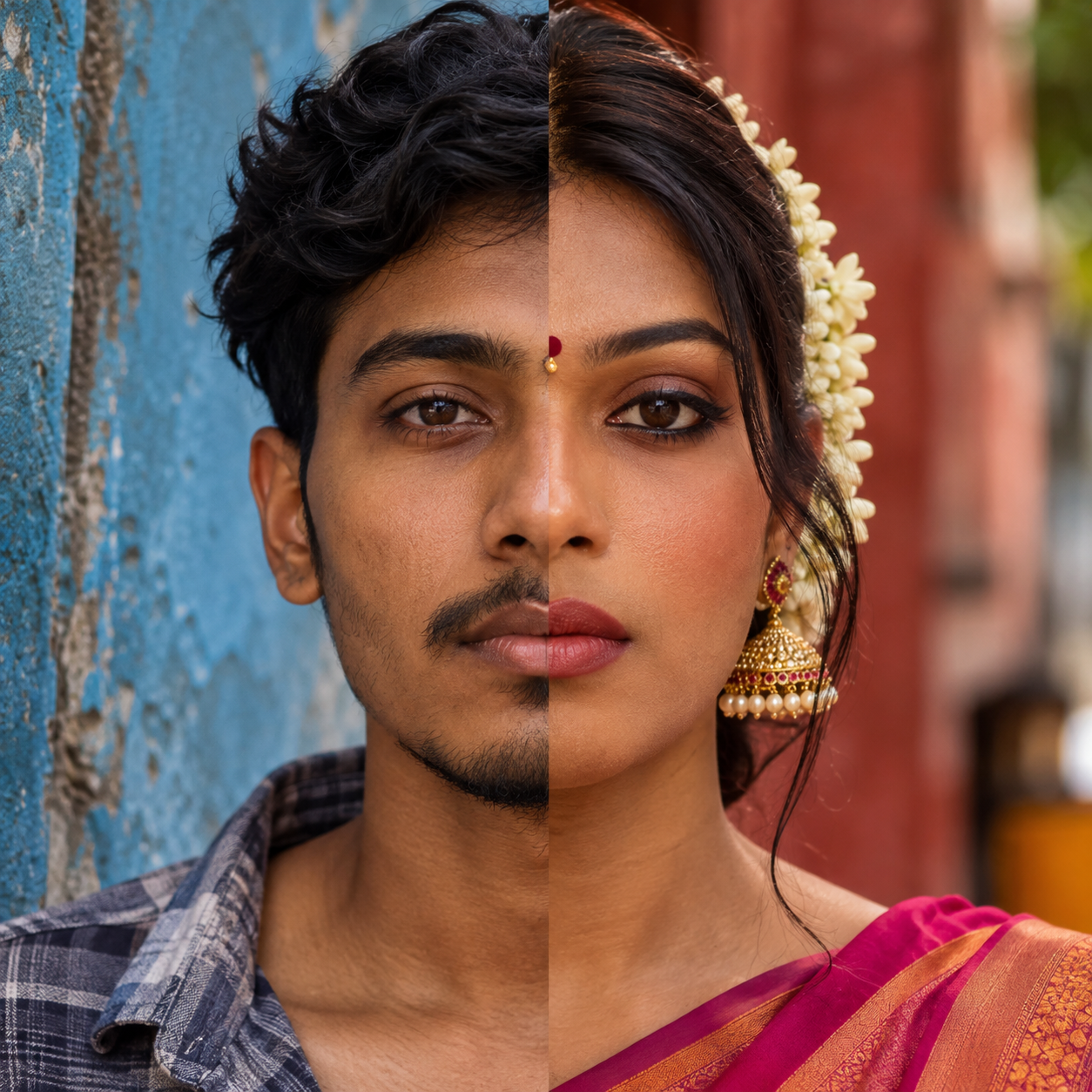
Is gender transition becoming more common in India? There is no national figure that can answer that question with a simple percentage. There is no readily available national dataset showing how many people undergo gender-affirming surgery each year.
There are, however, revealing figures from hospitals providing such care. At a gender identity clinic at Fortis Hospital in New Delhi, the number of new patients rose from six in 1993 to around 150 in 2019, a 20-fold rise, according to researchers. Over the same period, more than 3,000 gender-affirming surgeries were performed. In 2019, the clinic recorded 242 procedures, including breast reduction, hysterosalpingo-oophorectomy, phalloplasty, penile and scrotal procedures, breast augmentation and feminising genitoplasty.
These figures are from one specialist clinic, not India as a whole, but they show a substantial long-term increase in patients seeking care there. Doctors currently providing such care report a similar experience.
>> Living Through Transition
Dr Tapeshwar Sehgal, a cosmetic and plastic surgeon at Aura Clinic, says he has seen a steady increase in patients seeking gender reassignment surgery over the past decade. “We have seen a significant increase in the number of patients undergoing gender reassignment surgery over the past five to seven years. The rise has been consistent for about 10 years. We are now doing roughly twice the number of surgeries we were doing five to seven years ago.”
Sehgal’s figures are from his own practice, but they offer a recent clinical perspective. The increase could reflect greater willingness to transition, greater awareness, easier access to specialist care, or a combination of all three.
Vinshi, a transgender woman, transitioned from male to female. Her medical transition began with hormone replacement therapy. “For the first time, I felt that I had taken a real step towards becoming the person I had always known myself to be. I felt that I had finally started moving forward and that I didn’t have to look back.”
Her family still does not fully accept her as a woman. Her strongest support, she says, has come from Panchi, a friend of around 15 years who stood by her throughout her transition. “She has been one of my biggest support systems. She has stood beside me throughout every stage of my journey, almost like a mother supporting her child,” she says, her eyes filling with tears.
When Vinshi began her transition, she was working for an RO company. She faced workplace discrimination because of her gender identity. Eventually, the discrimination became so severe that she had to leave her job. Without a job and living away from her family, Vinshi says she survived through traditional badhai work and, at one point, sex work.
Manveer Yadav, a senior programme officer at TWEET Foundation, transitioned from woman to man. He says he had been aware from childhood that he was different. “I had an awareness since childhood that I was different. However, I learned about gender transition after the NALSA judgment in 2014.”
He lacked proper guidance and was struggling financially, but says he was clear about his identity. “I felt that life comes only once, and I did not want to live unhappily in a body that did not feel right for me.”
His medical transition began at a private hospital. He took testosterone for around five years. But he could not initially afford surgery. Eventually, he underwent top surgery and uterus-removal surgery. Recovery was painful and physically draining, but he says he was happy to finally live the life he had wanted.
The social challenges were harder. After his family learned about his transition, he had to leave home and live on rent. Finding employment was difficult. His documents still carried his previous name, creating problems during job applications. He also faced discrimination in some blue-collar workplaces, which affected his mental wellbeing.
Manveer believes things are changing. People are willing to discuss gender transition, treatment options have increased, and information is more accessible. He also believes social media has helped people learn about their rights and available resources.
Anuprabha Das Mazumder, a trans woman and social worker, says she knew from early childhood that she was a girl. For her, transition was about bringing her physical appearance closer to the person she had always known herself to be.
The journey came with medical, social and legal difficulties. Finding doctors who understood her needs was not easy. Accessing appropriate hospital care was another challenge. She also had to approach the high court to get a passport reflecting her changed name and gender. Anuprabha believes more people are coming forward today because awareness and support have improved. But she says healthcare and social acceptance still have a long way to go.
>> More Patients ≠ More Surgery
A 2017 study from Sir Ganga Ram Hospital reported on 20 patients who underwent gender reassignment surgery over seven years. Fifteen were female-to-male and five male-to-female. Researchers said gender identity disorder was becoming increasingly common, with patients seeking surgical intervention. Family opposition and socioeconomic constraints could make access to treatment difficult.
Some patients were satisfied with hormone treatment alone. Seeking gender transition does not necessarily mean wanting surgery. Some choose hormone treatment, some chest surgery and others procedures involving reproductive or genital anatomy. Some may not want surgery at all.
Dr Tapeshwar Sehgal says the main reason patients approach him is a strong dislike of the gender assigned to them at birth. “The main reason is that they are not happy with the gender assigned to them. The dislike for the assigned gender can be so strong that they are willing to undergo multiple surgeries to attain the gender they desire,” he clarifies.
Most patients are between 21 and 30, he says. He also sees some between 18 and 21 and some over 40. His clinic receives enquiries from people below 18, but he says counselling is recommended before that age.
Dr Sehgal believes greater awareness has contributed to the rise. “One reason is awareness that the surgery can be done legally and safely. Social acceptance of transgender people and gender reassignment surgery has also increased,” he says.
The Government of India’s Directorate General of Health Services uses the terms gender affirmation surgery and gender incongruence in its 2024 Standard Operating Procedures for the medical treatment of transgender persons. The SOP lists facial, vocal, chest and genital procedures and recommends multidisciplinary care involving mental-health professionals, endocrinologists and surgeons.
Under the SOP, psychiatric assessment is required before hormone treatment, while additional certification is required before gender-affirming surgery. Endocrine assessment and multidisciplinary care are also recommended. The guidelines generally call for a year of hormone treatment and stability on endocrine treatment before surgery, unless hormones are medically contraindicated.
Fertility is another issue that needs to be discussed before irreversible treatment. The SOP recommends that people considering removal of reproductive organs be informed about fertility-preservation options, including cryopreservation of embryos and oocytes, depending on the individual.
For patients, the decision can therefore involve questions of cost, family support, fertility and long-term medical care. Access to specialist services remains uneven.
>> Government Hospital Data
A recent study from Government Rajaji Hospital and Madurai Medical College shows gender-affirming care in an Indian government hospital.
The study covered three years and five months, from June 2021 to December 2024. 842 transgender people attended the multidisciplinary clinic: 580 trans men and 262 trans women. The mean age was 21 for trans men and 22 for trans women.
The hospital performed 220 gender-affirming procedures. Of these, 143 were bilateral mastectomies 65 per cent, and 59 were breast augmentations 26 per cent. Nine patients underwent hysterectomy with bilateral salpingo-oophorectomy, five underwent penectomy and orchidectomy, and four underwent vaginoplasty.
The figures show why the term “sex change surgery” does not capture the range of procedures involved. Most procedures involved the chest rather than genital reconstruction.
The study found social differences among those attending the clinic. Eighty per cent of trans women were unemployed, compared with 35 per cent of trans men. Only 5 per cent of trans women were living with family, compared with 10 per cent of trans men.
The researchers assessed gender dysphoria and depression before and six months after hormone treatment and surgery, reporting significant improvements in both measures. That finding needs careful reading. It does not mean every patient will have the same outcome, nor that gender identity is a mental illness.
The World Health Organization’s ICD-11 places gender incongruence under conditions related to sexual health rather than mental and behavioural disorders. WHO says this reflects the understanding that trans-related and gender-diverse identities are not conditions of mental ill-health.
The Indian evidence suggests growing demand for gender-transition care, but it does not provide a national percentage.
At Fortis Delhi, new patient presentations rose from six in 1993 to nearly 150 in 2019. At Government Rajaji Hospital in Madurai, 842 people attended a specialist multidisciplinary clinic between June 2021 and December 2024, with 220 gender-affirming procedures performed. Sehgal says his practice is now performing roughly twice as many gender reassignment surgeries as it did five to seven years ago.
These figures come from individual centres and cannot establish how many people across India are seeking transition or undergoing gender-affirming procedures each year. The evidence also shows why patient presentations and surgery numbers are not the same. People may seek counselling or hormone treatment without undergoing surgery. Financial constraints, family opposition and access to specialist care can influence whether and how they proceed.
So, is gender transition becoming more common in India? The defensible answer is that more people appear to be reaching specialist services than in the past. But India does not yet have the national data needed to say by how much. Establishing the scale of the trend will require better and more systematic data.