


History is built on documents. But what happens when the documents vanish?
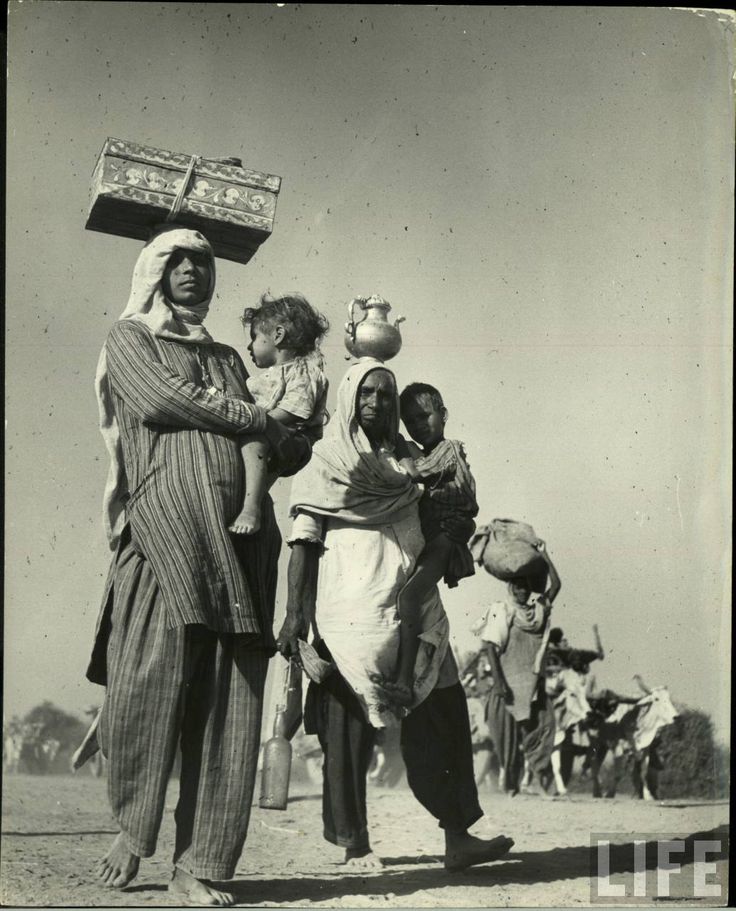
When we remember Partition, we think of borders, refugees and bloodshed. Yet another Partition unfolded quietly: the partition of memory. Documents were destroyed, forgotten, abandoned or left to decay, erasing invaluable evidence. The disappearance of these records remains one of the least explored dimensions of 1947 and continues to shape our understanding of that defining moment.
Few episodes illustrate this erasure better than Sir Cyril Radcliffe, who was given just five weeks to draw the borders dividing Punjab and Bengal in 1947. Before leaving India on August 15, 1947, he burnt his entire set of working papers. With them disappeared the reasoning, deliberations and uncertainties behind one of the twentieth Century’s most consequential decisions.
The destruction of records did not end there. Between the 1950s and the 1970s, Britain conducted the secret “Operation Legacy”, an official programme designed to eliminate sensitive colonial records. Around 25,000 files were transferred to the United Kingdom, while millions more were either burnt or dumped at sea. Countless records relating to the final years of the Raj disappeared forever.
Statistics on Partition tell only part of the tragedy. Official estimates suggest that around 12 million people were displaced, approximately one million were killed, and nearly 75,000 women were raped or abducted. Yet these figures represent only what entered the historical record. The true scale of loss—destroyed homes, broken families, missing relatives and erased identities—can never be fully measured.
The silence surrounding the Noakhali violence was not accidental. The Bengal Government commissioned retired judge Edward Skinner Simpson to investigate the killings and forced conversions. Yet the report was never handed over after consultations involving Huseyn Shaheed Suhrawardy, then the last prime minister of undivided Bengal, the Governor and senior officials. A potentially invaluable historical record disappeared into official secrecy.
The culture of official secrecy also survived Independence. India’s Official Secrets Act, 1923, a colonial-era law that remains in force, continues to restrict access to numerous government files. The result is a curious imbalance: official archives are often rich in administrative paperwork but remarkably poor in human experience.
One surviving document illustrates this gap with chilling precision. On September 15, 1947, the British High Commission in Delhi sent a telegram marked “Priority Immediate Secret” to the Commonwealth Relations Office in London under the heading “Communal Disturbance”. Reporting conditions in Punjab, one line stated: “In Rohtak district heavy killing was reported at one place.”
That was all. No village name. No estimate of the dead. No follow-up report. The telegram survives today in the National Archives of the United Kingdom, digitised and freely accessible. It remains an administrative record, not a human one. Whoever drafted it was managing a crisis, not preserving the stories of its victims.
To fill these gaps, independent initiatives such as the 1947 Partition Archive, Harvard Partition Stories and the BBC’s Partition Voices have preserved thousands of oral testimonies overlooked by official archives. Yet they cannot recover memories never recorded, families that left no descendants, or documents already lost.
Partition’s greatest missing archive, hence, lies not in sealed vaults but in what has been irretrievably lost: burnt files, missing reports, forgotten villages, abandoned homes and fading keepsakes. Every lost document narrows our understanding of the past, while every refugee’s preserved key reminds us that history also survives in the fragile objects carried by those who never gave up hope of returning home.
