


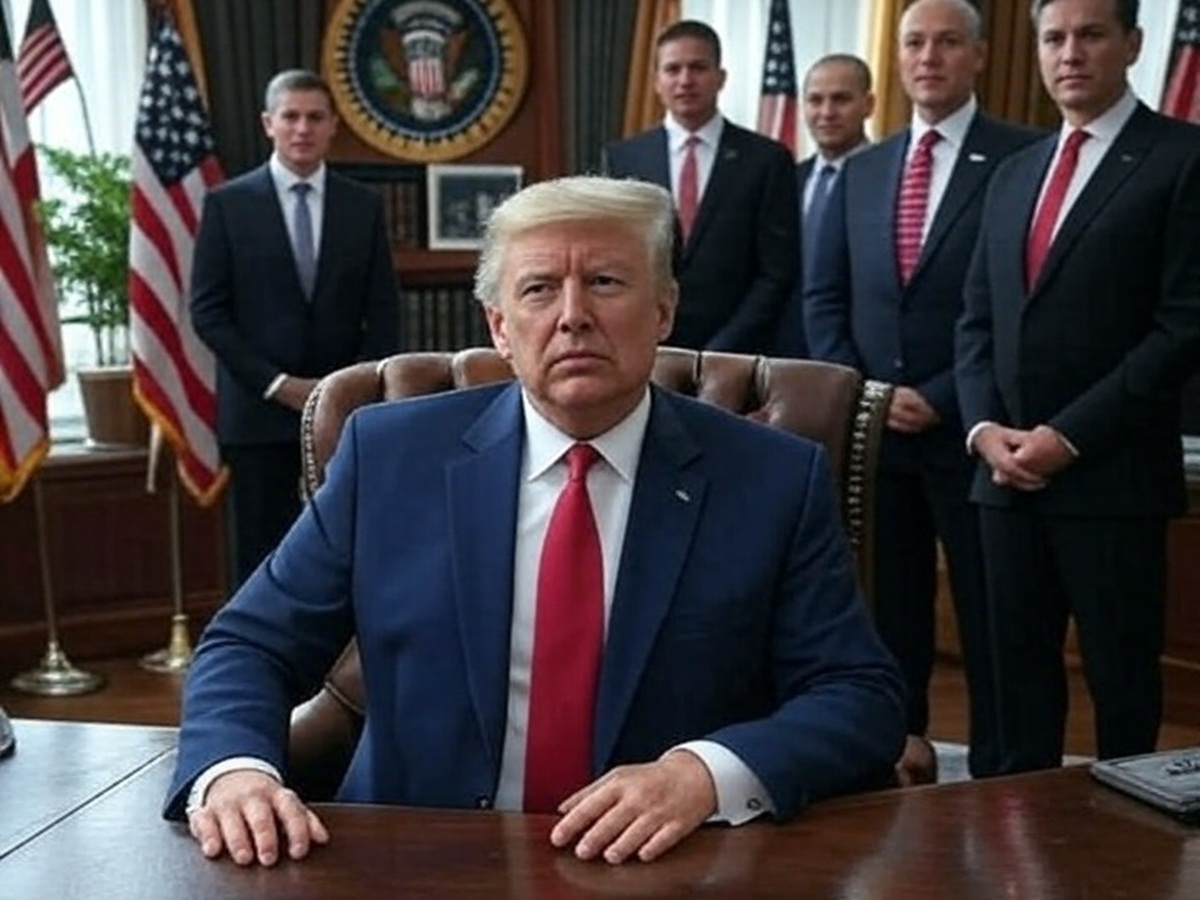
New Delhi: US President Donald Trump has intensified his push for domestic manufacturing, threatening a 25% import tariff on all smartphones not produced in the United States, targeting industry giants like Apple and Samsung. The policy, aimed at bringing manufacturing back to American soil, could significantly impact global supply chains and consumer prices.
Trump’s Ultimatum to Tech Giants
In a recent Oval Office statement, Trump emphasized fairness in his tariff policy, stating, “It would be Apple, Samsung, and anybody that makes that product. When they build their plant here, there is no tariff.” The president revealed he personally conveyed this expectation to Apple CEO Tim Cook, stressing that iPhones sold in the US must be manufactured domestically. A social media post on May 24, 2025, further underscored his stance: “I expect their iPhones sold in the United States of America will be manufactured and built in the United States, not India, or anyplace else.”
Apple’s India Expansion Under Fire
Trump’s remarks follow Apple’s significant manufacturing shift to India, where the company produced $22 billion worth of iPhones in the last financial year, a 60% increase from the previous year, according to Reuters. India has emerged as a critical hub as Apple diversifies its supply chain from China. However, Trump expressed frustration over this move during a recent meeting with Cook, stating, “I had an understanding with Tim that he wouldn’t be doing this.” He clarified that while Apple can produce in India, selling those products in the US without tariffs is off the table.
Economic Implications and Consumer Impact
The proposed tariffs could reshape the smartphone industry. A report by the Associated Press estimates that manufacturing iPhones in the US could inflate the price of a $1,200 iPhone to between $1,500 and $3,500 due to higher labor and infrastructure costs. Unlike industries like automotive or pharmaceuticals, the US lacks large-scale smartphone production facilities, making a swift transition challenging. Analysts warn that companies may pass these costs to consumers, potentially increasing retail prices by up to 30%, according to a 2024 study by the Consumer Technology Association.
Broader Manufacturing Push
Trump’s tariff threats extend beyond smartphones. His administration has targeted carmakers, drug manufacturers, and semiconductor producers to bolster US manufacturing. In a speech in Qatar last week, Trump reiterated his vision, stating, “Apple will be upping their production in the United States.” This aligns with his broader economic agenda, which includes a 10-20% tariff on all imports, as outlined in a 2025 policy brief by the US Chamber of Commerce. The smartphone industry, however, faces unique hurdles due to its reliance on global supply chains and specialized components.
Industry and Global Reactions
Apple’s Tim Cook has acknowledged the shifting landscape, noting that most iPhones sold in the US this quarter were made in India, with iPads produced in Vietnam. Samsung, a key player in the US market with a 30% share according to Statista, has yet to respond publicly but faces similar pressures. Industry experts, including tech analyst Sarah Nguyen, suggest that companies may explore hybrid models, combining US assembly with imported components, to mitigate costs. Meanwhile, India’s role as a manufacturing hub continues to grow, with its electronics exports rising 22% to $29 billion in 2024, per India’s Ministry of Commerce.
Challenges Ahead
Relocating smartphone production to the US is not without obstacles. A 2024 report by McKinsey highlights that building advanced manufacturing facilities could take 3-5 years and cost upwards of $10 billion. Additionally, the US faces a shortage of skilled labor for high-tech manufacturing, with only 12% of its workforce trained in such roles compared to 25% in China, according to the National Science Foundation. These factors could delay compliance with Trump’s demands, potentially leading to prolonged tariff disputes.
