






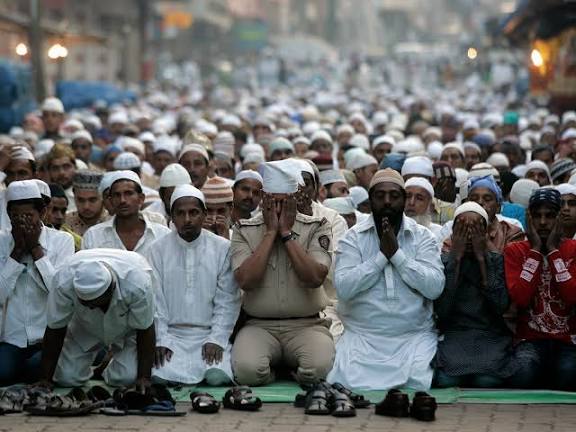
India’s Muslim community, comprising more than 200 million people, is not monolithic. Regional histories, linguistic identities, cultural syncretism, and differing encounters with major historical upheavals have shaped distinct trajectories, particularly between the Hindi-speaking heartland (North and parts of Central India) and the southern states. A recurring observation in sociological and historical discussions is that South Indian Muslims often experienced less direct trauma from the Revolt of 1857 and the Partition of 1947, leading to comparatively lower communal polarisation in everyday life than in the Hindi belt. While generalisations require caution, this regional variation offers insight into how history shapes social realities.
The Revolt of 1857: Uneven Participation and Impact
The Revolt of 1857, often called the First War of Independence, was concentrated in northern and central India—present-day Uttar Pradesh, Bihar, Madhya Pradesh, Delhi, and parts of Rajasthan and Haryana. It involved sepoys, disaffected rulers such as the last Mughal emperor, Bahadur Shah Zafar, and local populations reacting against British policies such as the Doctrine of Lapse, land-revenue systems, and cultural insensitivity, including the controversy over greased cartridges.
Muslim participation was prominent in these regions. Figures such as Maulana Ahmadullah Shah in Awadh, Begum Hazrat Mahal, and Feroze Shah became symbols of resistance. The British response was brutal: mass executions, destruction of Muslim elite institutions, and the deliberate marginalisation of the Urdu-Persian educated class in the Gangetic plains. This created a long shadow of defeat, economic decline, and suspicion towards Muslims as a ‘disloyal’ community in the Hindi heartland.
In contrast, southern India largely remained outside the main theatre of the 1857 revolt. The Madras Presidency and princely states such as Hyderabad, Mysore, and Travancore saw minimal organised uprising. South Indian Muslims, whether Tamil, Malayali, or Kannadiga communities with roots in Arab trading migrations, local conversions, or Deccani Sultanate legacies, were not centrally implicated. Their social structures, often tied to commerce (such as the Labbais, Rowthers, or Mappilas in the south), faced different colonial pressures, including later events such as the Mappila Rebellion of 1921 in Malabar. The direct British retribution that reshaped parts of the North Indian Muslim aristocracy largely bypassed them.
The Partition of 1947: Geography as Destiny
The Partition remains the deepest scar on Hindu-Muslim relations in the subcontinent. Millions died in riots, abductions, and migrations across Punjab, Bengal, and parts of Uttar Pradesh and Bihar. The creation of Pakistan as a Muslim homeland was debated intensely in the Hindi belt, where the Muslim League gained traction in the 1940s. Families were split, properties lost, and deep mutual suspicions entrenched. Even Muslims who chose to stay in India (often called “loyalists” in popular discourse) faced questions about their national belonging.
South India was geographically and demographically insulated. Migration to Pakistan was minimal; most South Indian Muslims had weaker cultural or kinship ties to the north-western Muslim-majority areas that became Pakistan. States such as Kerala, Tamil Nadu, Karnataka, and Andhra Pradesh saw far less violence during Partition. Hyderabad’s integration (via the 1948 Police Action) involved tensions, but it did not replicate the apocalyptic scale of Punjab. South Indian Muslims largely continued their lives without the massive refugee crises or retaliatory cycles that marked the North. This absence of direct “Partition trauma” contributed to a different collective memory, one less burdened by the narrative of betrayal or victimhood on either side.
Hindi Belt’s Enduring Divide vs Southern Syncretism
In Hindi-speaking regions, the cumulative weight of 1857, Partition, subsequent riots (e.g., from the 1960s to the 1980s in Uttar Pradesh and Bihar, the aftermath of the Babri Masjid demolition in 1992, and later episodes), and competitive electoral politics has sustained sharper Hindu-Muslim polarisation. Issues such as cow protection, ‘love jihad’ narratives, Urdu versus Hindi, personal law, and historical monuments remain flashpoints. Demographic anxieties, economic competition, and majoritarian politics amplify these divides. Muslim neighbourhoods in cities such as Meerut, Muzaffarnagar, or parts of Delhi often reflect both choice and exclusion.
South Indian Muslims, while facing discrimination and occasional tensions (e.g., in coastal Karnataka or parts of Tamil Nadu), generally report higher integration in language, cuisine, and social customs. Tamil Muslims, for instance, share strong linguistic and cultural bonds with Hindu and Christian Tamils. Kerala’s Mappilas have a history of reformist movements and leftist politics that cut across religion. Literacy rates, entrepreneurial traditions (particularly in trade and the jewellery and gems sectors), and lower fertility rates in some southern communities have also fostered different socio-economic outcomes. The Dravidian movement in Tamil Nadu emphasised non-Brahmin unity, diluting some religious binaries. Bollywood and North-centric media often amplify national communal narratives, while southern regional cinema and politics focus more on caste, language, or class.
Data from various surveys (such as those by the Pew Research Center and Lokniti-CSDS) consistently show lower communal-riot incidence and more fluid social interactions in southern states compared with the ‘cow belt’, though economic marginalisation of Muslims remains a nationwide concern, as documented by the Sachar Committee Report (2006) and subsequent studies.
Nuances and Contemporary Realities
This North-South distinction is not absolute. Radicalisation, social-media echo chambers, and national issues (including the protests against the Citizenship Amendment Act (CAA), hijab controversies, and temple-mosque disputes) increasingly blur the lines. South Indian Muslims have produced national leaders, entrepreneurs, and artists, while northern communities show vibrant resilience through education and cultural assertion. Urbanisation, inter-state migration, and a shared national identity under the Constitution are slowly creating convergence.
Yet the historical divergence remains instructive. The “pains of the Hindu-Muslim divide” were disproportionately borne by the Hindi heartland because that is where the fault lines of empire, nationalism, and Partition ran deepest. South Indian Muslims, spared the epicentres of those convulsions, developed along trajectories emphasising local rootedness over pan-Islamic or North-centric grievance narratives.
Understanding this heterogeneity is crucial. Painting all Indian Muslims with one brush ignores how geography and history shape identity. For a plural democracy like India, recognising these regional realities can inform more nuanced policies, focused on education, economic inclusion, and local governance, rather than uniform national rhetoric that often heightens anxiety in the most affected regions.
True national integration requires acknowledging varied historical burdens without essentialising any community. The story of Indian Muslims is ultimately many stories, woven differently across India’s social and geographical landscape.


