


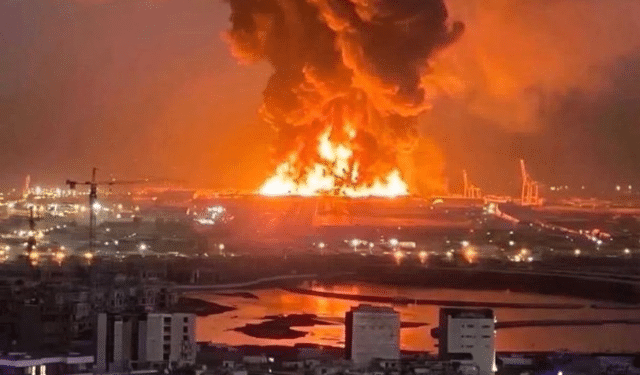
Without sufficient clarity over the linkages between strategies and outcomes of the current war in the Middle East, and driven by nebulous objectives, the US and Israel, through their joint military campaign, have, however, achieved several tactical gains vis-à-vis Iran through the use of their massive airpower, largely propelled by long-range missiles and bombers. They were able to assassinate the supreme leader of Iran, Ayatollah Ali Khamenei, at the very beginning of their operation on February 28.
Subsequently, they assassinated top leaders and commanders, ranging from those in security to the intelligence wings of the country. The combined military campaign of the US and Israel degraded Iran’s military and nuclear capabilities, which was again a tactical success rather than a strategic one. They attained these gains with significant collateral damage, as the civilian toll in Iran exceeded 1,900.
However, strategically, both these powers have failed so far, as their airstrikes could not deter Iran from launching its own drones and short-range missiles across the Middle East, targeting financial lifelines such as ports, banks, oil depots and hotels, apart from American military bases and diplomatic installations. It has also carried out deadly strikes on Israel and fired long-range missiles at the distant American military base in Diego Garcia in the Indian Ocean.
It has sent shockwaves throughout the Middle East by its sheer capability to destroy military and financial infrastructure and hold the global economy to ransom by effectively closing the Strait of Hormuz, the most significant global gateway for the passage of oil, natural gas and fertilisers. The US strategy failed to reckon with these consequences before entering the war.
The call for regime change turned out to be a hollow promise of the US, as the war did not distinguish between civilians and military targets, and airpower was used indiscriminately against Iran across the entire country. As circumstances moved from bad to worse, the lack of a clear strategy became increasingly perceptible, particularly when the US found it difficult to exit. The US plan for exit would have effectively signalled victory for Iran, as it survived with the existing regime.
Perceiving the war as rapidly turning into a quagmire for the US, President Donald Trump changed his stance. Within weeks, the conflict had drained military stockpiles, strained financial resources, and triggered instability in financial markets. This shift came immediately after his threat to bomb Iran’s power plants over its refusal to open the Strait of Hormuz.
The President unilaterally offered a grace period, extended until April 6, and called for bilateral negotiations with Iran, which Tehran rejected as unfounded. reports, the US took assistance from Pakistani intermediaries to open diplomatic channels and press for a ceasefire with Iran.
Meanwhile, such dovish gestures from President Trump quickly dissipated, and US and Israeli missile attacks on Iranian military and financial assets continued. Quite contrary to his decision to inch towards peace, the US moved more than 2,000 Marines from Japan to the Middle East. Ironically, Trump sought to dictate a ceasefire by threatening to destroy Iran’s electricity plants, oil wells and Kharg Island unless there was a peace deal.
In June last year, following American attacks on Iran’s nuclear facilities, Tehran retaliated with strikes on a US military base in Qatar but avoided causing a major regional conflagration by disclosing its plan of attack and agreeing to a ceasefire proposed by President Trump. The US had a clear strategy then to conduct surgical strikes with defined objectives: the destruction of Iran’s nuclear capabilities.
Moreover, last year, it was not a combined military campaign from the beginning that threatened Iran; the US joined the Israeli campaign midway through.
However, this time, the US and Israel embarked on a joint campaign from the outset and pushed for regime change by assassinating the supreme leader of Iran, Ali Khamenei, and encouraging protesters to take over the government. As Iran faced an existential threat, it resorted to a full spectrum of retaliatory measures necessary for survival.
Iran expanded the horizon of military operations as well as engaged several non-state actors, transforming the conflict into a war of attrition, unlike last year’s relatively mild retaliation. Iran conducted joint operations with Hezbollah in Lebanon and backed Shiite militias in Iraq to sabotage American presence and interests there. The depth and scale of these operations by all parties make a ceasefire increasingly unlikely.
The war in Lebanon has turned into another theatre, further complicating ceasefire prospects. While American strategic thinking and its approach to the war kept shifting, this came at a cost to its military inventories and financial exchequer. It also raised concerns over the global supply of natural resources. In contrast, Israel appeared far more willing to pursue the war, continuing its strikes on Iran and Hezbollah strongholds in Lebanon.
It seemed as though President Trump had little influence over Israel in restraining its actions. Observing the trajectory of the war, Israel has demonstrated unmitigated resolve and a greater willingness to bear human and material costs in response to the perceived imminence of the Iranian threat, compared to the US. Israel’s intransigent behaviour and its actions in Lebanon continue to erode the prospects of a ceasefire.
Meanwhile, the exit option has been further undermined by the assassination of high-level Iranian officials and commanders who possessed greater experience in negotiations and were relatively moderate compared to the younger generation of officials and military personnel. The latter view the war as an opportunity to prove themselves by exacting retaliation against the US and Israel.
For instance, the killing of Ali Larijani, former secretary of Iran’s Supreme National Security Council, has diminished the prospects of a ceasefire, with his replacement by a hard-line former IRGC commander marking a decisive shift towards a more uncompromising security posture. Similarly, Mojtaba Khamenei, son of Ali Khamenei, is more radical and has adopted a more confrontational stance towards the US due to his long association with the IRGC and the loss of his father and other family members in the war.
Iran will have less appetite for a negotiated end to the war unless it receives significantly greater incentives compared to past agreements. It is also aware that Israel did not fully honour ceasefires in Lebanon and Gaza, continuing intermittent strikes. Hence, Iran will demand far more credible security guarantees before entering into any ceasefire agreement.
Iran is also wary of the fact that it has been attacked this year, as in the previous year, while negotiations on nuclear issues were still ongoing. This is a factor that has likely eroded its confidence in diplomatic engagement.
The Trump administration, through Pakistani intermediaries, has reportedly sent a 15-point ceasefire proposal. A coalition of mediators, including Egypt, Pakistan and Turkey, has been assembled to influence Iran to agree to a ceasefire. It is believed that, as Islamic-majority states, they may collectively exert influence on Iran.
However, the ceasefire plan remains tethered to American and Israeli interests, demanding substantial concessions from Iran without offering meaningful reciprocation. For instance, the US has proposed zero nuclear enrichment by Iran, coupled with restrictions on its missile programme, and seeks an end to Iran’s support for regional proxy groups.
Tehran is unlikely to accept these proposals, given the existential threats it perceives from Israel and the unwavering support extended by the US. Iran is unlikely to surrender strategic assets that have proven vital to its survival in the ongoing war.
Any successful ceasefire must offer reciprocal incentives. Iran is likely to agree to major concessions only if the opposing side reciprocates proportionately. Similarly, Iran has demanded the closure of all US military bases in the Middle East and the withdrawal of troops from the region, along with post-war reparations, but these are demands unlikely to be acceptable to the US.
However, the US could offer substantial sanctions relief and allow Iran access to its frozen assets if negotiations proceed in good faith. Mediators, meanwhile, must leverage shared interests, particularly stabilising global energy prices and ensuring safe passage through the Strait of Hormuz.
They must focus on pragmatic possibilities rather than idealistic expectations. Deliberations should include mechanisms for clearing mines from the Strait and providing naval escorts for commercial vessels.
Here, China, which imports 90 per cent of its crude oil from Iran, and India, a significant buyer of Iranian resources and a partner in developing the Chabahar port, can utilise their economic and diplomatic leverage to advance these objectives.
(Dr Manoj Kumar Mishra is a senior lecturer in Political Science, SVM Autonomous College in Jagatsinghpur, Odisha)

