









In recent months, there has been a growing demand for conducting an NRC (National Register of Citizens) in Manipur. The demand comes amid allegations of an influx of a large number of illegal immigrants into the state from neighbouring countries, particularly Myanmar. These illegal immigrants are believed to have settled in several parts of Manipur, particularly in the tribal hill districts.
Manipur shares a 1,643-km-long border with Myanmar. The border touches the state’s districts of Ukhrul, Kamjong, Tengnoupal, Chandel, and Churachandpur. The communities living along the India-Myanmar border are broadly Chin-Kuki-Mizo ethnic communities and the different tribes of the Nagas.
A free movement regime without a passport or visa was agreed upon by the two neighbouring countries. It was formalised in 1968 between Myanmar and India. According to the agreement, citizens from both sides are allowed free movement up to 16 km into each other’s territory.
Now, with the state of Manipur in continued tension and the crisis being attributed to the cross-border influx, the free movement distance was reduced to just 10 km in December 2024. With the border fencing being taken up in full force, this is also likely to end soon.
Communities crisscross the border for social and economic activities. These are communities who are kin and relatives. Trade has been happening even before the recognition of the “international border” came into being. Earlier, it was a barter system that eventually evolved into a cash economy. There are small-scale trades by locals as well as trade on a larger scale in recent times.
In post-independence India and Burma (now Myanmar), there has been political disturbance and instability in neighbouring Myanmar. There are numerous occasions when Myanmar citizens flee into India. Among others, the 1962 coup, the youth uprising of 1988, and the recent 2021 coup have led to a massive number of refugees fleeing into the Indian state of Manipur and other Northeastern states such as Mizoram and Nagaland.
It may be recalled that there was never an issue with regard to border communities or Myanmarese coming into India. Back in the 1988 uprising, the Manipur (Indian) government set up camps for the refugees, both in Manipur and in Delhi. The refugees moved from the northeastern states to Delhi in order to get recognition from UNHCR and then moved to a third country for resettlement.
Meanwhile, these porous Indo-Myanmar borders are hideouts for the Northeast insurgent groups. They set up camps and carry out frequent violent activities.
In recent years, civil societies in Manipur, particularly the Meiteis, who predominantly inhabit the plain areas, have alleged that there is a large population of “illegal immigrants” who have crossed over the border into the state of Manipur. These populations are said to be settling down in the tribal districts, occupying lands illegally. Most of the accused and alleged migrants are of the Chin-Kuki-Mizo group of people, a cross-border ethnic community.
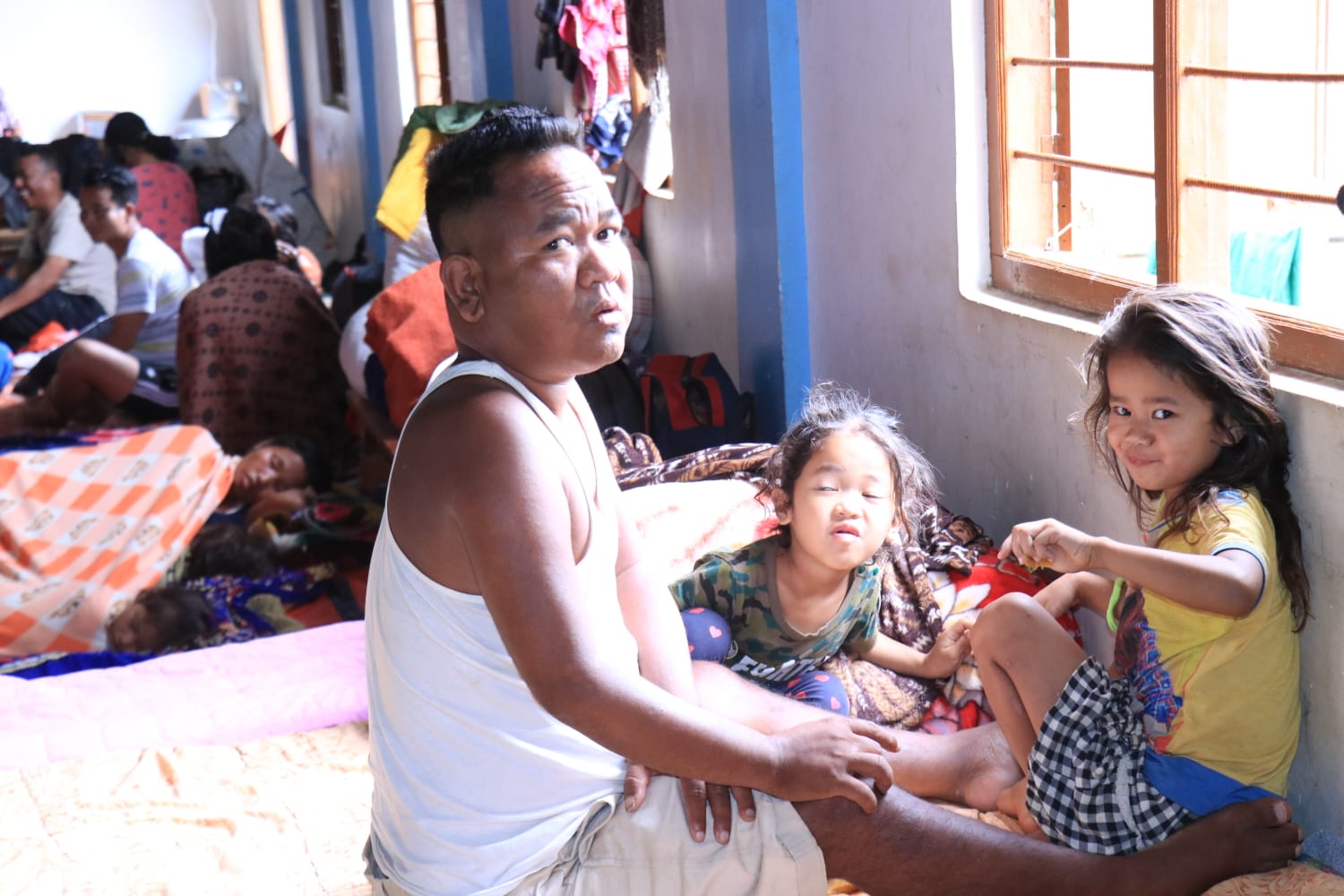
The 2023 violence and its aftermath have severely impacted lives and have thrown the state of Manipur into a massive humanitarian disaster. This has further led to a massive campaign against the alleged “illegal settlers” in Manipur.
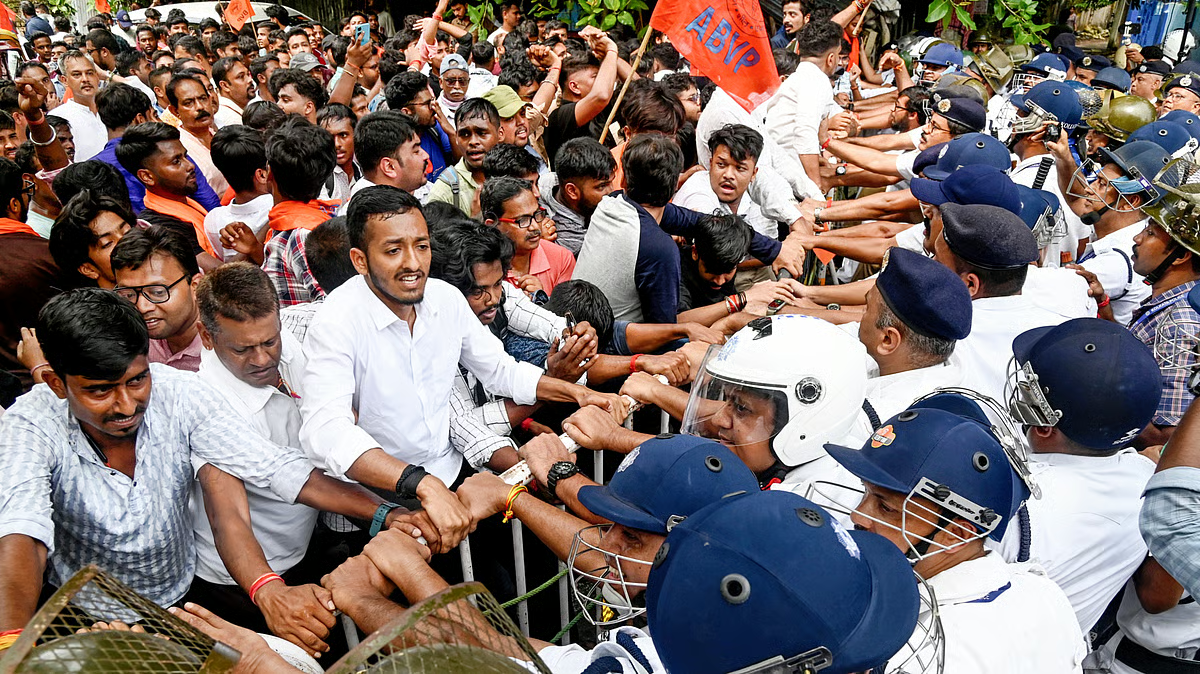
Meitei civil societies and student groups have called for flushing out these so-called illegal inhabitants. The Nagas too have supported these calls. They believe that a National Register of Citizens (NRC) would be the best way to weed out the “illegal” inhabitants from the legal occupants and bring peace into the state.
Meanwhile, the Kuki-Zomis are more or less silent but apprehensive and anxious. The Meiteis and Nagas of Manipur have alleged that the majority of the Kukis and the Zomis are “illegal inhabitants” in Manipur.
The Kukis and Zomis have stated their stand that the NRC be conducted across the country and not with an intention to target a certain community, such as the Kukis or the Zomis.
The state BJP government has also officially stated its commitment to push for the conduct of the NRC.
Back in 2022, the state government had passed a resolution urging the central government to conduct the NRC. Earlier, in the state assembly in March this year, the same was reaffirmed. The upcoming assembly session in September is slated to take up the matter again.
Several senior BJP state legislators have met central BJP leaders over the matter, but there has been no conclusive decision from the BJP central government. Even as there have been noises around the conduct of the NRC in Manipur, and some CSOs and politicians have claimed positive signs from the BJP central leadership, it remains to be seen whether the exercise is practical.
Meanwhile, preparations for Census 2027 have begun in Manipur. Meitei and Naga civil societies have demanded a halt to the exercise. The census operations are scheduled to be held from September 1 to September 30.
Numerous protests were carried out to stop the census. Recently, the training for census enumerators and supervisors was disrupted and prevented from continuing in the Tengnoupal district. Meitei and Naga CSOs have prevented the officials from conducting the orientation. Opposition to the census exercise is based on the demand that the NRC be held before the conduct of the census so as to identify the illegal settlers before the population census and exclude them from the population count.
Several arguments have surfaced. Observers say that one single state cannot hold an NRC; if at all, it should be conducted across the country. It may also be mentioned that even as the NRC was mandated in the Citizenship Amendment Act in 2003, it has not materialised.
The year 1951, proposed as the cut-off for “citizenship,” has also led to several criticisms. The first population census available for India was the 1951 census. This was followed by the NRC in the same year.
But in the state of Manipur, the first census operation was conducted in 1961. Therefore, the insistence on 1951 as a baseline is absurd. Moreover, Manipur gained statehood in 1972 only. From the 1950s until the early 1960s, Manipur was still in the process of evolving, with several political and administrative arrangements. The state did not have a census record of 1951.
The recently held SIR had taken off with no major hiccups, though there were over 1.58 lakh voters being deleted. This is out of a total of 2,093,076 electors.
Even as the demand for implementing NRC grows louder, there has been no concrete response from Delhi.
The Manipur state government is placing the matter in the state assembly, which is scheduled to be held from September 2.
Besides the concern over a large population, especially in rural, remote tribal villages, who either have no identity cards, Aadhaar cards, or birth certificates, the more worrying part is that there is still a large population – an estimate of more than 60,000 – who are displaced by the 2023 violence. Their homes, properties, and documents were destroyed or burnt down in the mayhem.
With tension and uncertainty in the state, there is apprehension. Community relations are still extremely fragile. The NRC exercise, instead of an effort to cleanse out “illegal inhabitants,” could cause more harm than good. Moreover, after three years of crisis, Manipur’s economy has suffered setbacks. Conducting an NRC would be an expensive affair.


