






An unprecedented electoral battle grips Bengal, with the state in security blanket
The air in Kaliachak smells of tear gas and old grievances. On the night of April 1, 2026, seven judicial magistrates, three of them women, were gheraoed inside a government office in Malda’s Kaliachak-2 block, held without food or water for over nine hours by a crowd angry at the deletion of names from voter rolls. In New Delhi, 2000 km away, the Chief Justice of India, Surya Kant, was up until 2 am, personally monitoring the standoff. It took central forces with batons to free the judges past midnight, with stone-pelting as a farewell.
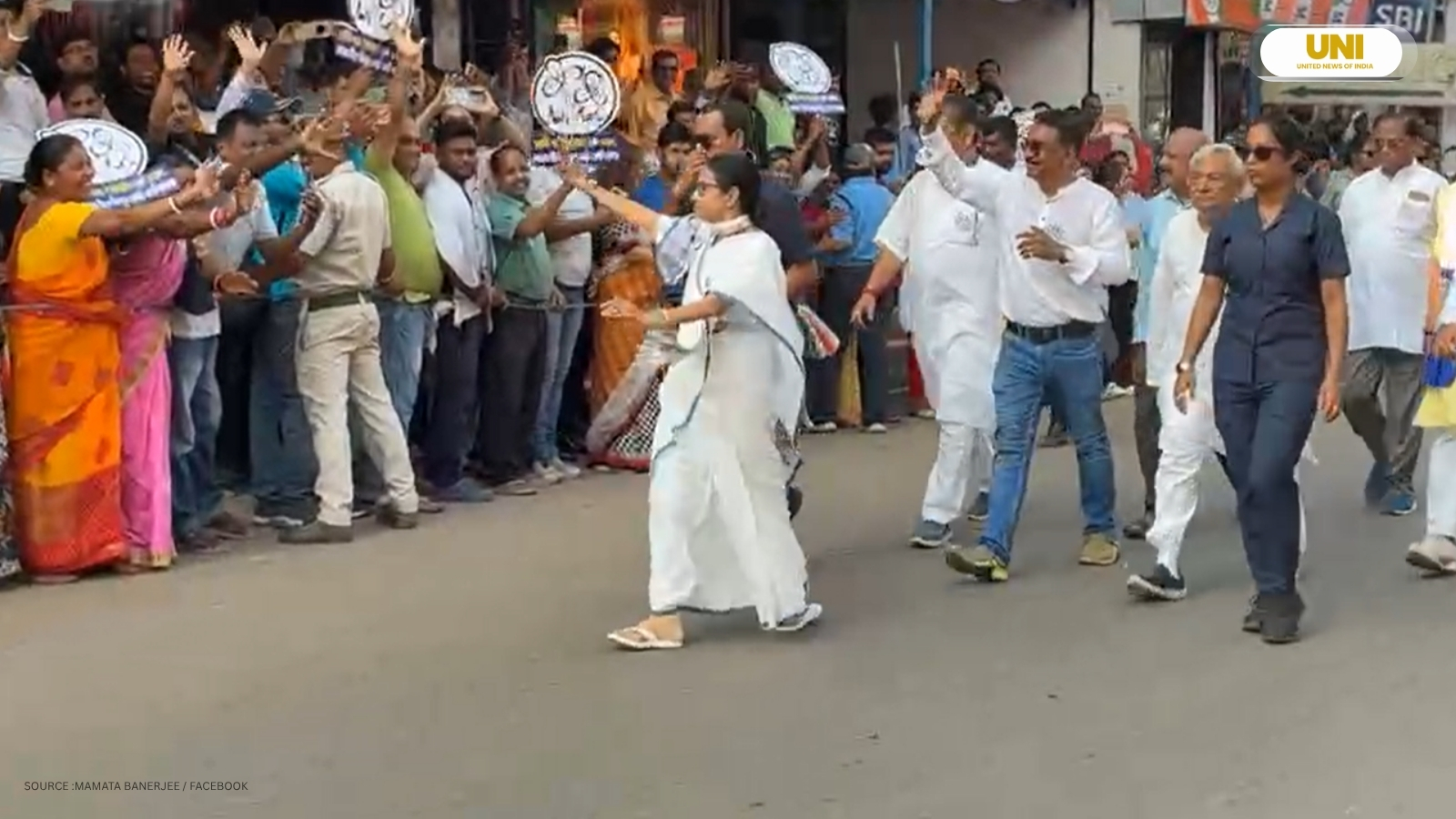
That single episode encapsulates everything wrong and everything that is at stake in the West Bengal Assembly Election of 2026. It is a state where a Supreme Court bench has formally called it “the most polarised state in India” and “there is a complete failure of civil and police administration in the state”. Where about 91 lakh names have been scrubbed from voter rolls in what the ruling Trinamool Congress calls a political massacre, and the BJP calls an overdue cleansing. Nearly 2.4 lakh paramilitary personnel are being deployed in an unprecedented security blanket. And at the centre of it all, stands one 70-year-old woman: Mamata Banerjee, chief minister for 15 unbroken years, fighter, survivor — and now, for the first time, someone who looks genuinely rattled.
Five Fault Lines
No Bengali chief minister since the Left Front’s Jyoti Basu has lasted this long. The Left ruled for 34 years; they governed through cadre terror, booth rigging and an impenetrable party machine. Mamata ended all that in 2011 with a populist tsunami. She has since won in 2016 and 2021, each time against rising odds. “But the fourth term is a different beast,” says Suman Chattopadhya, a noted journalist in Bengal.
The TMC knows it. Mamata knows it better. The party has denied tickets to 74 sitting MLAs, a quiet admission that voter fatigue with familiar faces is real. Anti-incumbency after 15 years is not merely a term from political science in Bengal, it is visible at chai shops in Shyambazar, in the silence of middle-class Kolkata neighbourhoods that once cheered “Didi”, in the anger of school teachers who never got jobs they were promised, in the public discourse that refuses to forget the gruesome rape and murder of an on-duty doctor inside a government hospital, and rampant corruption of Trinamool partymen which has become an integral part of everyday Bengal. Fifteen years, four battles, and Mamata is facing a storm like never before.
So, will Mamata scrape through? Credible polls say yes. VoteVibe/CNN-News18 projects TMC at 184-194 seats; Matrize-IANS puts it at 155-170, with TMC and BJP within 2 per cent of each other in vote share. The magic number is 148. One poll suggests a cushion. The other, a knife-edge. There are, however, many factors that may upset the apple cart.
1. Welfare Shield
Mamata’s single most powerful political weapon has always been direct welfare delivery. The Lakshmir Bhandar scheme, which provides monthly cash to women, has created a formidable loyalty base, particularly among rural women. The scheme covers over 2 crore households. Add Kanyashri (scholarships for girls), Rupashree (marriage assistance), and Krishak Bandhu (farmer support) and the TMC has built what political scientists call a “welfare architecture” that is genuinely difficult to dismantle electorally. As a poll exercise, Mamata has strengthened her “welfare architecture”, topping up the flagship Lakshmir Bhandar monthly cash scheme to ₹1,500 for the general category, ₹1,700 for SC/ST women, and announcing a whopping ₹5,713 crore budget for madrasas, catering to her core minority vote bank. The question is whether that architecture can hold against 15 years of governance frustration.
2. Muslim Vote
West Bengal has over 30 per cent Muslim population, the highest among non-Muslim-majority states in India. In at least 80 Assembly seats across five districts (Murshidabad, Malda, North and South Dinajpur, Birbhum), Muslims constitute 35 per cent to 80 per cent of the electorate. This has historically been the TMC’s most reliable vote bank.
But cracks are visible. The SIR deletions have hit border districts, many of them Muslim-majority, with particular force. The Malda agitation was driven primarily by Muslim voters protesting the removal of names. The presence of Asaduddin Owaisi’s AIMIM and Nausad Siddique’s Indian Secular Front (ISF) as alternatives means that even a 5-7 per cent shift in Muslim votes away from the TMC could cost it a dozen seats in Murshidabad and Malda alone.
The figure is healthy, but the VoteVibe survey shows Muslim voters with “very high satisfaction” while SC voters show “strong dissatisfaction”, and youth remain unpersuaded. This is a dangerous voter map for the TMC: its Muslim base is threatened by SIR deletions, its SC base is drifting toward the BJP, and youth unemployment, West Bengal’s obvious crisis, has no easy answer.
3. North Bengal
North Bengal, comprising Cooch Behar, Jalpaiguri, Darjeeling, Alipurduar, and parts of Siliguri, has become the BJP’s most reliable fortress in West Bengal. The BJP’s appeal to Rajbanshi identity, its mobilisation of tea garden workers and its promise of Scheduled Tribe protections have created a durable voter base here.
The BJP strategy in 2026 is to consolidate and expand in the North while making inroads into swing areas like Jangalmahal (Purulia, Bankura, Paschim Medinipur). In 2021, the BJP won significantly in Jangalmahal; the TMC clawed back in the 2024 Lok Sabha. The 2026 verdict in this belt could go either way, and it may hold the key to whether the BJP crosses 110 seats.
4. Prestige Battles
Two constituencies will dominate national headlines on May 4: Bhabanipur and Nandigram. Bhabanipur, Mamata’s own seat in south Kolkata, is where the BJP has fielded Suvendu Adhikari, the man who defeated her in Nandigram in 2021 by a razor-thin margin. Adhikari is also contesting Nandigram simultaneously. Ground reporting from Bhabanipur suggests that residents remain broadly satisfied with Mamata’s governance. “She has worked for everyone here. We want Didi to return,” one resident told this reporter.
5. Urban Middle Class
The urban middle class of Kolkata, historically the arbiters of Bengal’s political culture, is deeply conflicted. The RG Kar Medical College rape and murder of August 2024, which triggered weeks of protest in Kolkata, left a wound that has not fully healed. The Sandeshkhali affair of early 2024, allegations of sexual violence and land grab by TMC local bosses, shook the Bengali urban conscience. The school jobs scam, the ration distribution fraud and the teachers’ recruitment scam are not abstract statistics. They represent real people who were cheated.
“But anger does not automatically translate to BJP votes, and that is the BJP’s crucial problem,” says Suman Chattopadhyay. “Many urban Bengalis who are disillusioned with the TMC are equally suspicious of the BJP’s Hindutva agenda and its ‘outsider’ image in a state with fierce sub-nationalist pride. The Left, which once owned this space, has collapsed to approximately 5 per cent vote share. Into this vacuum, several voices compete, but none has a decisive answer.”
Last Hurrah or Last Laugh?
The fact is that despite a tremendous incumbency, the structural factors that have saved Mamata earlier remain intact: a fragmented opposition refusing to consolidate around the BJP, her commanding 48.5 per cent CM preference against Suvendu’s 33.4 per cent, and a welfare machine still delivering. The BJP, meanwhile, has no credible state-level face beyond Suvendu, and remains internally fractured: 19.9 per cent of respondents cite factionalism as its biggest weakness.
In 2021, Mamata won with booth-level advantages that are now being systematically removed by the EC to a large extent. As political analyst and professor Biswanath Chakraborty warns: “If there is any unexpected swing, the seat count could collapse dramatically.” The scenario is precise: if Matrize-IANS proves more accurate than VoteVibe, if the SIR deletions hold on polling day, if 3-4 per cent of Muslim voters drift to ISF or AIMIM in critical seats, the arithmetic unravels faster than any model predicts.
Bengal has a habit of humbling its prophets. The Left was going to rule forever. The BJP was going to sweep in 2021. Both were wrong. When counting begins on May 4 at centres guarded by 200 CAPF companies, Bengal will deliver one of the most consequential verdicts in modern Indian history: either Mamata’s fourth term, or her final curtain.
(Atanu Dutta is a Kolkata-based journalist)


