

By New Delhi Post
New Delhi.
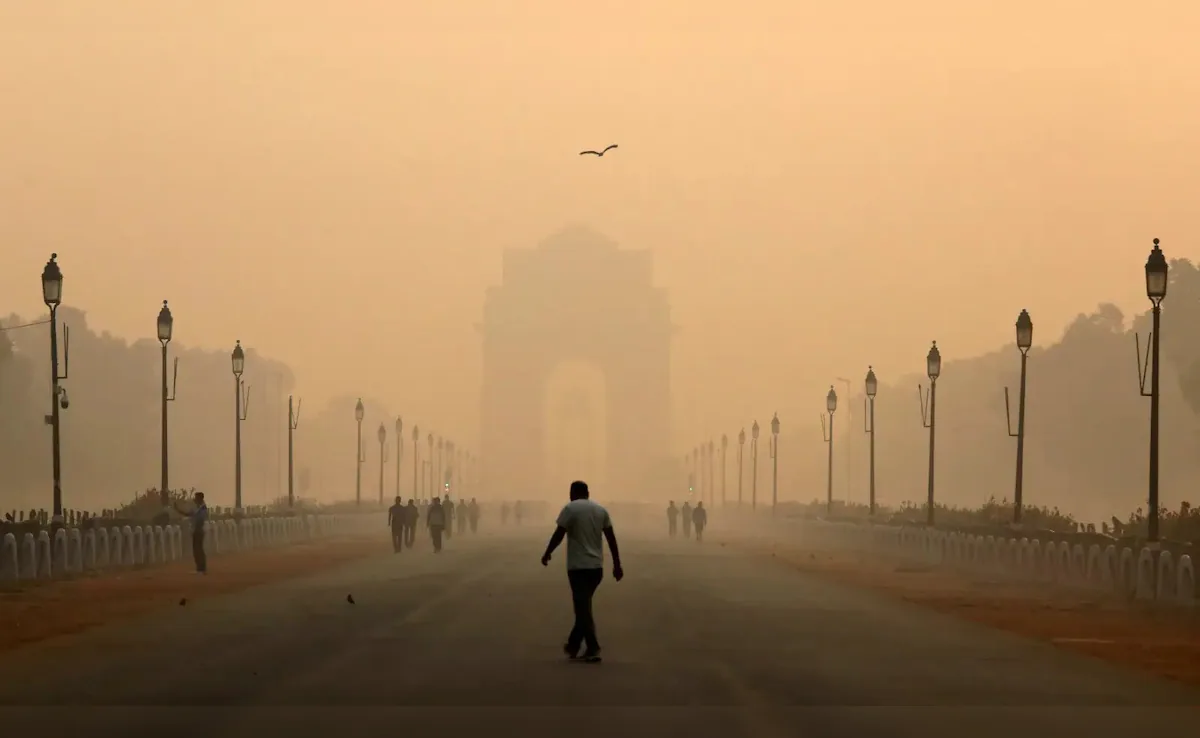
India’s air quality remains dangerously below World Health Organization (WHO) standards, with over 40% of the population still relying on biomass fuels like wood, dung, and crop residues for cooking—a major contributor to indoor and outdoor air pollution. This reliance leads to severe health impacts, including hundreds of thousands of premature deaths annually.
In an exclusive interview with Videos, Dr. Maria Neira, Director of the Department of Environment, Climate Change, and Health at WHO, emphasized the urgent need for India to expand its clean energy initiatives, particularly the LPG subsidy schemes, to combat household air pollution.
A Looming Public Health Crisis
According to WHO data, India accounts for a significant portion of global air pollution-related deaths, with household air pollution alone contributing to over 600,000 premature deaths annually. The burning of biomass releases toxic pollutants, including fine particulate matter (PM2.5) and carbon monoxide, which are linked to respiratory diseases, heart conditions, and even lung cancer.
“We need to consider programmes like providing access to LPG and subsidies, but of course, the effort has to be not only maintained but probably scaled up,” Dr. Neira said.
Success of Ujjwala, But Gaps Remain
The Pradhan Mantri Ujjwala Yojana (PMUY), launched in 2016, has been a landmark initiative, providing over 90 million LPG connections to women in rural households. However, challenges persist:
- Affordability Issues: Many beneficiaries cannot afford regular LPG refills and revert to biomass.
- Last-Mile Delivery: Remote areas still lack reliable LPG distribution networks.
- Subsidy Gaps: Recent reductions in subsidies have made LPG less accessible for low-income families.
Case in Point: In Chhattisgarh’s tribal regions, families like Sukanti Bai’s (name changed) received an LPG connection under Ujjwala but still use firewood due to high cylinder costs. “We use LPG only for emergencies. Wood is free,” she says.
WHO’s Call for Stronger Action
Dr. Neira stressed that expanding subsidies and ensuring sustained LPG usage are critical. She also highlighted the need for:
- Increased awareness campaigns on the health risks of biomass burning.
- Alternative clean energy solutions, such as electric stoves in urban areas.
- Stronger enforcement of pollution control measures in industries and transport sectors.
The Road Ahead
While India has made progress with initiatives like the National Clean Air Programme (NCAP), experts argue that more aggressive policies and funding are needed to meet WHO’s air quality guidelines.
“The health burden of air pollution is unacceptable. Scaling up clean cooking solutions is not just an environmental necessity but a moral imperative,” Dr. Neira concluded.
Tags:
#AirPollution #WHO #LPGSubsidy #UjjwalaYojana #CleanAir #PublicHealth #India #ClimateChange
Key Takeaways:
- Over 40% of India’s population still uses biomass fuels, worsening air pollution.
- WHO urges expansion of LPG subsidies to reduce household pollution.
- Ujjwala Yojana needs strengthening to ensure sustained LPG usage.
- 600,000+ premature deaths annually linked to air pollution in India.
As India grapples with worsening air quality, the call for scaled-up clean energy interventions has never been more urgent.