

A trillion-dollar opportunity is emerging from India’s cultural heritage. The next step is to move beyond preservation and bring centuries of history to life through experiences worth travelling for
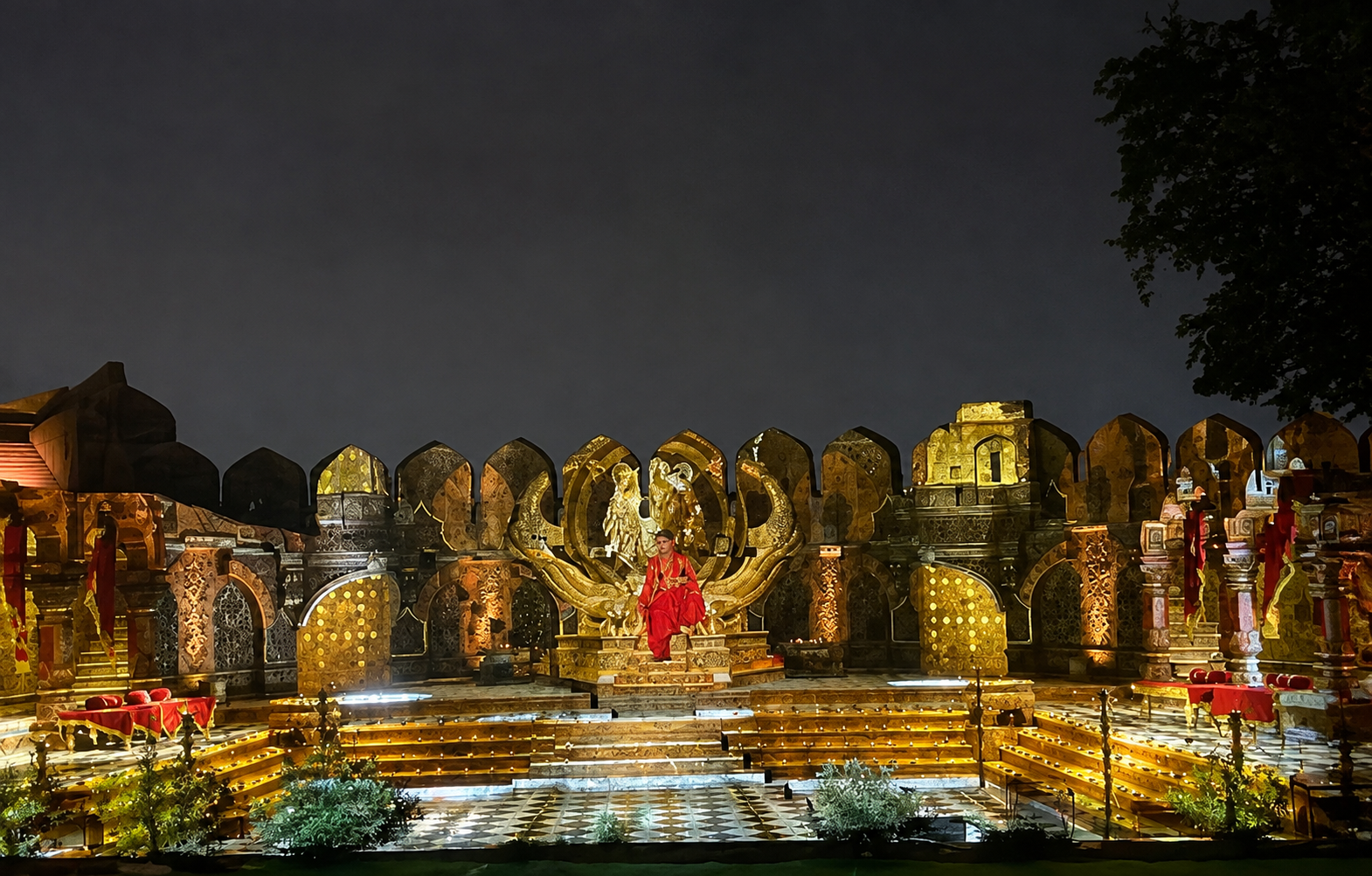
After dark, the walls of an old fort begin to move. Light washes across the stone, a voice rises from the silence, music gathers, and a history long gone unfolds across the very architecture where it once happened. The son-et-lumière, or sound-and-light show, has existed for decades. Yet its underlying principle points to something much larger: an experience economy in which culture is not simply preserved, displayed or visited, but experienced.
India has spent decades preserving its cultural inheritance. The next opportunity is to make it more accessible, experiential and economically valuable without compromising its authenticity. The country has never lacked stories; it has lacked ways to make them contemporary and compelling to new audiences. A fort is architecture. A museum is a collection. A monument is history in stone. None of these, by itself, is an experience. The experience begins when a visitor understands what they are seeing, forms an emotional connection with it, and leaves with a reason to remember.
The artefact may be the foundation, but interpretation is what turns cultural inheritance into an experience. Economic value has long been moving from commodities and goods towards services and, increasingly, experiences. The same logic now applies to culture: value lies not only in what survives, but in how meaningfully its story is told.
From Preservation to Participation
India possesses an extraordinary cultural reserve: thousands of monuments and museums, archaeological sites, crafts, performing arts, festivals and living traditions. For decades, much of heritage interpretation followed a static model: objects were displayed, information was printed, and visitors were left to absorb the context around them.
That is changing. Digital interpretation can reconstruct a ruined structure without rebuilding it. Projection mapping can reveal architectural detail through light and movement. Augmented reality can raise a vanished settlement over the ground where it once stood. Interactive installations can show how an ancient object was made or used.
The technology, however, is not the destination; it is the medium. What is emerging around this shift might be called an interpretation economy, an ecosystem in which research, curation, storytelling, design, technology and audience engagement combine to turn cultural assets into experiences. The aim is not to commercialise heritage, but to make it more accessible and engaging while protecting the authenticity of the material itself. This is where India’s experience economy moves beyond conventional tourism.
Technology Must Serve the Story
There is, however, an important distinction between using technology and designing an experience. A spectacular projection without a narrative may generate photographs but leave little behind. A gallery designed around technology rather than content risks becoming an entertainment venue rather than a cultural institution.
The strongest experiences begin with the story. Research establishes what is true; curators establish context; writers create narrative; designers translate it into space; and technology then gives the story movement, atmosphere and accessibility. Projection mapping should not simply make a building look spectacular; it should reveal something a visitor could not otherwise see.
At a fort after dark, the most powerful moment may not be the loudest burst of light. It may be the instant when one voice, a shift in colour and the outline of a vanished gateway allow a century to fold into the present. The strongest experiences know when to fall silent and let the place speak.
Aman Arora, Founder & Creative Director of Magical Theatre says, “For decades, the focus in heritage has been on preserving what exists. Today, the question is how we interpret it for wider and more diverse audiences, so that heritage is not only understood, but experienced as something they inherit, carry and take forward. This requires history, architecture, storytelling and technology to be imagined together from the very beginning.”
From Footfall to Dwell Time
The economics of tourism have traditionally focused on visitor numbers. The next phase of growth will depend on what happens after a visitor arrives. How long do they stay? What else do they experience? What makes them return?
The scale of the opportunity is already substantial. According to the World Travel & Tourism Council, travel and tourism was projected to contribute around ₹21.15 trillion to India’s economy in 2024 (close to a tenth of GDP) and to support nearly one in eleven jobs, on a path towards ₹43 trillion by 2034. The government’s vision for 2047 sets a larger horizon still, targeting 100 million annual inbound visitors and a tourism economy at genuine trillion-dollar scale. Numbers of that order will not be reached at the gate alone; they depend on visitors staying longer, travelling beyond marquee sites, returning and spending locally. This is precisely where experience design can change the equation.
An orientation gallery can introduce centuries of history in minutes. A night-time experience can extend activity beyond daylight hours. A museum can become a destination rather than a stop, and a network of smaller sites can encourage travellers to stay an extra day. The value of heritage therefore reaches far beyond the ticket counter into hotels, restaurants, transport, guides, artisans and creative services.
India’s recent tourism growth illustrates the potential. Ayodhya’s transformation shows how faith, infrastructure, hospitality and cultural experience can converge to create a destination of national significance. The lesson is not the scale of its visitor numbers, but that destinations become more productive when visitors have more reasons to stay, explore and return. This matters most in smaller cities and rural districts, where much of India’s cultural inheritance lies and stable creative work is scarce. The opportunity is not simply to bring more tourists to India, but to give them more reasons to experience it.
Rise of the Experience Designer
Interpretation is an industry in its own right because an immersive gallery or heritage experience brings together historians, curators, writers, spatial designers, artists, technologists, fabricators, educators and access specialists, often working alongside the communities being represented. Its value lies in integrating these disciplines through a single creative vision, from initial research and storytelling to installation and long-term maintenance. This makes interpretation closer to filmmaking or architecture than to equipment supply, and treating it merely as an audiovisual line item overlooks its larger value.
This is a globally established field. In France, visitors encounter the protected Lascaux cave paintings through Lascaux IV, a full-scale facsimile and interpretation centre combining reconstruction, film and interactive exhibits. In Paris, a nineteenth-century foundry has become an immersive digital-art venue, while Tokyo’s digital-art museums are now major attractions in their own right. The methods vary, but the principle remains: value lies not only in what survives, but in how its story is interpreted and experienced.
This approach is already taking shape across India. Delhi-based experience foundry Magical Theatre, for instance, has developed interpretive experiences for heritage sites including Jhansi Fort, Rajwada Palace in Indore, Travancore Palace in Delhi and Bahu Fort in Jammu, among others.
These projects bring historical research, curatorial narratives, spatial design, projection and sound together to communicate the significance of each site to wider audiences. The aim is not to place technology over heritage, but to use it as a medium of interpretation, transforming a visit into an experience that informs, engages and encourages people to explore India’s cultural destinations.
From Cultural Capital to Creative Infrastructure
The experience economy also creates a different kind of employment engine: the many disciplines it draws together are not support services around tourism; they are the creative infrastructure of tourism itself. India already possesses much of the capability required: one of the world’s largest pools of software, animation and visual-effects talent, much of it already powering global film, streaming and gaming, alongside deep strength in fabrication and live entertainment. The opportunity is to connect these capabilities with India’s cultural capital. The country that holds the Ramayana, the Mahabharata, centuries of architecture and classical music also has the engineers, artists and studios to interpret them through contemporary media.
India now needs scale, stronger standards and a commissioning process that develops content and technology together. The experience must be conceived as one integrated proposition from the beginning, rather than added after the building has been designed.
Interpretation as Cultural Infrastructure
Realising this requires a change in how heritage and tourism projects are commissioned. Interpretation cannot remain a vendor’s afterthought, a show added once the architecture is complete. It must be treated as cultural infrastructure from the beginning, with research, content, curation, accessibility, design, technology, testing, operations and maintenance accounted for from the earliest stages of planning.
A museum or immersive installation is never finished on opening day: content changes, technology evolves, audiences shift and hardware needs upkeep. Interpretation is not a one-time purchase; it is a continuing practice. India also needs a stronger talent pipeline in experience and interpretation design, drawing professionals who understand not one discipline but the relationships between culture, storytelling, architecture, technology and human behaviour. The question is no longer whether India can create world-class experiences, but whether it can build an ecosystem to do so consistently and at scale.
The Trillion-Dollar Opportunity
India’s next economic breakthrough will not come only from industries, technology parks and financial districts. Part of it can also rise from temples, museums, monuments and historic landscapes, not merely as the next sound-and-light show or immersive museum, but as an entirely new creative industry built around the country’s cultural capital.
That industry will not be built by technology alone, nor by preserving monuments or attracting tourists. It will emerge when research, culture, storytelling, architecture, technology and commerce operate as one ecosystem. India has the stories, the heritage, the technology and the creative talent; the next step is to bring them together. The civilisation is already here. The opportunity now is to turn it into experiences the world will travel to encounter.