


What International Indigenous Peoples Day Means for Eastern Nagas
As the Frontier Nagaland Territorial Authority moves towards legislation, its real test will be whether self-governance can bring development, opportunity and decision-making closer to the people.
Every year, on 9 August, the world pauses to recognise the rights, dignity, cultures, knowledge and aspirations of Indigenous Peoples. Across continents, communities remember their ancestors, celebrate their languages and traditions and reflect upon the future they are leaving for their children. For Eastern Nagas, International Indigenous Day arrives in 2026 with a particularly intimate meaning. It comes at a moment when questions of identity, development, dignity and self-governance have converged around the aspiration for the Frontier Nagaland Territorial Authority. Beneath the language of agreements, legislation and constitutional arrangements lies a much older human question: how can a people remain rooted in its homeland while giving its children the confidence and opportunity to build their lives there?
Indigenous identity is carried through ordinary life. It is heard in a language spoken around a family table, preserved in stories told by grandparents, expressed through customary practices and remembered in the landscape of childhood. It lives in the relationship between generations and in the knowledge that passes quietly from one pair of hands to another. It also depends upon the conditions in which the next generation grows up. A child needs a school. A family needs healthcare. A farmer needs a market. A young person needs an opportunity to work, create and contribute. A community needs institutions capable of understanding its circumstances. Culture becomes secure when the people who carry it can see a future for themselves within the society to which that culture belongs.
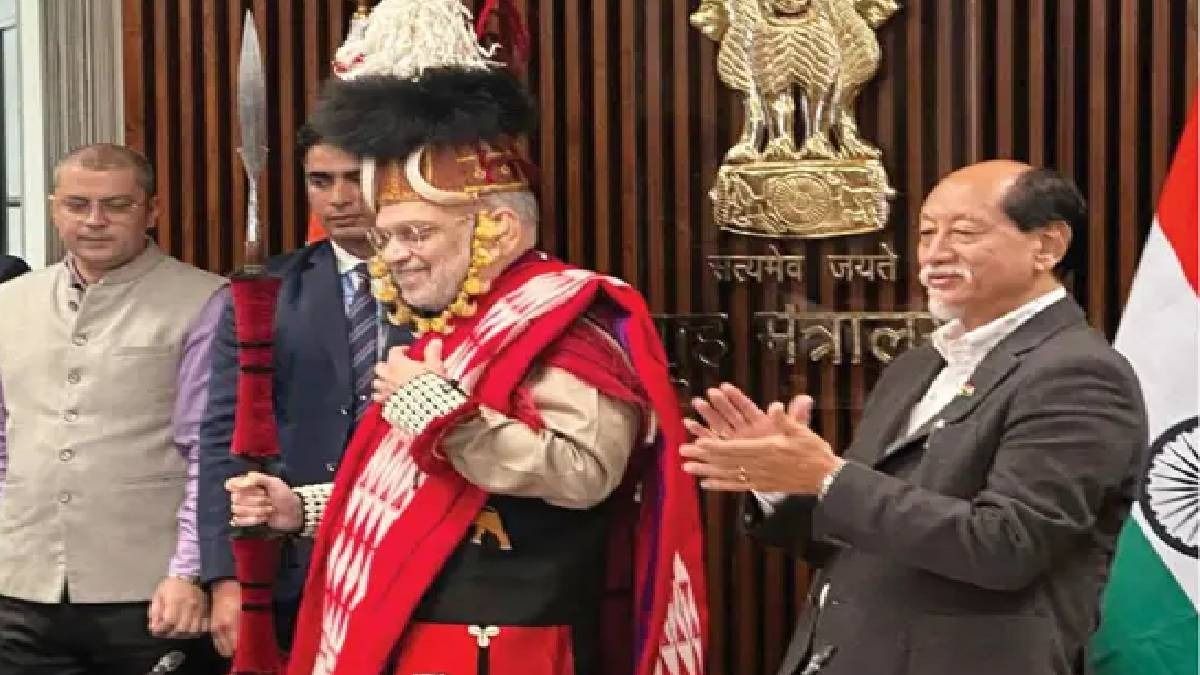
For Eastern Nagas, this International Indigenous Day comes while an important institutional chapter is being written. On 5 February 2026, the Government of India, the Government of Nagaland and the Eastern Nagaland Peoples’ Organisation signed a tripartite Memorandum of Agreement for the creation of the Frontier Nagaland Territorial Authority. The Ministry of Home Affairs recorded that the agreement provides for an FNTA for the Eastern Nagaland Region with legislative, executive and financial autonomy within the State of Nagaland, intended to fulfil the social, political, economic, educational, cultural and linguistic aspirations of the people of the region.
The proposed FNTA concerns the six eastern districts of Nagaland: Tuensang, Mon, Longleng, Kiphire, Noklak and Shamator. The Government of Nagaland has described the proposed arrangement as a self-governing Territorial Authority intended to provide democratic, decentralised self-governance at the regional level and to enable the people of Eastern Nagaland to fulfil their social, economic, educational, cultural and linguistic aspirations. Those words matter because they place the institutional question close to the lives of the people for whom the arrangement is being created.
When Geography Becomes Marginality
For someone looking at Eastern Nagaland from a distance, the FNTA process may appear to be a matter of constitutional law, legislation and administrative design. For someone living there, its meaning is much closer to the ground. It concerns who understands the needs of a village, who plans its development, who administers resources, who responds when something fails and who carries responsibility for the result. The meaning of governance eventually arrives at the doorstep.
A road is felt by a child travelling to school, by a farmer carrying produce to market and by a family taking a patient to hospital. A school is felt in the quality of a child’s education and in the dreams that education makes possible. A health centre is felt when illness enters a household. A local economy is felt by a young graduate deciding whether there is a future for him or her at home. An institution becomes real when people can see its work in their own lives.
For generations, geography has shaped the Eastern Naga experience. Difficult terrain and long distances have affected access to education, healthcare, markets, infrastructure, employment and administration. The Government of Nagaland has itself acknowledged the developmental deficits of Eastern Nagaland and the geographical and historical circumstances that have contributed to them. Yet geography does something more subtle over time. Physical distance can become administrative distance. Administrative distance can become social distance. Social distance can eventually enter the imagination of a people.
A village far from a centre of power experiences distance in many small ways. A decision takes longer to arrive. A service requires a longer journey. An opportunity seems to exist somewhere beyond the hills. A young person travels away for education and then for employment. A family learns to organise its expectations around departure. None of these experiences alone defines a community. Together, repeated over years, they can influence the way a generation understands its place in the wider system.
This is where the psychology of development begins. When difficult circumstances persist, people learn to live around them. A difficult road becomes familiar. Limited employment becomes familiar. Long journeys for healthcare become familiar. Educational limitations become familiar. Young people leaving home becomes familiar. Familiarity can quietly become expectation. A child may grow up understanding that the best education lies elsewhere, that professional opportunity lies elsewhere and that economic security may require leaving the place where the family has lived for generations.
The deeper consequence is a gradual loss of expectation. A community can retain enormous pride in its identity while becoming uncertain about the future available to its children. A young person can love home deeply and still believe that ambition belongs somewhere else. A parent can encourage a child to leave because the parent wants that child to succeed. A village can become quieter as its younger people leave, even while the emotional bond with the village remains strong.
This is the difference between geographical marginality and psychological marginality. The first can be measured in distance and travel time. The second lives inside people’s expectations. It begins when people feel that important decisions are made elsewhere, that opportunity belongs elsewhere and that development arrives from elsewhere. Once that feeling becomes established, the distance between a community and the centres of power is no longer only physical. It becomes part of how people imagine their own possibilities.
International Indigenous Day gives Eastern Nagas a moment to reflect upon this reality. Indigenous dignity is experienced in the ordinary conditions of life. It is experienced when a child has a good school within reach, when a family can access healthcare, when a farmer can reach a market, when a graduate can find meaningful work and when a community can participate in decisions affecting its future. Dignity also lives in the knowledge that one’s circumstances are understood by the institutions responsible for serving the people.
From Identity to Institutional Power
This is where indigenous identity acquires an institutional dimension. A people needs cultural continuity, and cultural continuity needs a living social environment. Language needs young speakers. Traditional knowledge needs younger generations willing to receive it. Community institutions need people who remain connected to them. Families need livelihoods that allow them to stay. Young people need reasons to imagine a future at home. The question of autonomy therefore becomes inseparable from the question of whether the social conditions exist for a culture to remain alive.
The Eastern Naga aspiration for the FNTA is connected to this deeper question of agency. The Memorandum of Agreement provides for clear executive, legislative and financial autonomy. What is required at this moment is for the Government of Nagaland to enact special legislation that faithfully reflects and gives effect to this agreed autonomy within the constitutional framework.
That special legislation is the bridge between the promise of the agreement and the experience of autonomy in everyday life. Clause 3.3 of the MoA provides for the FNTA to be constituted through special legislation by the State Government in consultation with the Ministry of Home Affairs. The State Government prepared the FNTA Bill and introduced it in the Nagaland Legislative Assembly on 26 March 2026. Questions subsequently arose concerning the constitutional position of legislative powers. The Bill was deferred while the matter was examined further.
The process has since moved forward. In July 2026, the Government of Nagaland stated that it had decided to convene a Special Session of the Nagaland Legislative Assembly for legislation constituting the FNTA, including provisions concerning legislative powers over the transferred subjects and departments, in consultation with and with the approval of the Ministry of Home Affairs and in consonance with the Constitution. The State Government also reiterated that the safeguards contained in Article 371A are sacred and will not be diluted or altered.
This is an important moment because an institutional promise is moving towards the difficult work of institutional construction. The legal form must be strong enough to carry the substance of the political understanding across generations. For Eastern Nagas, constitutional care is therefore part of the journey towards autonomy. The objective is an institution with sufficient clarity, legitimacy and durability to serve the people it is intended to represent.
The FNTA Test: Autonomy Must Reach the Ground
Executive autonomy can bring administration closer to the people and give local priorities a clearer institutional home. Financial autonomy can provide the means for sustained planning and development. Legislative authority, through the constitutionally appropriate mechanism, can provide greater capacity to shape governance concerning subjects transferred to the Authority. Each dimension carries a corresponding responsibility. Executive authority requires competence. Financial authority requires transparency and discipline. Legislative authority requires constitutional legitimacy, careful lawmaking and accountability to the people.
The real meaning of autonomy will therefore be determined by what happens after the institution exists. It will be visible in the village school, the health centre, the agricultural field, the market, the road and the public office. It will be visible in whether plans respond to actual needs, whether resources reach their intended purposes and whether people have a meaningful voice in setting priorities. The measure of an institution is eventually found in the lives of those who may never enter its offices.
This is why participatory governance matters. The Government of Nagaland has described the FNTA as a mechanism for democratic, decentralised self-governance at the regional level. Decentralisation can strengthen the relationship between citizens and institutions when people can see their communities reflected in decisions. It can create a sense of ownership over development and deepen the responsibility to ensure that public authority serves public needs.
The question of accountability must therefore remain close to the centre of the Eastern Naga aspiration. Greater authority carries greater responsibility. Greater resources require greater transparency. Greater institutional power demands greater public scrutiny. The creation of the FNTA will give Eastern Nagas an opportunity to build institutions that serve their communities with competence and integrity. It will also place a responsibility upon the people themselves to remain attentive to the manner in which that authority is exercised.
That responsibility must extend into everyday community life. Autonomy will have little meaning if institutions remain distant from the people they are intended to serve. The farmer, the teacher, the student, the entrepreneur, the woman managing a household or building a livelihood, the elderly person carrying the memory of another generation and the young person deciding whether to return home should all have a place in the developmental imagination of the Authority. Self-governance becomes meaningful when people can recognise their own lives within the institutions created in their name.
Keeping the Young Connected to Home
The idea of homeland gives this institutional question its emotional depth. A homeland is made of more than territory. It is made of memory. It is the hill remembered from childhood, the path walked by grandparents, the field cultivated by a family, the language spoken in a home and the stories attached to places whose names have been carried across generations. Eastern Nagaland is a homeland in this deeply human sense. Its villages carry accumulated memory, its communities carry inherited knowledge and its people maintain relationships with their land that cannot be reduced to administrative boundaries.
The future of that homeland is closely connected with the future of its young people. Eastern Naga youth leave for education, employment, professional opportunities and economic security. Their journeys often contain ambition, sacrifice and hope. Their attachment to home can remain powerful even after years away. The deeper developmental question is whether they will eventually see a reason to return.
A young graduate should be able to imagine a career in Eastern Nagaland. A farmer should be able to see agriculture as a viable livelihood. An entrepreneur should be able to establish a business and create employment. A teacher should be able to work within institutions capable of supporting quality education. A healthcare professional should be able to serve communities through functioning systems. A researcher should be able to study the region while remaining connected to the people and communities whose histories and experiences form the subject of that research.
When these possibilities grow, something important happens to the relationship between a person and home. Home begins to carry possibility alongside memory. Migration can become an experience of learning and exploration rather than an unavoidable departure from opportunity. Returning can become realistic. Families can remain connected. Communities can retain the energy of their younger generations.
Culture Cannot Survive Without Opportunity
That possibility of remaining connected also has a direct bearing on cultural continuity. Language needs people who speak it. Traditional knowledge needs people who receive it. Stories need listeners. Customs need communities in which they remain meaningful. Cultural inheritance needs a living social environment. Development therefore becomes part of cultural preservation. A road, a school, a market, a livelihood programme or a functioning institution can contribute to the survival of the cultural world around them by giving people stronger reasons to remain connected to their communities.
Language deserves particular attention because it carries memory and worldview. The Eastern Naga aspiration includes educational, cultural and linguistic development, and the Government of Nagaland has expressly linked the proposed FNTA with these aspirations. Language contains ways of naming the land, understanding relationships and describing experiences that may not exist in another language in quite the same way. When children continue to learn and use their languages, a conversation between generations remains alive.
That conversation between generations also depends upon the participation and leadership of women. Eastern Naga women have carried enormous responsibilities within families and communities and have contributed to the transmission of knowledge, food systems, cultural practices, social relationships and community resilience. Their participation in governance, education, economic life and public decision-making is essential to the strength of the society. When women have space to bring their knowledge, leadership and aspirations into institutions, the inheritance of one generation becomes richer for the next.
Traditional institutions form another part of this inheritance. Eastern Nagaland possesses community knowledge and systems of social organisation that have developed over generations. These institutions carry lessons about community relationships, responsibility and collective life. The contemporary world is changing rapidly through technology, education, markets and new forms of communication. The future can draw upon inherited knowledge while embracing these changes. Cultural confidence grows when people know where they come from and possess the tools to navigate where the world is going.
Building Institutions for the Next Generation
The FNTA therefore carries a responsibility that extends beyond administrative machinery. It can become a place where development planning, cultural continuity, economic opportunity and participatory governance meet. It can provide institutional space for communities to articulate priorities and participate in their implementation. Its effectiveness will depend upon the quality of leadership, the professionalism of administration, the integrity of financial systems and the willingness of institutions to listen.
The present moment deserves patience and seriousness because the institution being created is expected to serve generations. The Government of Nagaland has expressed its determination to establish the FNTA within the constitutional framework, while its July decision to pursue special legislation through a Special Session reflects the continuing effort to give effect to the MoA while addressing the legislative question. The constitutional process matters because a durable institution needs a durable foundation, and an institution intended to serve generations must be built with care.
For Eastern Nagas, however, the meaning of this moment is ultimately human. It is about whether the distance that has shaped the experience of generations can begin to narrow. It is about whether decision-making can come closer to communities, whether development can become more responsive and whether young people can begin to see the homeland as a place where ambition has room to grow. These questions lead naturally to the responsibility of the present generation: what kind of inheritance will it leave behind?
Every generation receives an inheritance and leaves one behind. Eastern Nagas have inherited languages, customs, stories, land, memory and knowledge from those who came before them. The present generation is also creating another inheritance through the institutions it builds today. Those institutions will influence the lives of children who have not yet entered the world.
The responsibility is therefore larger than the immediate politics of the present. Future generations deserve functioning institutions, good schools, accessible healthcare, economic opportunity, reliable connectivity and meaningful participation in decisions affecting their lives. They deserve cultural confidence alongside modern education and opportunity. They deserve a homeland in which their ambitions can take root.
From Promise to Possibility
The deepest measure of the FNTA will eventually be found in the imagination of a child. It will be found in whether a child growing up in Tuensang, Mon, Longleng, Kiphire, Noklak or Shamator can
imagine becoming a doctor, professor, researcher, entrepreneur, civil servant, farmer, teacher, artist or professional while remaining connected to home. It will be found in whether a young person who studies elsewhere can return and find meaningful work. It will be found in whether families can build secure lives within their communities. It will be found in whether villages continue to possess the energy of their younger generations.
This is where the institutional question returns to the meaning of Indigenous Day. A people cannot carry its culture into the future through memory alone. Memory needs people. Language needs speakers. Communities need families. Homelands need generations who can imagine their lives within them. Development is therefore inseparable from indigenous continuity. Good institutions are inseparable from cultural survival. Opportunity is inseparable from belonging.
For Eastern Nagas, International Indigenous Day is ultimately about that belonging. Belonging grows when people have reasons to remain connected to their homeland. Cultural identity grows when younger generations can live with dignity within their communities. Traditional knowledge survives when there are people ready to receive and renew it. Indigenous identity acquires a stronger future when a people possesses the confidence and institutional capacity to carry its inheritance into a changing world.
The day also asks Eastern Nagas to look at their inheritance with responsibility. The past cannot be changed, but its lessons can be carried forward. The present cannot be postponed, because institutions are being shaped now. The future cannot be taken for granted, because the decisions of today will become the circumstances in which tomorrow’s children grow up.
This is what gives the present FNTA process such significance. The agreement, the proposed legislation, the constitutional discussions and the continuing consultations are stages in a much larger journey. They concern the shape of governance, yet their deepest significance lies in what governance can make possible for human beings. If institutions become more responsive, development can become more grounded. If development becomes more grounded, confidence can grow. If confidence grows, young people may see greater possibilities in their homeland. If young people remain connected, culture has a stronger living future.
International Indigenous Day therefore means remembering that indigenous identity is a living responsibility. It means honouring the generations who carried their languages, customs, memories and communities into the present. It means recognising the developmental realities that shape the lives of people today. It means thinking about the institutions required to give the next generation confidence. For Eastern Nagas, it also means watching carefully as the aspiration for the Frontier Nagaland Territorial Authority moves from agreement towards legislation and implementation.
The special legislation now contemplated carries an importance that extends beyond its legal provisions. It will help determine whether the promise of executive, legislative and financial autonomy can acquire a durable institutional form. The process requires constitutional care, political maturity and fidelity to the substance of the agreement. It also requires an understanding that autonomy is ultimately a responsibility to the people.
The success of that responsibility will be seen. It will be seen when a parent feels less anxiety about a child’s future. It will be seen when a young graduate begins to consider returning home. It will be seen when a farmer finds a reliable market, when a woman finds space to lead, when a teacher has the support to teach well, when a patient can reach dependable healthcare and when a village feels that its concerns have reached the institutions responsible for acting upon them.
These moments may never appear in a constitutional document. They will nevertheless determine what that document means.
For Eastern Nagas, that may be the deepest meaning of International Indigenous Day in 2026. The day is about memory, identity and cultural continuity, and it is equally about the conditions that allow those things to live. It is about a people carrying its inheritance forward while building institutions capable of giving its children opportunity. It is about narrowing the distance between people and power, between home and possibility and between the memory of the past and the imagination of the future.
Eastern Nagas have inherited a homeland filled with memory. The responsibility of the present generation is to help make it a homeland filled with possibility. Their children deserve to speak the languages of their ancestors, remember the stories of their elders, participate confidently in a changing world and still see a future unfolding where their roots run deepest.
Perhaps that is what International Indigenous Day should mean for Eastern Nagas: a day to remember where they came from, to understand the realities of where they stand and to take responsibility for building a future in which their homeland remains a place of identity, dignity, opportunity and belonging.
