

DATELINE: ISTANBUL
The room had not yet cooled from the friction of Doha when Afghan and Pakistani negotiators met again in Istanbul on October 25. What was meant to be a continuation of cautious optimism quickly disintegrated into frustration, accusation and walkouts.
The agenda was clear: build on the Doha ceasefire and prevent further cross-border attacks. Instead, the Istanbul meeting became a reflection of the long, uneasy history that binds and divides the two nations.
Just six days after the Doha agreement, representatives from both sides assembled in Istanbul for three days of talks. Pakistan’s delegation included senior military and intelligence officers, alongside Defence Minister Khawaja Asif. The Taliban’s side was led by Rahmatullah Najib, Anas Haqqani, Noor Ahmad Noor, Noor-ul-Rehman Nusrat, and Abdul Qahar Balkhi — a formidable lineup intended to convey authority and control.
From the outset, Islamabad made it a precondition that Afghanistan rein in the Tehrik-i-Taliban Pakistan (TTP), the militant group responsible for hundreds of attacks across Pakistani territory this year. The Taliban delegation countered that Pakistan’s security failures were self-inflicted, arguing that they would only ensure Afghan soil was not used against another nation.
The mood deteriorated further when the Taliban accused Pakistan of enabling US drones to cross its airspace into Afghanistan and of providing support to ISIS-K. Pakistan initially agreed to discuss airspace integrity before suddenly backtracking, claiming that the matter was “not fully under its control” after consultations with Rawalpindi.
By the third day, the talks had collapsed. Both sides issued guarded statements expressing “hope for continued dialogue”, but key issues remained unresolved.
A brief follow-up meeting in Tehran between Pakistan’s Mohsin Naqvi and the Taliban’s Ibrahim Sadr offered a sliver of optimism. Yet soon after returning to Islamabad, Khawaja Asif reignited tensions with a warning that those who tested Pakistan’s patience “would be pushed back to the caves”.
Former MP and political rights activist Shukria Barekzai interpreted the Istanbul breakdown as a symptom of deeper dysfunction. “Pakistan’s demands from Afghanistan and the Taliban’s demands from Pakistan are completely separate paths,” she said. “Those who should guarantee peace from both sides are unfortunately absent.”
While both sides traded statements, the Durand Line — that long, haunted frontier — was already on fire.
DATELINE: TORKHAM
The smell of smoke and cordite still clings to the wind. For eight days in mid-October, the borderlands turned into a furnace. The war began with a single strike that changed everything.
On the night of October 9, Pakistani fighter jets bombed Kabul. Islamabad claimed the operation targeted Noor Wali Mehsud, the TTP leader. Within hours, the group released a video showing Mehsud alive and standing somewhere in Pakistan. The raid, the first direct strike on Kabul under Taliban rule, ignited the fiercest fighting since 2021.
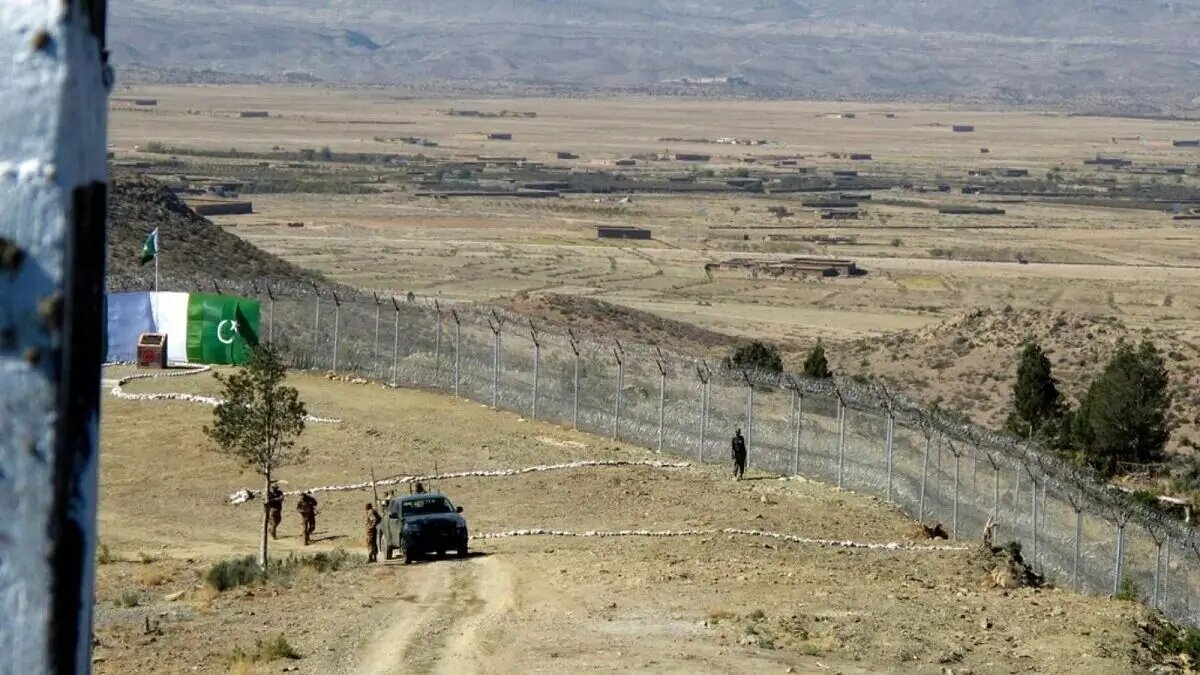
The Taliban responded with fury, attacking Pakistani posts along the Durand Line using everything from small arms and improvised rockets to drones and barrels filled with explosives. Pakistan retaliated with mortars, drones and further airstrikes, expanding the conflict to multiple fronts in Torkham, Spin Boldak, and Ghulam Khan while targeting sites in Kabul and Kandahar.
At Spin Boldak, a trader told this correspondent his house was reduced to dust as he and his family sat down to dinner. “We thought the sky had fallen,” he said, staring at the ruins.
By the Taliban’s count, 58 Pakistani soldiers were killed and 20 military outposts seized. Pakistan claims to have killed 200 Taliban fighters and lost 23 soldiers. Beneath these duelling numbers lies a deeper human tragedy.
In Spin Boldak alone, 40 people died and 300 were injured, including 80 women and children. The United Nations Assistance Mission in Afghanistan recorded at least 18 civilian deaths and over 360 injuries across Kabul and other provinces. In Paktika, 10 civilians, among them local cricket players, were killed as Pakistani bombs struck during dinner.
When this correspondent reached a field hospital near Torkham, nurses were still cleaning dried blood from the floor. Doctors whispered that “half of those brought in were children”. Kabul’s Emergency Hospital reported 40 civilian casualties from the strikes; five women died before arrival.
The fighting also crippled the economy. Key crossings such as Torkham, Spin Boldak, and Ghulam Khan remain shut, paralysing trade worth nearly a million dollars a day. Hundreds of trucks lie stranded in the desert sun, their fruit cargo rotting by the roadside. Afghan traders estimate collective losses of up to $30 million since mid-October.
Only migrants returning from Pakistan are occasionally permitted to cross. Everyone else — traders, workers, families — waits in limbo.
The war has left entire districts gutted. Villages resemble skeletal remains: collapsed homes, minarets shattered mid-prayer, burnt-out checkpoints abandoned in haste. The border itself feels erased, a wasteland of smoke and silence.
DATELINE: DURAND FRONTIER
The guns are silent for now, but silence here is never peace. Along the rocky ridges dividing Paktika from North Waziristan, people whisper that the ceasefire will not last.
Although both sides publicly claim to observe a truce, military officials privately admit its fragility. The Taliban say they will uphold the ceasefire if Pakistan halts its air raids. Pakistan insists it will “respond decisively” to any cross-border firing. Each side’s restraint feels conditional, a lull enforced by fatigue rather than faith.
At a border post near Torkham, Taliban fighters were busy cleaning captured Pakistani rifles as they tuned in to scratchy radio updates from Istanbul. Their commander, a veteran of the Helmand wars, shrugged when asked about peace. “Ceasefire?” he said. “It means we reload.”
Across the line, in Pakistan’s Khyber region, locals describe an uneasy calm. Markets reopen for hours at a time before closing when drones buzz overhead. Schools remain shut. Aid agencies warn that winter may bring hunger to villages already running on empty.
The United Nations, the European Union, and Washington have all urged restraint. Even Donald Trump, speaking in Kuala Lumpur, quipped that he could “solve this issue very quickly”, a remark that drew muted laughter in Kabul’s tea houses.
Yet hope, however faint, persists. In a shattered mosque in Spin Boldak, residents swept rubble to prepare for Friday prayers, a small act of defiance against despair. A trader in Chaman said he would reopen his shop “as soon as the first truck crosses again”.
But beneath those gestures lies dread. Everyone knows the ceasefire rests on brittle ground, held together by exhaustion and the fear of escalation.
Pakistan and Afghanistan now stand at a crossroads: diplomacy bruised, borders scarred, armies wary, civilians traumatised. The question that hangs over every checkpoint, every crater, every sleepless night is simple and terrifying: How long until it breaks again?
EXPLAINER 1
THE DURAND FAULTLINE: ASIA’S MOST DANGEROUS BORDER?
1. What is the Durand Line?
Drawn by the British in 1893, the 2,640-km Durand Line splits the Pashtun heartland of Pakistan and Afghanistan. The world recognises it as Pakistan’s frontier, but Kabul, including the Taliban regime, rejects it as a colonial relic.
2. Why is it now called a ‘terrorism corridor’?
Torkham and Spin Boldak have become flashpoints, with Taliban and Pakistani forces clashing often. The porous terrain enables the TTP and Afghan Taliban to move fighters, arms and narcotics freely, powering a new jihadist nexus.
3. How are both sides fighting this undeclared war?
Pakistan targets TTP camps in Afghanistan with drones, while the Taliban mobilises tribal militias along disputed stretches. Each side accuses the other of incursions and harbouring militants.
4. What drives the border’s shadow economy?
Smuggling routes through Chaman, Ghulam Khan and Angoor Adda move billions in untaxed fuel, fertilisers and weapons, financing insurgents and enriching warlords on both sides.
5. What happens to the Pashtuns caught in between?
Border fencing and clashes have uprooted entire villages. Divided families face raids from Pakistan and taxes from the Taliban — citizens of neither, victims of both.
EXPLAINER 2
NOOR WALI MEHSUD: THE REORGANISER
1. Who is Noor Wali Mehsud?
Noor Wali Mehsud is the emir of TTP. A madrassa-trained cleric and veteran of the Afghan jihad, he became TTP chief in 2018 after years of internal disarray.
2. Why is he important?
Mehsud restored unity to a fractured TTP, shifting its focus from mass-casualty bombings to targeted attacks on Pakistan’s security forces. Under his command, TTP’s revival has reignited trouble in north-west Pakistan and deepened Islamabad–Kabul tensions.
3. What drives him?
He blends tribal pride with jihadist ideology. His 700-page book Inqilab-e-Mehsud portrays the insurgency as both a religious duty and Pashtun resistance.
4. Where is he now?
Believed to be hiding in Afghanistan’s Paktika province, he survived Pakistani airstrikes in Kabul in 2025.
EXPLAINER 3
TEHRIK-E-TALIBAN PAKISTAN: REAL WINNER OF THE CEASEFIRE
1. What is the TTP?
Formed in 2007, the TTP is a coalition of militant factions fighting to impose Sharia across Pakistan. Declared a terrorist group by the UN, it has claimed hundreds of attacks, including the 2014 Peshawar school massacre.
2. How did the ceasefire strengthen it?
The 2021–22 truce allowed the TTP to regroup, rearm and reclaim territory in Swat, Khyber and North Waziristan. While Pakistan held fire, militants rebuilt networks, raised funds and reasserted control over local communities.
3. How is it funded and aligned?
The TTP thrives on extortion, smuggling, kidnapping and illicit trade, while drawing ideological fuel from Al-Qaeda and global jihadist currents.
4. What is the human cost?
For residents of Swat and Waziristan, the ceasefire brought not peace but a return to fear of forced levies, assassinations and militant checkpoints under a flag they had once escaped.
(Tamim Hamid is a freelance journalist from Afghanistan. His work mainly covers war, corruption and human rights issues)
