


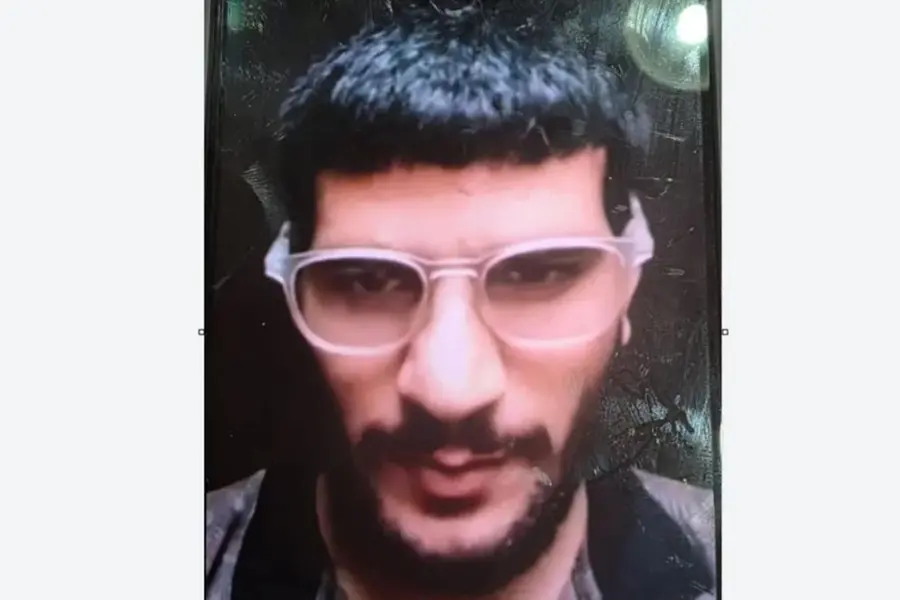
Since the November 10 blast near the Red Fort, which tragically killed 15 people, the term “white-collar terrorist” has gained traction across op-eds, articles, social media commentary, television debates, and drawing-room conversations. The suspected individuals involved in orchestrating this heinous act are medical doctors by profession, including the suicide bomber, Dr Umar Nabi. The other doctors named are Dr Adil Ahmad Rather, Dr Muzamil Ganie, Dr Shaheen Shahid, Dr Arif, and Dr Nisar-ul-Hassan. Thus, the frenzy surrounding white-collar terrorists is rapidly gaining currency.
Yet the involvement of people with Western and technical education in terror activities is neither new nor an emerging trend.
This naturally provokes immense curiosity among ordinary citizens, for whom a terrorist is, in most cases, imagined as a religiously motivated, brainwashed individual with rudimentary schooling, typically a madrasa product. But one must not forget that the most dreaded terrorist of all time, Osama bin Laden, held a degree in Public Administration from King Abdul-Aziz University in Jeddah. Likewise, Mohamed Atta, the operational leader of 9/11 and hijacker-pilot of American Airlines Flight 11, which flew into the World Trade Centre’s North Tower, was an architectural engineer. In fact, members of the “Hamburg Contingent” of the 9/11 plot, including Atta and the other three, Ramzi Binalshibh, Marwan al-Shehhi and Ziad Jarrah, aspired to pursue higher education in Germany.
If we revisit the history of terrorism after the Second World War, the Black September Organisation (BSO), which acquired global notoriety for murdering 11 members of Israel’s Olympic team at Munich in 1972, had Western-educated militants at its core. For instance, the infamous “Red Prince”, Ali Hassan Salameh, BSO’s Chief of Operations, was educated in Germany. Mohammad Daoud Oudeh, known as Abu Daoud and the planner of the massacre, taught mathematics and physics to schoolchildren. Likewise, Mahmoud al-Hamshari, another mastermind and member of the military wing of the PLO, was a schoolteacher by profession. Similarly, Wadie Haddad, or Abu Hani, the chief of the Popular Front for the Liberation of Palestine (PFLP), which orchestrated the 1976 Entebbe hijacking of Air France Flight 139, was a medical doctor by training.
However, the rise of the Mujahideen fighting jihad against the “infidel” Soviet invaders in Afghanistan in the late 1970s and 1980s transformed the outward “appearance” of a dreaded terrorist. This new breed was gun-toting, shalwar-kameez-wearing, turban-clad and bearded, unlike their cigarette-smoking, well-spoken, elegantly dressed, Europeanised predecessors.
Formed in 1994, the Taliban under Mullah Mohammed Omar, the Amir-ul-Momineen (leader of the faithful), began with only a few followers, mostly religious students who had fought with the Mujahideen and were schooled in madrasas in Pakistan. These students, or seekers, as they are described in documents, wished to rid Afghanistan of the instability, violence and warlordism afflicting the country since the Soviet withdrawal in 1989.
Significantly, the role of the madrasa in indoctrinating pre-teens and young adults entered both international academic discourse and popular imagination as a post-9/11 phenomenon. The 9/11 Commission Report (2004) notes:
“…Millions of families, especially those with little money, send their children to religious schools, or madrassahs. Many of these schools are the only opportunity available for an education, but some have been used as incubators for violent extremism. According to Karachi’s police commander, there are 859 madrassahs teaching more than 200,000 youngsters in his city alone…”
Moreover, the convergence of Al Qaeda and the Taliban (many of whose members were products of Dar-ul-Uloom Haqqania, Akora Khattak, Pakistan) in the mid-1990s placed this madrasa under intense global scrutiny. Its chancellor, the prominent Pakistani cleric Maulana Samiul Haq, is widely known as the “father of the Taliban”.
Nevertheless, even as the Mujahideen-Taliban hybrid became the popular template of a terrorist, Western-educated white-collar individuals continued to be embedded in various organisations. Ahmed Omar Saeed Sheikh (of Harkat-ul-Mujahidin and Jaish-e-Mohammed), who planned the kidnapping and eventual beheading of Wall Street Journal reporter Daniel Pearl in 2002, attended the London School of Economics. “Jihadi John” (Mohammed Emwazi), a British-Kuwaiti ISIS militant who appeared in numerous ISIS execution videos, held a degree in Information Systems with Business Management from the University of Westminster.
In the Indian context, many members of SIMI and its later manifestation, the Indian Mujahideen, had professional qualifications. Mohammed Mansoor Peerbhoy, a key operative, was a computer engineer. Ariz Khan, alias Junaid, linked to the 2008 Batla House encounter, attended UPT University in Lucknow until the second year of his BTech. The Popular Front of India (PFI), banned in 2022, a radical Islamist organisation formed in 2006 and operating mainly in Kerala, Karnataka and Tamil Nadu, projected itself as a socio-political movement. Its prominent faces were all professionals: Professor P. Koya of Government Arts College, Kozhikode; Anis Ahmed, formerly employed with a global telecommunications company in Bengaluru; and EM Abdur Rahiman, a retired librarian from Cochin University of Science and Technology. For decades, PFI operated as a trans-regional “activist network” that blended a veneer of social welfare with covert political mobilisation, criminal operations and systematic grassroots radicalisation.
A decade ago, several Indians who joined ISIS/DAESH also possessed a Western education. Arib Fayyaz Majeed was a civil engineer by training; Shajeer Managalasseri Abdulla completed a B.Tech in Civil Engineering; and Mohammad Mohsin Ahmad, involved in raising funds for ISIS, was a second-year Electrical Engineering student at Jamia Millia Islamia. Reports in 2016 indicated that around 70% of the 152 Indians arrested, detained or counselled for ISIS links were from middle and upper-middle-class backgrounds, with half holding graduate degrees and 23 per cent possessing master’s degrees. Only a quarter had religious degrees.
Returning to the context of terrorism in Kashmir, the notorious 2001 Parliament attack conspirator Afzal Guru, hanged on February 9, 2013, was a first-year MBBS student at Jhelum Valley Medical College before joining the JKLF. Even Hizbul Mujahideen’s chief, Syed Salahuddin, has a Master’s degree in Political Science. Therefore, amid today’s uproar over the term ‘white-collar terrorist’, one can assert with confidence that white-collar recruits have long been a regular fixture in terror organisations across the world, including in India.
What is more noteworthy is the motivation behind joining such militant outfits. The psychology of such recruits is layered, and their propensity for violence is often linked to identity shifts, social linkages and perceived injustices. Crucially, radicalisation occurs through close bonds—loyalty to a cause, influence of a charismatic militant leader, friendships and shared radical values. While isolated lone-actor criminals may exhibit higher rates of psychological disorders, the majority of organised jihadists do not meet the criteria for severe psychiatric ailments. This demonstrates that radicalisation is rooted primarily in ideological, social and structural factors.
The story of white-collar recruits may involve a lone militant, a group of radically-influenced friends or classmates from diverse backgrounds, a software professional, or a well-structured organisation pursuing a defined mission. These terrorists form a clandestine layer within extremist networks, operating through financial assistance, logistical support, ideological dissemination and institutional infiltration. Their mode of violence, though devastating, often remains cloistered from direct operational risk.
(Sanchita Bhattacharya is a research fellow at the Institute for Conflict Management)
