


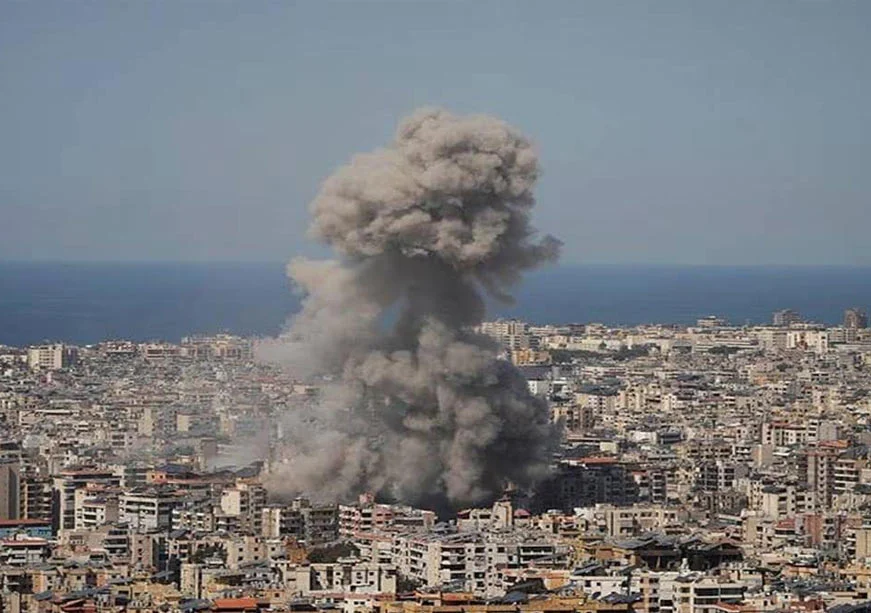
Wars are often judged by the territory captured, governments overthrown, or military targets destroyed. Yet those measures frequently obscure the more important question: who emerges with greater strategic leverage? The recent confrontation between the United States and Iran illustrates why battlefield statistics can be deeply misleading.
Washington undoubtedly inflicted considerable military and economic damage on Iran. Its air power struck military infrastructure, sanctions continued to squeeze the Iranian economy, and senior American officials repeatedly described Tehran as being at its weakest in decades. Judged solely by military capability, the United States appeared dominant. But strategy is not simply about destruction. It is about translating military power into political outcomes. By that measure, the conflict tells a very different story.
The central paradox is that despite America’s overwhelming military superiority, it failed to acquire greater strategic leverage. Instead, many of the pressures generated by the conflict gradually shifted the balance in Iran’s favour.
One reason is straightforward. Military escalation never produced a convincing theory of victory. Throughout the conflict, Washington assumed that additional strikes would eventually compel Tehran to accept American terms. Yet there was never a clear explanation of what military objective remained that had not already been attempted, or how further bombing would fundamentally alter Iranian decision-making. Strategy gradually became an exercise in repeating the same instruments while expecting different political results.
Iran, meanwhile, approached the conflict differently. It treated the confrontation as an existential struggle. History shows that states confronting existential threats rarely surrender simply because economic damage increases or bombing intensifies. Governments fighting for survival absorb extraordinary punishment before accepting defeat. That historical reality shaped Tehran’s behaviour throughout the crisis. Rather than collapsing under pressure, it continued to retaliate and demonstrated that it retained sufficient military capability to keep raising costs for its opponent.
The real shift occurred not on the battlefield but in the global economy. As instability spread across the Gulf, the world’s attention turned increasingly towards energy markets. The Strait of Hormuz remained contested while disruptions around the Bab el-Mandeb complicated one of the world’s most important maritime trade routes. Rising energy prices ceased to be a regional concern and became a global economic problem. Inflationary pressures increased, governm
ents faced growing political strain and international markets became increasingly vulnerable to prolonged instability.
This development fundamentally altered the strategic balance. Unlike military superiority, economic leverage does not depend on destroying an opponent’s armed forces. It depends on imposing costs that others find increasingly difficult to bear. Every additional week of instability strengthened Iran’s bargaining position because it magnified pressure on energy-importing economies and America’s allies. Time, which conventional military thinking assumes favours the stronger power, gradually began favouring the weaker one.
Washington confronted another problem that received far less public attention: the growing consumption of precision-guided munitions. Modern wars are constrained not simply by political will but by industrial capacity. Every missile fired today reduces inventories required for future contingencies elsewhere. Unlike the long campaigns in Afghanistan or Iraq, this conflict simultaneously strained American weapons stockpiles and disrupted the international economy. That combination makes prolonged conflict far more difficult to sustain than previous American wars.
None of this means Iran emerged as the military victor. Tehran suffered extensive economic losses. Infrastructure was damaged. Sanctions continued to weigh heavily on its economy. But victory in international politics is not always measured by absolute gains. More often it is measured by relative advantage.
Iran survived. It demonstrated that overwhelming American military power could not easily translate into political success. It retained the capacity to retaliate. And perhaps most importantly, it increased its leverage simply by prolonging a conflict that imposed mounting costs on everyone else. That represents a strategic achievement, even if it came at considerable expense.
The consequences extend well beyond Iran. Russia and China have observed the conflict closely because it reveals important truths about the changing distribution of global power. A United States deeply engaged in the Gulf consumes military resources, absorbs economic costs and diverts strategic attention from other theatres. For America’s principal competitors, that represents a favourable outcome regardless of developments on the battlefield. Prolonged conf
rontation stretches American power across multiple fronts while encouraging a more multipolar international environment.
The implications are equally significant for Ukraine. American military resources are finite. Precision-guided munitions committed to one theatre cannot simultaneously reinforce another. As Washington devotes greater attention and resources to the Middle East, sustaining support for Kyiv inevitably becomes more difficult. Higher energy
prices also improve Russia’s economic position while increasing the burden on European governments already financing Ukraine’s war effort. The interaction between these conflicts illustrates how regional wars increasingly shape global strategic balances.
The broader lesson concerns the changing nature of American power. For three decades following the Cold War, Washington often assumed that overwhelming military superiority guaranteed political success. Increasingly, that assumption no longer holds. Military strength remains unmatched, but translating that strength into durable political outcomes has become considerably more difficult. Adversaries need not defeat the United States militarily. They merely need to prevent Washington from achieving its objectives while steadily increasing the costs of continued engagement.
That is precisely what Iran managed to do. This does not mean the United States has ceased to be the world’s most powerful country. Nor does it imply that Iran has emerged stronger in absolute terms. Rather, it suggests that power itself is becoming more diffuse. Smaller regional powers, supported directly or indirectly by major competitors such as Russia and China, can increasingly exploit economic interdependence and geopolitical complexity to offset conventional military disadvantages.
The emerging international system therefore looks very different from the unipolar moment that followed the collapse of the Soviet Union. It is becoming harder for any great power to dictate outcomes through military force alone. Economic interdependence, energy security, supply chains, technological competition and munitions production now shape strategic outcomes as much as aircraft carriers and fighter aircraft. That is perhaps the most important lesson of the US-Iran confrontation.
Wars are no longer won simply by demonstrating superior firepower. They are won by converting military action into political leverage. In this confrontation, the United States demonstrated overwhelming military superiority but struggled to improve its strategic position. Iran, despite suffering significant punishment, increased its leverage by raising the economic and political costs of prolonged conflict. The greatest beneficiary, however, may not have been either belligerent. The conflict further accelerated the diffusion of power away from a
single dominant state towards a more contested and multipolar international order. That, more than any battlefield outcome, is the enduring significance of this war.
BLURB:
America repeatedly described Tehran as being at its weakest in decades. Judged solely by military capability, the US appeared dominant. But strategy is not simply about destruction. It is about translating military power into political outcomes. By that measure, the conflict tells a very different story
##
The emerging international system therefore looks very different from the unipolar moment that followed the collapse of the Soviet Union. It is becoming harder for any great power to dictate outcomes through military force alone
CAPTION 1
US strike on Iran in Tehran on March 2, 2026
CAPTION 2
People walk past a mural depicting Iran’s late Supreme Leader, Ayatollah Ali Khamenei, in Tehran on June 1, 2026
