


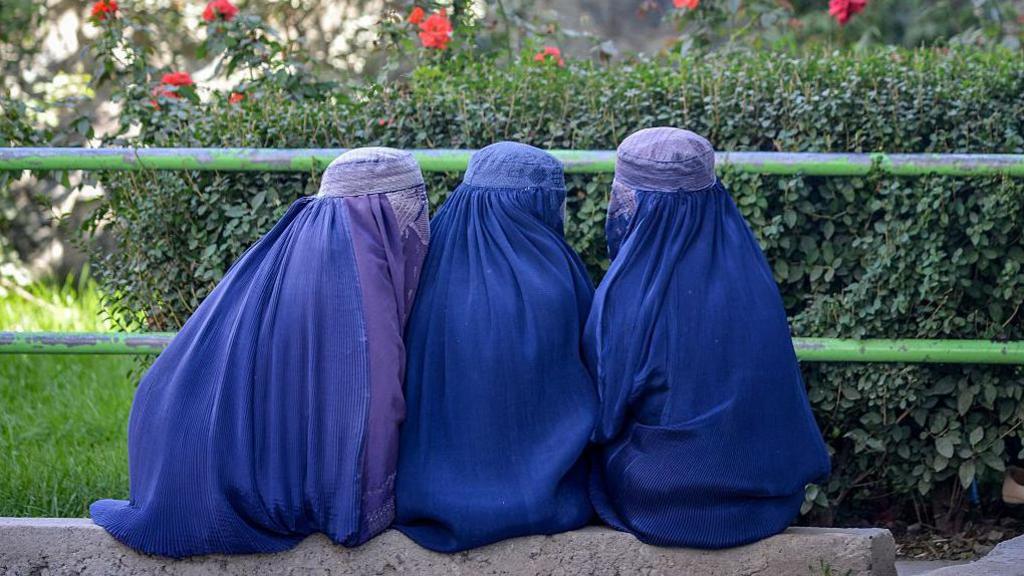
On the eve of the fifth, grim anniversary of the fall of Kabul, reflecting on this story means reckoning with the balance sheet of a twenty-year war that ultimately resulted in the restoration of the very government that the 2001 international intervention set out to overthrow. Two decades of military, economic, and institutional presence were not enough to build foundations sturdy enough to withstand the return of the Taliban, battered by corruption, the fragility of Afghan institutions, and the contradictions of Western strategy. The result for the civilian population, particularly women, is a return to square one, if not worse: certain restrictions currently in force, such as the ban on entering medical school, had no equivalent even during the first Taliban regime of the 1990s.
It was August 15, 2021, when Taliban forces marched into Kabul without firing a shot, marking the end of two decades of conflict and unfulfilled promises as the last US aircraft left the country. Today, five years later, those harrowing scenes of desperation at the international airport, with thousands of people clinging desperately to the landing gear of departing planes, have largely faded from the global agenda. Yet the crisis that began back then is far from over; the destiny of an entire nation has since fractured in a way that may prove irreversible.
The Unfiltered Reckoning
Reconstructing these past five years is not merely a matter of recounting the political chronology of events. It requires an unfiltered analysis of the path the country has taken since the return of the Taliban regime, and a demonstration of how the prolongation of this government brings deep devastation across three interconnected fronts: cultural, economic, and social. The worst-case nightmare is a prolonged tyranny that condemns Afghanistan to becoming less educated, more backward, poorer, and more austere, alongside turning it into a true prison for women. This impoverishment affects not just the GDP, but the very possibility for millions of Afghans to build a future. While the economy collapses and civil liberties contract, it is upon the female population that the regime has unloaded the most unbearable burden, turning homes into places of forced confinement rather than refuge.
A Culture Being Erased
There is a second layer of analysis, perhaps even more original than the now-familiar narrative of the Afghan humanitarian crisis: the denunciation of a progressive cultural erasure, no less severe than political repression. Today, Afghanistan is perceived almost exclusively as a primitive and peripheral place, as if its identity had been wiped out overnight in 2021, erasing centuries of history in a single instant. When people think of Afghanistan, their minds immediately turn to a backward and uncultivated nation; its millennia-old culture is no longer mentioned, swallowed beneath the dark shadow of ignorance.
This is a reflection that reverses the most common perspective through which the West views this country. Long before it became a territory of attacks, bans, and images of repression to which the media have accustomed us, Afghanistan was for millennia a crossroads of civilisations: a land traversed by the Silk Road, guardian of poetic, artistic, and architectural traditions rooted in remote eras. Reducing Afghanistan today to a single image, that of Taliban obscurantism, means completing an act of erasure that the Taliban themselves began with the physical destruction of monuments, libraries, and works of art. The loss of cultural memory deprives new generations of Afghans of an identity heritage to hold onto in dark times, while depriving the outside world of the tools needed to understand the complexity of a people, reducing them to a simplified stereotype.
Five Years Without a School Future
Amidst this multi-layered devastation, the condition of women occupies a central place, and the ban on education is perhaps its most glaring expression. Afghanistan remains the only country in the world where secondary and higher education is formally forbidden to girls and women, a negative unicum that UNESCO continues to denounce as a violation of a fundamental, non-negotiable human right.
The numbers convey the true scale of this exclusion. According to UNESCO, 2.4 million Afghan girls are currently barred from secondary school, a figure projected to rise to nearly four million by 2030 if the ban continues. As Hoda Jaberian, coordinator of UNESCO’s emergency education programme, noted, five years for a young Afghan girl equate to nearly an entire secondary school cycle lost forever. The contrast with the past is stark: in 2021, nearly one million girls were enrolled in secondary school, the fruit of two decades of investment dismantled in a matter of months.
The ban did not stop at high schools. After barring girls past the sixth grade, the Taliban government also banned university access in December 2022, and in December 2024 extended the ban to medical institutes, closing one of the last remaining doors: that of female healthcare training, crucial in a country where women cannot be treated by male doctors.
Behind the statistics lie stories that capture better than any number what it means to grow up in this system. A thirteen-year-old girl named Frishta devised a desperate strategy to keep going to school: failing on purpose. Getting bad grades, repeating the year, remaining a “child” in the eyes of the law for as long as possible, because once past a certain age, the school gates would shut forever. It is an image that upends every school logic: in Afghanistan, being promoted can mean being expelled from education.
Not all families can even attempt alternative pathways: online classes remain a privilege for the few, due to a lack of internet connectivity, devices, or financial resources. In these cases, educational exclusion is frequently compounded by a pre-written destiny: child marriages arranged at a very young age by families as the sole means of economic survival.
Facing the ban, an underground network of resistance has formed in several Afghan cities. In Herat, a group of teachers continues to secretly educate hundreds of young girls in tiny classrooms following the closure of the first clandestine school venture: hidden micro-learning communities, domestic libraries, and silent protests outside locked gates that keep alive the idea that female education is non-negotiable.
On the internal political front within the Taliban, the issue is also a battleground between factions: on one side, the hardline “Kandahar group,” tied to supreme leader Hibatullah Akhundzada, is strongly opposed to any concessions; on the other, a more pragmatic faction, linked to the Haqqani network, views potential concessions on women’s rights as leverage to secure international funding. Thus far, however, this second line has failed to prevail, a sign of how the ban has transformed from a contingent measure into a core identity pillar of the regime.
Women Out of Work, Health and Future
Banning women from education is not an isolated measure, but a piece of a cruel mosaic aimed at entirely erasing them from Afghan history and society. At first glance, the surge in female business licences, climbing to 10,000 compared to the scarce 1,000 recorded before 2021, might look like a sign of hope. But it is an illusion. Fewer than seven per cent of Afghan women currently hold a job, and behind those new micro-enterprises lies no emancipation, but rather the desperation of those trying to survive after being driven from their professions. These are fragile activities, born under siege, destined to collapse amid movement restrictions, barred access to credit, and the darkness of a total energy crisis.
Adding to this scenario are the emergencies that have battered the country in the recent period, devastating earthquakes, mass forced repatriations from Iran and Pakistan, and escalating regional geopolitical tensions. In this critical context, the drastic reduction of international humanitarian funding threatens to uproot the few intervention projects still remaining, dispersing expertise and professional capacity built up with immense effort over the years.
Condemning half the population to ignorance does not merely extinguish the dreams of individual girls; it delivers a death blow to the future of an entire country. It means emptying hospitals of future generations of female doctors and midwives, strangling an economy deprived of capable intellects and hands, and ripping away society’s lifeblood by denying it the light that only educated mothers, teachers, and professionals can pass down.
The World Is Looking Away
One of the most urgent issues concerns how global public opinion relates to long-term crises like the Afghan one. Major geopolitical tragedies, when they no longer generate shocking front-page images, quickly slip off the information radar. When media attention wanes, silence becomes the ideal condition to consolidate oppression, allowing authoritarian regimes to operate undisturbed.
The international community, the United Nations, humanitarian organisations, and several Muslim-majority nations have repeatedly asked the Taliban to revoke the ban, to no avail: the Kabul regime considers the matter an internal political affair, non-negotiable with outsiders. Meanwhile, technical representatives of the regime recently made an appearance in international venues like Brussels, sparking controversy over a potential path towards diplomatic normalisation that, in the view of many observers, risks normalising ongoing gender apartheid as well.
A crucial question remains open: what tools do we have to keep attention focused on crisis contexts now perceived as “old news”? Culture, understood in its broadest sense, remains one of the few effective bulwarks against the erasure of rights. Telling the millennia-old history of Afghanistan alongside the daily chronicle of repression means restoring complexity to a people that newspaper headlines tend to reduce to a single dimension, pitting the logic of tyranny, which feeds on ignorance and isolation, against the logic of shared knowledge.
Five years after the Taliban’s return to power, Afghanistan remains a unique case in contemporary history: a country that voluntarily deprives itself of half its human capital while letting its millennia-old cultural heritage sink beneath the shadow of ignorance. Behind the official figures remain the stories of girls like Frishta, who have learned to hide their intelligence just to stay inside a classroom, even if only for a little while longer. Their silent resistance, alongside that of teachers continuing to educate in secret, remains today one of the few lights burning in a landscape that, without more incisive international pressure, risks going dark for an entire generation.
