

Picture this: you are seated at an upscale business dinner or a formal evening gala. The waiter fills your crystal glass with a rich Cabernet Sauvignon. You reach out, cup the round bowl in the warm palm of your hand and take a sip. It feels perfectly natural. But to a sommelier or an experienced host, something is slightly off. You have just broken one of the quiet rules of wine etiquette.
Long before you speak a single word at the table, your visual voice is already communicating. It is the language of poise, posture and presence, the subtle way you signal confidence, ease and social grace without saying anything at all. Wine is a central part of modern fine dining, and the way you handle a glass can become one of the clearest expressions of that silent style. Mastering wine etiquette is therefore about more than knowing what is in your glass. It is about understanding how you carry yourself around it, and how those small gestures can sharpen your professional footprint and elevate your visual voice.
Architecture of Fine Stemware
There is a reason a wine glass looks the way it does. The curves, proportions and slender stem are not merely decorative. They are designed to help the wine breathe, concentrate its aromas and reach the palate in the right way, while giving the hand a natural place to rest.
The rim is the thin upper edge of the glass. A finely made rim allows the wine to flow smoothly onto the palate without requiring an awkward tilt of the head or glass.
The bowl is where the wine rests, and its shape varies according to the wine. Red wine glasses are generally wider and more rounded, creating a larger surface area for contact with oxygen and helping to open up the wine’s aromas. White wine glasses are usually smaller and more upright, helping to preserve freshness and keep the wine cool.
The stem is the elongated column connecting the bowl to the base. More than a graceful design feature, it is the part of the glass intended to be held, keeping your fingers away from the wine itself.
The base, or foot, provides stability and gives the glass its balance when it rests on the table.
Knowing what each part does makes one of the most important rules of wine etiquette almost instinctive.
Golden Rules: Stems, Not Bowls
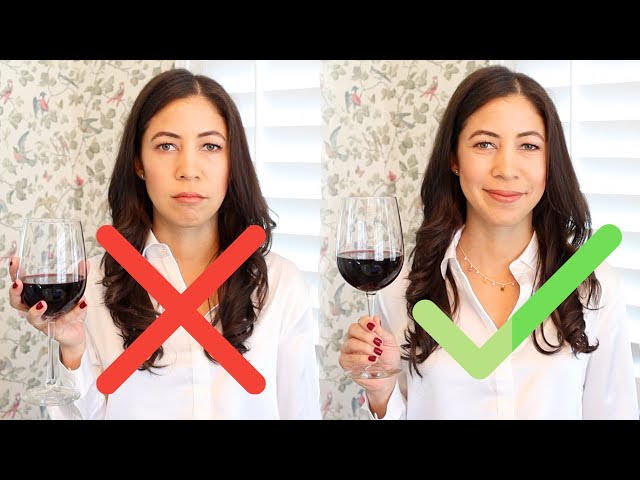
If there is one rule worth remembering, it is this: hold the stem, not the bowl. From a sommelier’s perspective, holding the bowl transfers warmth from your hand to the wine, potentially affecting its temperature. There is also the matter of fingerprints. Cupping the bowl can quickly leave smudges across the glass, interfering with the simple pleasure of looking at the wine’s colour and clarity.
Holding the stem keeps the bowl pristine and your movements measured. More importantly, it looks effortless. And in formal dining, effortless is often the ultimate expression of sophistication.
1. Holding White Wine
White wines such as Sauvignon Blanc and Chardonnay, along with sparkling wines, are meant to be enjoyed chilled, with many styles best served between 7°C and 12°C.
The technique: Gently hold the lower half of the stem between your thumb, index finger and middle finger. Your ring finger and little finger can curl naturally towards the palm or rest lightly against the base for balance. There is no need for a rigid grip. The lighter the touch, the more natural it looks.
Why it matters: Keeping your hands away from the bowl helps the wine retain its intended temperature and keeps the glass free of fingerprints. It also gives your gestures a certain lightness, particularly when you are moving between conversation, a sip and a toast.
2. Holding Red Wine
Red wines such as Pinot Noir, Merlot and Cabernet Sauvignon are generally best served slightly cooler than typical room temperature, usually between 12°C and 18°C, depending on the wine and its style.
The technique: Hold the lower part of the stem between your thumb and fingers. You can also place a finger beneath the base for additional stability. Keep the grip relaxed; there is no prize for holding a wine glass too tightly.
Why it matters: Red wine may tolerate more warmth than white wine, but excessive heat from your hand can still affect its temperature and aroma. And from a style perspective, holding the stem leaves the bowl unobstructed, allowing the wine to remain the visual centre of attention.
Beyond the Hold: The Body Language of the Table
Knowing how to hold the glass is only the beginning. The real elegance lies in what you do with it afterwards. At a formal table, even the smallest movement can become part of your visual language.
The Gentle Swirl
Swirling introduces oxygen to the wine, helping to release its aromas and reveal its character. If you are unsure about the technique, keep the base of the glass on the table and make small, smooth circles with the stem. There is no need to send the wine spinning dramatically around the bowl. A restrained swirl is both more effective and more elegant.
And that restraint matters. Grace at the table is rarely about doing more. It is about knowing exactly how much is enough.
Mind the Rim: Lipstick and Food Marks
If you are wearing lipstick, or have just finished a bite of food, pay attention to where your lips meet the glass. Try to sip from roughly the same spot each time rather than leaving marks around the entire rim. It keeps the glass looking clean and considered, and saves you from creating a rather unglamorous ring of lipstick around your wine.
Where to Look While Sipping
When taking a sip, tilt the glass naturally and allow your gaze to follow the wine rather than trying to maintain eye contact over the rim. Looking at someone while drinking can make the moment feel awkward or overly deliberate. Once the glass is lowered, return to the conversation, make eye contact and remain present.
The point is not to become self-conscious about every movement. Quite the opposite. Good etiquette should eventually disappear into instinct.
The Art of the Toast
The toast is where wine etiquette becomes a little more theatrical. Traditionally, glasses are brought together with a light chime, but fine stemware calls for a gentle touch. If you do clink glasses, make contact around the wider part of the bowl rather than striking the delicate rim.
Never hit the glasses hard. Apart from sounding rather aggressive, it can damage or even shatter delicate crystal. And sometimes, the most elegant toast is the quietest one. Raise your glass, meet the eyes of the person across the table, smile and take the moment in. No dramatic gesture is required.
Fine wine is meant to be enjoyed, not feared. The purpose of etiquette is not to turn dinner into a test, but to make you more comfortable in the moments when details matter. The way you hold a glass, the way you raise it for a toast, even the way you pause before taking a sip, all contribute to the impression you leave behind.
That is the real power of wine etiquette. It turns a handful of small, almost invisible gestures into a visual voice of their own: polished without being stiff, confident without being showy, and sophisticated without trying too hard.