


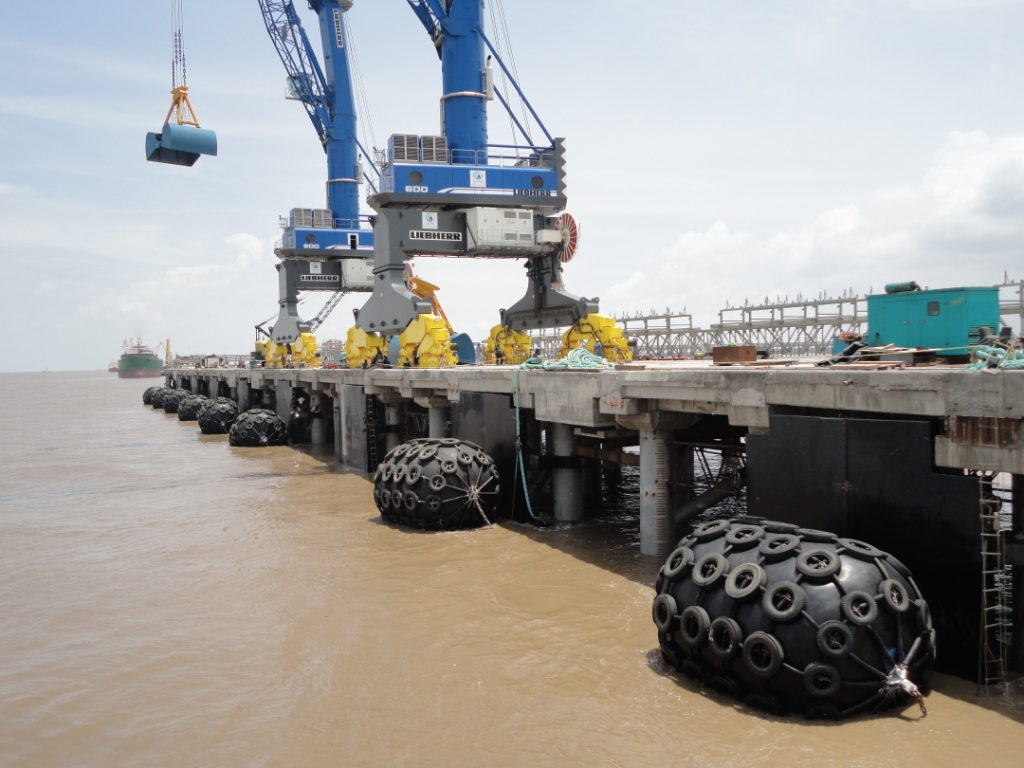
A study prepared by scientists working for the National Institute of Oceanography (NIO) has revealed the adverse environmental impacts caused by a port operated by an Adani Group company at Dahej in Gujarat. It has also estimated the damaging consequences likely to result from the port’s expansion over 23 hectares of ecologically sensitive coastal area.
“The mudflat area has significantly decreased, from 20.49 hectares (85.38%) in 2015 to 5.76 hectares (23.89%) in 2024, for a total fall of 61.49%,” says the NIO study. “…mudflats and scrublands are decreasing in proportion to the increase in built-up areas.”
Mudflats are flat coastal areas with very wet soil that are submerged during high tide. They are ecologically sensitive regions. Scrublands, though classified as degraded forests by the government, also support biodiversity. The study, finalised in July 2024, suggests that port development activities over the past decade have harmed this coastal ecosystem and warns of further adverse consequences if expansion continues.
“Land reclamation and dredging activities required to build additional infrastructure may disrupt coastal habitats. Increased shipping traffic and vessel operations may lead to noise pollution, marine life disruption, and the spread of exotic species,” the study says. “Furthermore, increased industrial activity may lead to air and water pollution, posing threats to local communities and ecosystems. Port operations may also produce more waste, necessitating adequate waste management measures to avoid pollution.”
Sponsored by Adani Petronet (Dahej) Port Limited, the 56-page study was prepared by the NIO in compliance with a National Green Tribunal (NGT) order passed in response to a petition filed by the Mumbai-based Conservation Action Trust (CAT), headed by activist Debi Goenka. While outlining environmental harms, the study also notes that “by implementing effective mitigation measures and adhering to environmental standards”, the port can reduce its environmental impact and foster sustainable development.
The study has revived a legal battle between CAT and Adani Petronet over the ecological impact of the port’s development. New Delhi Post has reviewed previously unreported documents that explain how the port’s environmental record came under scrutiny. We have written to Adani Petronet and the NIO scientist who worked on the study for clarification. Responses are awaited.
Why the National Green Tribunal Ordered the Study
On November 23, 2023, the NGT directed Adani Petronet to commission a study by one of three institutions specialising in coastal ecology — the National Institute of Oceanography, the National Institute of Ocean Technology or the National Centre for Sustainable Coastal Management — to determine whether “any significant damage is being caused by the project to the ecology of the local area”.
The tribunal also directed that, if damage was found, remedial measures should be recommended.
The order arose from CAT’s challenge to the environmental and Coastal Regulation Zone (CRZ) clearances granted for the port’s expansion. Although the tribunal allowed the clearances to continue, it ordered a study into the “adverse impact” of the expansion on “mudflats and mangroves at this belated stage”.
NIO scientists conducted fieldwork in January 2024 and submitted their report in July. After obtaining a copy, CAT filed a fresh application before the tribunal highlighting the study’s findings as well as what it described as shortcomings. The NGT had specifically allowed the trust to return if it found any “lacunae” in the report.
How the Mumbai Trust Responded
In November 2024, CAT filed a fresh application based on the NIO findings and its own research. The application alleges that Adani Port’s activities have caused multiple ecological impacts and also points to what it considers shortcomings in the NIO study.
Among its principal claims are that the drastic reduction of mudflats and their replacement by port infrastructure will have long-term consequences for the environment and fishermen’s livelihoods because mudflats are habitats for fish and other marine species; that the mudflats were “biologically active”, i.e. they support local coastal ecosystems, contrary to Adani Petronet’s description of them as “biologically insensitive”, i.e. they do not play a significant role in in ecology; that reclaiming such mudflats was therefore illegal; that photographs in the NIO study show mangroves, saltmarsh, mangrove associates and mudflats, confirming their biological activity; and that the study demonstrates reclamation of CRZ-1A areas, the most ecologically sensitive category, making the reclamation illegal.
The trust requested the tribunal to prohibit further reclamation, restore CRZ-1 areas comprising mudflats and mangroves to their original condition, deepen creeks so tidal waters can reach the mudflats, undertake compensatory mangrove afforestation in addition to restoration, publicly disclose compliance on the company’s website and complete these measures within six months.
The tribunal admitted the application and sought replies from Adani and other respondents. At the time of writing, it had not passed any order on the application.
How Adani Petronet Responded
In a detailed reply filed in August 2025, Adani Petronet rejected all the allegations. It disputed the trust’s description of the area as CRZ-1A, calling the claim “unfounded both factually and legally” since the issue had already been decided in its favour by the tribunal in 2023. It also rejected the contention that the mudflats were biologically active, saying the claim was “overbroad and contrary to site-specific scientific findings” of the NIO study and government agencies.
The company denied that it had illegally reclaimed mudflats, stating that the reduction in mudflat area and increase in built-up land reflected approved reclamation undertaken as part of phased port expansion.
Adani Petronet also stated that it had implemented the remedial measures suggested in the NIO report “to the extent as per the reclaimed area of the project”. Of the 23 hectares proposed for future development, 16 hectares had already been reclaimed by August 2025, while the remaining seven hectares would be developed according to future business requirements.
Adani Petronet’s Alleged Failure To Undo Environmental Damage
Besides detailing the environmental impacts of port development, the trust also alleged that Adani Petronet had failed to comply with conditions attached to its Environment Clearance and Coastal Regulation Zone (CRZ) clearance. These conditions are intended to ensure compliance with the law and implementation of mitigation measures to contain environmental damage.
Two conditions feature prominently in both the NIO study and the trust’s application: plantation of mangroves over 50 hectares as compensatory afforestation at another location, and development of a six-hectare greenbelt within the project area.
The NIO study highlights both issues. “Considering the development activities and their impact on the environment, the conditions related to mangrove afforestation are adequate and need to be complied in totality. The compliance status is required to be submitted to concerned regulatory authorities on half yearly basis,” it says. The study further emphasises that mangrove afforestation should be carried out according to the Gujarat Forest Department’s standard procedures, “if not implemented”.
According to the trust’s application, these observations clearly show that “there is no compliance with the conditions regarding mangrove plantations even today”.
Adani Petronet, however, stated that it had completed mangrove plantation over 50 hectares at Devjagan village in Jambusar Taluka in 2019 and carried out an additional 10-hectare plantation at Malpur village in 2022.
The study is more definitive on the greenbelt issue.
“During our investigation, it was observed that the immediate proximity of the proposed site was dominated by exotic species, such as Prosopis julifora. On the landward side of the project’s proposed location, the same species was observed to be growing,” it says. “It is suggested to create a green belt around the planned project site following CPCB’s standards for greenbelt development.”
The Central Pollution Control Board recommends indigenous tree and shrub species for greenbelt development. Prosopis julifora, although now common in parts of Gujarat and Rajasthan, is native to South America. The study further notes: “Green belts are generally advised to be planted with plants tolerant of the present environmental conditions, although it is quite difficult to say with certainty that the species will flourish and establish.(sic)”
According to the trust, these observations demonstrate that “there is no green belt even today”. Adani Petronet, in its reply, maintained that it had developed a greenbelt over the 16 hectares already reclaimed within the port premises and “undertakes to continue and expand the greenbelt area, as feasible”. The tribunal has yet to rule on these competing claims.
Why the Trust Criticised the NIO Study
While relying extensively on the NIO report, the trust also criticised several aspects of it. According to its application, the study states that the expansion activities “will” have environmental impacts but “fails to identify or particularise what these impacts may be, whether the same can be prevented or mitigated and does not suggest any measures for protection of the environment and/or any mitigation measures”. It argues that habitat loss, disruption of marine life and other consequences of port development required more detailed examination.
The trust also contended that satellite imagery should have been analysed from February 1991 onwards, when the Coastal Regulation Zone notification first came into force, rather than from 2015. Such an assessment, it argued, would provide “an accurate portrayal of the CRZ 1 area that has been illegally reclaimed since the beginning of the project”.
It further pointed out that although the study refers to soil samples having been collected, it does not disclose the findings. According to the application, disclosure of the “biological constituents of the sediments” would have confirmed that the mudflats are “biologically active”.
Adani Petronet’s Reply
Adani Petronet rejected several of these criticisms. It said the NIO report stated that the expansion “may potentially have environmental effects” and not that it “will” have environmental impacts. To interpret the report otherwise, the company argued, was “speculative, exaggerated, and devoid of any cogent material or evidentiary basis”.
The company also said the study period began in 2015, when the port expansion was proposed. It further argued that the mere presence of mudflats or mangroves did not establish that the area was biologically active, pointing out that the Gujarat Coastal Zone Management Authority had classified the site as “biologically inactive”.
The trust was also critical of government authorities, alleging that they had “failed to make any independent verification of the claims” made by Adani Petronet while granting environmental and CRZ clearances. The company dismissed this allegation, saying the NGT had already considered the issue in its 2023 judgment.
Far from resolving concerns over the ecological impacts of the Dahej port, the NIO study has revived legal and scientific scrutiny of the project. While the study documents substantial changes to the coastal ecosystem and recommends mitigation measures, the trust argues that it also raises questions about the legality of past reclamation and compliance with environmental conditions. Adani Petronet maintains that all reclamation was lawfully approved and that it has complied with the required safeguards.
The National Green Tribunal’s decision on these claims and counterclaims will determine whether the study becomes the basis for remedial action or remains another contested document in the long-running dispute over the environmental consequences of the port’s expansion.
