

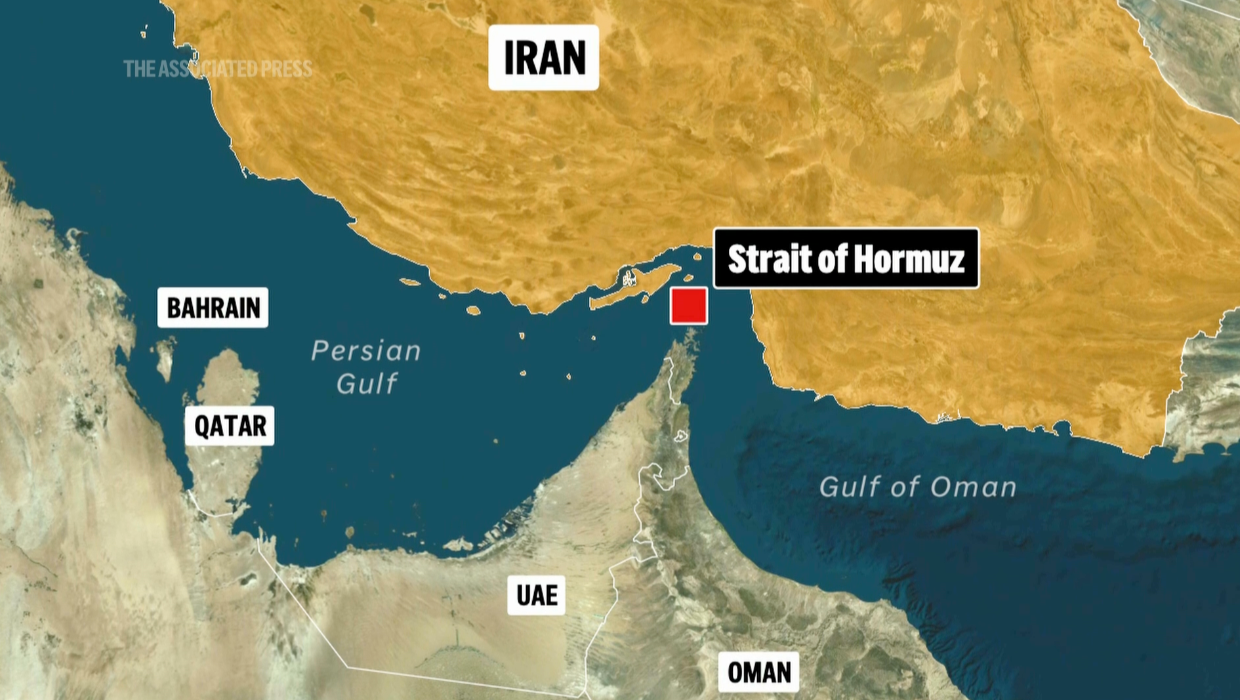
As conflict flares across the Persian Gulf, the world watches the Strait of Hormuz, the narrow maritime passage through which nearly a fifth of global oil supplies flow, become a flashpoint for economic and geopolitical tension. Every disruption in this strategic chokepoint sends ripples across energy markets, global trade and national economies. It is here, amid the hum of idle tankers and halted shipments, that a pressing question emerges: was Iran genuinely becoming so strategically potent or unpredictable that it could no longer be ignored, or was the perceived threat amplified by global narratives and strategic calculations?
At first glance, the situation appears straightforward: Iran, with its growing regional influence, asymmetric capabilities and nuclear ambitions, posed a challenge to established powers. Its control over the Strait of Hormuz provided it with unprecedented leverage, capable of influencing global energy flows overnight. When tensions escalated, oil prices surged, financial markets quivered, and governments scrambled to mitigate the economic shock. Beneath this surface, however, lies a far more nuanced reality, one in which perception, narrative and strategic positioning are as critical as firepower.
Economic Shock of a Silent Siege
The cost of this confrontation is staggering. Estimates suggest that direct military operations in the region cost US taxpayers tens of millions of dollars per hour; yet these expenditures represent only a fraction of the broader economic impact. The closure or disruption of the Strait of Hormuz through which nearly 20 million barrels of oil per day typically pass creates a cascade of consequences for industries, governments and consumers worldwide. Oil shortages drive inflation, disrupt production and heighten economic uncertainty, particularly in energy-importing regions.
Asia, heavily dependent on Gulf oil, experiences immediate vulnerability. Nations such as India, Japan, China and South Korea face industrial slowdowns, rising energy costs and mounting macroeconomic pressures. India, for instance, imports over 85% of its oil requirements. A surge of even $10 per barrel can inflate its import bill by over $13 billion, placing stress on the current account and the rupee. Inflationary pressures ripple through food, transportation and manufacturing, threatening both growth and social stability. Beyond oil, disruptions to natural gas and liquefied petroleum gas (LPG) imports compound the crisis, exposing structural weaknesses in energy security.
Europe, although more diversified in its energy mix, is not immune. The continent faces renewed tension between long-term sustainability goals and immediate energy security needs. Rising gas prices strain households and industry alike, forcing policymakers into difficult trade-offs while markets respond with volatility. Supply chain disruptions, from fertilisers to container shipping, magnify these pressures, demonstrating the deep interconnectedness of global economies.
Capability vs Intent: The Strategic Dilemma
Despite these economic shocks, a critical question remains: did Iran pose an imminent threat to the United States, or was the perception of threat amplified by geopolitical anxieties? Intelligence assessments suggest that while Iran possesses significant regional capabilities, including missile systems, drones and asymmetric warfare tactics, there is limited evidence of a direct, immediate threat to US territory.
This distinction between capability and intent is crucial. Iran’s military and strategic reach is undeniable: it can disrupt regional shipping, target critical infrastructure and employ asymmetric tactics to influence international actors. Yet its power is predominantly regional, magnifying the economic impact of conflicts without necessarily constituting a direct existential threat to distant superpowers. Modern power, in this sense, is less about direct confrontation and more about systemic disruption, the ability to create global consequences through localised action.
The 2026 Gulf crisis exemplifies this form of influence. By leveraging the Strait of Hormuz, Iran imposed economic costs far exceeding the financial and logistical resources it expended. This asymmetry, where relatively modest investments in military capability trigger disproportionately large disruptions, is a defining characteristic of contemporary strategic power.
Human and Geopolitical Cost
The crisis is not solely economic or strategic; it is deeply human. In India, for example, the conflict has forced partial shutdowns of fertiliser plants, delayed exports of rice and onions, and triggered domestic price pressures on essential goods. Families in energy-dependent regions face rising fuel and food costs, while businesses grapple with uncertainty. Across the Middle East, ordinary citizens experience the consequences of halted trade, disrupted livelihoods and heightened insecurity, reminding us that the human toll of such conflicts extends far beyond the battlefield.
Regional politics further complicate the situation. Pakistan’s role as a partner with access to Gulf oil, combined with its strategic military positioning, exemplifies how regional dynamics can reinforce or mitigate conflict pressures. Meanwhile, India’s diplomatic and strategic posture, attempting to maintain ties with both Western powers and Middle Eastern nations, illustrates the tightrope nations must walk when regional instability intersects with global economic dependence.
Lessons from the Gulf: Economic and Military Preparedness
The Gulf crisis provides critical lessons for nations confronting modern, asymmetric threats. For India, it is a stark warning about vulnerabilities inherent in a two-front conflict scenario, with China in the north and Pakistan in the west. Low-cost drone swarms, precision missile attacks and electronic warfare could overwhelm conventional defences and rapidly deplete resources. The economic dimension of warfare, where each defensive missile may cost millions while the incoming drone costs mere thousands, exposes a structural weakness in prolonged conflicts.
India must urgently recalibrate its defence strategies. Investment in cost-effective countermeasures such as laser-based directed-energy systems, reverse-engineered interceptor drones and advanced electronic warfare capabilities is critical. Stockpiles must be scaled not for peacetime exercises but for realistic conflict scenarios, ensuring sufficient resilience to sustain prolonged engagements. Lessons from the Gulf, where US missile inventories were quickly depleted, highlight the importance of both indigenous production and rapid mobilisation capacity.
Additionally, India’s northern sectors, including Ladakh and Siachen, should become live testing grounds for anti-drone and electronic warfare technologies. This proactive approach, combining operational experience with technological development, is essential for preparedness against both conventional and asymmetric threats. Doctrine, too, must evolve. Modern conflicts are increasingly measured not only by battlefield outcomes but by economic endurance, adaptability and the ability to sustain influence over time.
Perception and Strategic Narrative
Returning to the central question: was Iran too powerful to ignore, or was the threat largely a matter of perception? The answer lies in the interplay between reality and narrative. While Iran’s capabilities are significant, the immediacy of any threat to distant powers, including the United States, is less evident. Instead, perceived risk may have been amplified by strategic narratives, global media and the framing of actions in terms of pre-emptive security. History repeatedly demonstrates that perception often shapes policy as much as empirical evidence.
New Nature of Global Power
What emerges from this crisis is a fundamental lesson in modern strategic thinking: power is increasingly defined by systemic influence rather than direct force. Control over economic flows, energy markets, information and technological systems can impose costs far exceeding conventional military expenditure.
Takeaway: Between Perception and Reality
The 2026 Persian Gulf crisis reminds the world that modern conflicts are multidimensional, combining conventional threats with economic, technological and perceptual dimensions.
Ultimately, the crisis forces reflection on a central paradox of modern geopolitics: nations often respond not only to what adversaries can do today, but to what they fear they might do tomorrow.
Finally, a swift US “victory” in Iran may be conceivable on paper, but it would neither resolve underlying tensions nor restore regional stability. Even if active strikes diminish, proxy conflicts, cyberattacks and maritime friction are likely to persist. The most probable outcome is a hybrid scenario, one in which the US signals success domestically while instability, economic shocks and strategic manoeuvring continue beneath the surface
(Dr Nishakant Ojha is an eminent international expert on counterterrorism, West Asia and the Middle East)