

S. Krishnan & Minakshi Patel
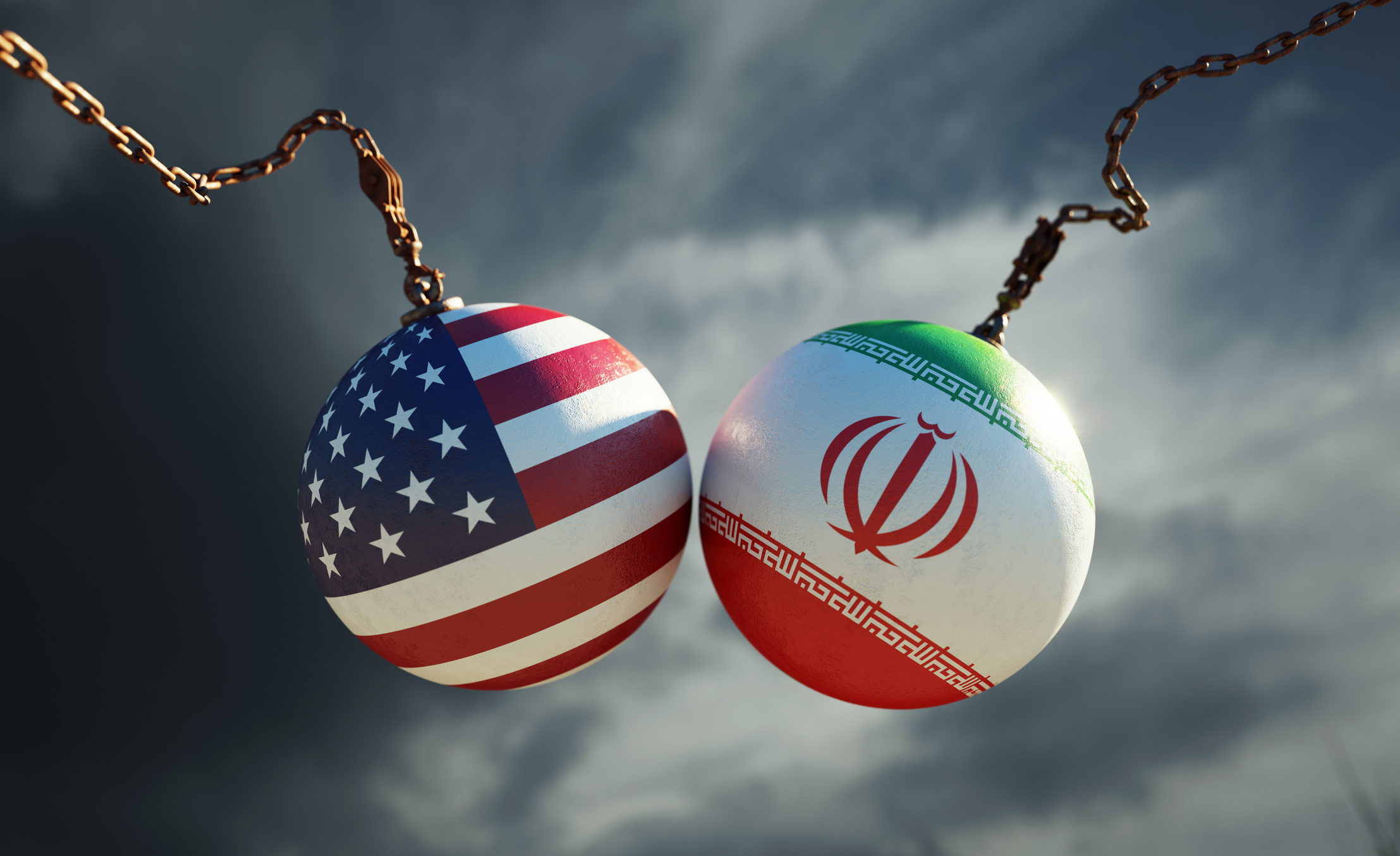
Popular protests in Iran, which began in late December 2025 amid an economic downturn accelerated by the national currency’s collapse in value, have rapidly evolved into a nationwide upheaval. The government has cracked down, including through beatings, shootings and a near-total internet blackout. So far, state forces have killed several hundred protesters and arrested thousands, though the true numbers are almost certainly much higher. In Washington, the Trump administration has warned the Iranian regime to halt its repression. Iranian officials have threatened harsh retaliation for any military action and suggested that pre-emptive strikes are on the table as well.
Washington and Tehran are engaged in escalating rhetoric over anti-government protests in Iran, with Iranian Foreign Minister Abbas Araghchi saying his government is ready for war after United States President Donald Trump threatened military action over Iran’s crackdown on the demonstrations.
Public Sentiment: Economy, Reform and Nuclear Question
Starting in late December 2025, market instability prompted demonstrations among Tehran bazaar merchants, the cadre of shopkeepers who have long been a pillar of the Islamic Republic’s support, that quickly spread beyond the capital. Soon, marchers were giving voice to grievances that went well beyond financial hardship, calling for an end to the regime that took power in 1979. To take this course, just three years after the brutal clampdown on the “Women, Life, Freedom” protests, in which nearly 500 demonstrators were killed and many more injured, was extraordinarily brave and a measure of how desperate things have become. Both in 2022 and since then, the regime has proven able, and all too willing, to quash dissent with brute force.
The protests snowballed in the lingering shadow of the 12-day hostilities with Israel (and briefly the United States) in June 2025, which left Iran’s nuclear programme severely damaged, many in the senior ranks of its military killed, its defensive vulnerabilities exposed and its intelligence deficiencies on full display. To hear the Islamic Republic’s leaders tell it, the lesson of the 12-day War was that the system was still standing, having taken the worst beating its external foes could administer. They believed that cohesion at home had helped them ward off the threat from abroad.
It proved to be wishful thinking. If the war forged a moment of national unity, it was short-lived and swiftly undermined by the system’s own failings. As with previous rounds of protest over the past decade, the regime’s sclerotic response to political and socio-economic malaise has turned the country into a tinderbox. In the past, the leadership in Tehran might have argued that it deserved latitude for having provided security for Iran’s citizens in a region riven with conflict. This time, the regime’s failure to protect the country during the 12-day war instead suggested that it is no longer capable of honouring the most basic element of the social contract.
Indeed, for much of the Iranian public, leadership failure is a resonant theme. Two years of confrontation with Israel after Hamas’s 7 October 2023 attack severely degraded both Iran’s nuclear programme and the “axis of resistance” that Tehran had built elsewhere in the Middle East over decades and at massive cost to project power and deter adversaries. Meanwhile, Tehran’s efforts to counter US sanctions by building a “resistance economy” reliant on domestic capacity and non-oil trade have proven disastrous, as mismanagement and corruption have accelerated the country’s economic freefall.
But perhaps the greatest leadership failure of all has been resistance to change at home. Under the octogenarian Supreme Leader, Ali Khamenei, the system has faced repeated popular challenges to its rule, only to crush them with an iron fist while continuing to govern as poorly as before. That approach bought it time, but success measured solely by the maintenance of coercive power gave the country’s leaders little impetus to address the grievances underlying public discontent. The regime’s refusal to expand political and social freedoms or to overhaul the sputtering economy has meant that it is continuously narrowing its options from the ineffective to the counterproductive.
Historical Burden: Complex US-Iran Relationship
The US has a complex relationship with Iran, rooted in events such as the 1953 coup that overthrew Iran’s democratically elected Prime Minister, Mohammad Mosaddegh. The US, working with the United Kingdom, played a key role in that coup. American and British leaders feared that Mosaddegh’s policies might push Iran closer to the Soviet Union and sought to protect Western economic interests in Iran’s oil industry.
After the end of the Second World War, Iran sought to limit its dependence on the West. Mosaddegh, a nationalist leader, became prime minister in 1951. He was committed to reducing foreign influence over Iran’s resources, particularly oil.
At the time, the British-controlled Anglo-Iranian Oil Company (AIOC) dominated Iran’s oil industry. The vast majority of profits went to Britain, while Iran received only a small fraction.
British intelligence agencies warned of the danger of Soviet involvement. The US was concerned about a communist takeover of Iran, which shared borders with Soviet republics such as Armenia, Azerbaijan and Turkmenistan. Consequently, the CIA, together with British intelligence, backed a coup d’état in 1953 that ushered in an authoritarian regime dominated by Shah Mohammad Reza Pahlavi.
What Next for Iran?
The regime in Tehran can choose between two broad approaches in dealing with the crisis it faces. The first would involve making fundamental political and economic changes — even though it has historically resisted such reforms, especially under pressure, and given every indication of rejecting them at present. The second path would be to hope the protests begin to fizzle out due to fear and fatigue. The regime could then use a combination of economic triage and outright repression to buy itself more time. But the first course could still see unrest continue as discontent percolates, while the second would invite further anger from below and aggravate the risk of action from outside.
Secondly, US military action against the political leadership or repressive apparatus may further weaken the system, but it could also lead its embattled core to unleash a scorched-earth campaign against its own people, US interests and US allies. None of these outcomes is pre-ordained, but the hope of seeing the back of a system few will lament should not obscure the full range of potential consequences.
It is difficult to imagine the Supreme Leader himself or many of those around him agreeing to any form of transition. Yet these are unusually challenging times. For all those who will baulk at the notion, others in positions of influence may find the proposition tempting as an off-ramp, particularly given the inevitable transition to the post-Khamenei era. Investing in such an approach could enable Washington to offer the system’s opponents a pathway out of a moribund order and towards a government enjoying popular legitimacy, expanding economic opportunity and positioned for stable relations with Iran’s neighbours. More immediately, it would reduce the risk of renewed and unpredictable military confrontation and the spectre of Iran collapsing into chaos at an already uncertain moment.
(Dr S. Krishnan is an Associate Professor in the Seedling School of Law and Governance, Jaipur National University, Jaipur. Minakshi Patel is a law student at the same university)