



By Abhinav Mehrotra and Amit Upadhyay
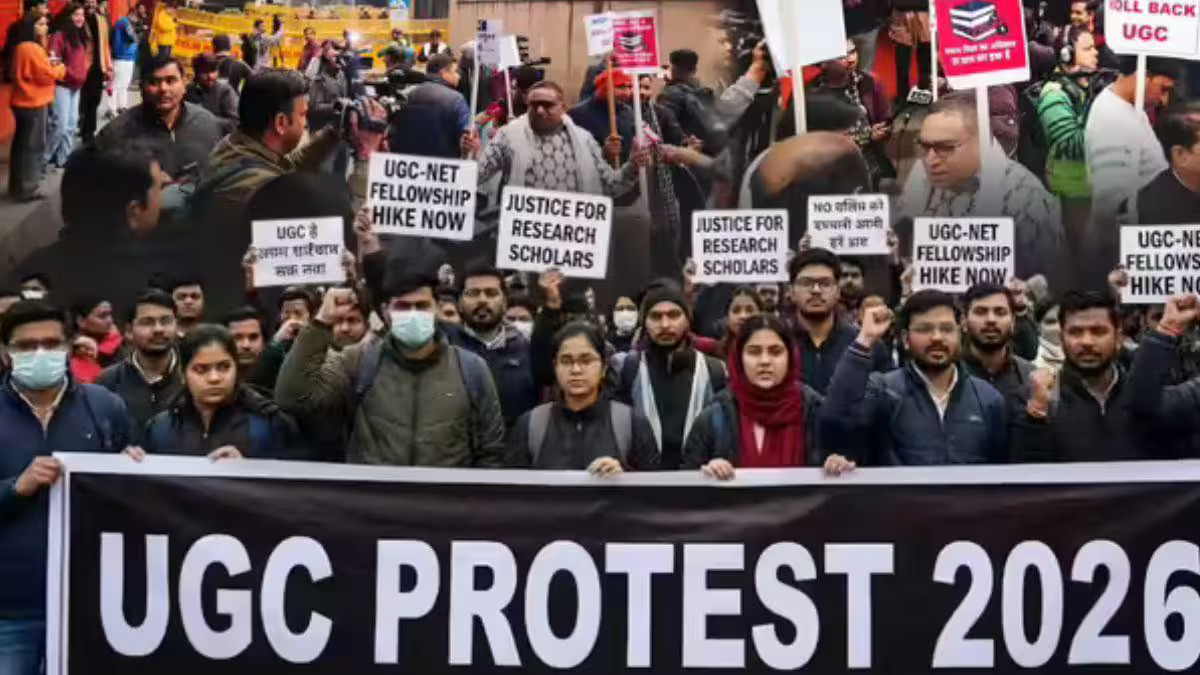
On January 29, a Division Bench comprising Chief Justice Surya Kant and Justice Joymalya Bagchi stayed the University Grants Commission (Promotion of Equity in Higher Educational Institutions) Regulations, 2026. Notified barely two weeks earlier, on January 13, the regulations had already become contentious, particularly among students from the general category, who argued that the framework treated them unfairly.
The University Grants Commission’s Promotion of Equity in Higher Educational Institutions Regulations, 2026, were introduced with the stated aim of addressing discrimination and exclusion faced by historically marginalised communities in Indian higher education. However, the debate surrounding these regulations reveals a deeper concern: equity, when pursued without balance, can itself produce unfair outcomes.
The new regulations mandate the creation of Equal Opportunity Centres, Equity Committees, helplines, and monitoring mechanisms in all higher education institutions. The principal objection, however, lies in the definitional framework of the regulations. Clause 3(c) narrowly defines “caste-based discrimination” as discrimination based exclusively on caste or tribe against members of the Scheduled Castes, the Scheduled Tribes, and the Other Backward Classes. According to the petitioners, this formulation effectively excludes students from the general category from the protective ambit of caste-based discrimination, leaving them vulnerable to false or motivated complaints.
By framing caste discrimination solely as unfair treatment against SC, ST, and OBC individuals, the regulations raise a fundamental question: does discrimination cease to be discrimination if the victim belongs to the general category? This has generated anxiety among students and faculty from the general category, who fear that grievances arising from caste-based discrimination against them may not receive equivalent institutional safeguards. A regulatory framework that appears to pre-judge who can be a victim and who cannot risks undermining the principle of equal protection.
The second, and perhaps more contentious, issue is the removal of provisions penalising false complaints. Critics note that the absence of a mechanism to address demonstrably false or malicious complaints deepens this imbalance. Earlier drafts of the regulations reportedly included clauses allowing institutions to act against complainants who knowingly filed false allegations. The stated rationale for their removal is that penalties for false complaints might discourage genuine victims, particularly from marginalised communities, from coming forward. Yet, without procedural safeguards, there is a real danger of misuse and, ultimately, of eroding the credibility of genuine cases.
Any justice system, whether judicial or administrative, depends on two core principles: protecting those who have been wronged and treating the accused fairly. Ideally, these principles reinforce each other. In the present form of the UGC regulations, however, the balance appears tilted in favour of one at the expense of the other. Protection of victims seems to have been prioritised in ways that risk sidelining fairness and due process. Such an imbalance weakens, rather than strengthens, equity.
Supporters of the regulations argue that such an approach is necessary to address long-standing and deeply entrenched injustices, pointing to higher dropout rates, underrepresentation in faculty positions, and repeated accounts of caste-based bias faced by SC, ST, and OBC students. Seen from this perspective, targeted safeguards are not discriminatory but corrective, designed to build empathy and institutional accountability. This argument deserves serious engagement. However, addressing historical disadvantage must remain anchored in universal principles of justice. It is possible to recognise caste-based discrimination while also affirming that discrimination, harassment, and false accusations are wrong, regardless of who they affect or who commits them.
The legal challenges to the UGC Regulations, 2026, bring these unresolved issues into sharp focus. Petitions before the Supreme Court question whether the regulations’ narrow definition of caste discrimination violates Article 14 of the Constitution, which guarantees equality before the law and equal protection of the law. The Court’s interim stay indicates that these concerns transcend political disagreement and raise serious constitutional questions. Critics argue that by limiting the scope of what constitutes discrimination, the regulations risk excluding lived experiences that do not neatly fit within formal categories. The outcome of this litigation will therefore be significant, not only for the validity of the regulations themselves, but also for the broader constitutional understanding of equality and non-discrimination in educational spaces.
What this litigation ultimately reveals is not merely a technical dispute over definitions, but a deeper tension between substantive equality and procedural safeguards. While the constitutional mandate clearly supports special protections for historically oppressed groups, regulatory design must also inspire institutional confidence and avoid perceptions of arbitrariness. The challenge before the Court is to ensure that equity regulations function as instruments of inclusion rather than sources of new anxieties, reaffirming that social justice and fairness are not competing ideals but constitutionally interdependent values.
Broadly speaking, the debate is not about denying the reality of caste discrimination, which undeniably exists, nor is it about questioning whether marginalised communities deserve protection. The real issue is whether equity can be achieved through regulations that appear exclusionary or procedurally deficient. If Indian higher education is to become truly equitable, its regulatory systems must command trust across communities. This requires clear definitions, consistent safeguards, and processes that protect both complainants and the accused.
The UGC’s initiative is an important step, but it remains unfinished. Only by engaging seriously with concerns about inclusivity and due process, rather than dismissing them, can the regulations evolve into a stronger and more credible instrument of justice. Only then can campuses become spaces where dignity, opportunity, and accountability coexist, and where equity is seen not as selective, but as a shared constitutional commitment.
(Abhinav Mehrotra is an associate professor and Amit Upadhyay is an associate professor at Jindal Global Law School, OP Jindal Global University)