

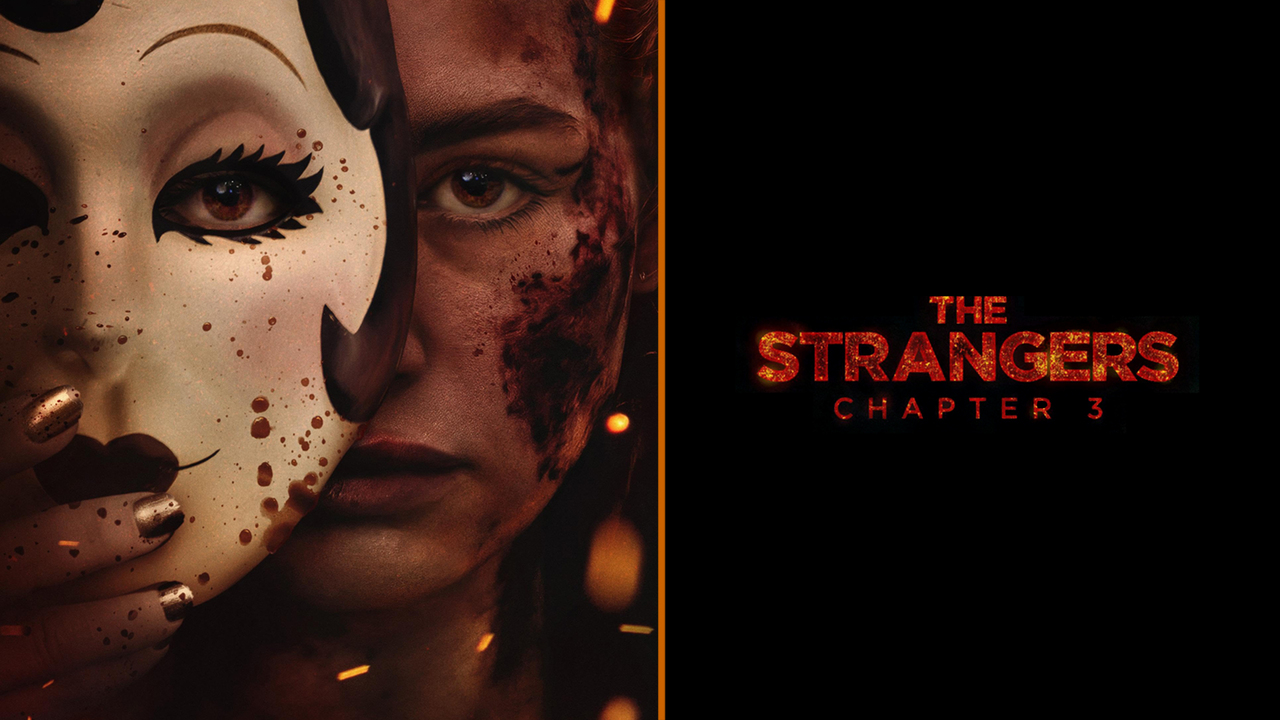
The Strangers – Chapter 3 positions itself as the concluding instalment of the rebooted trilogy — a narrative endpoint and psychological reckoning for its lone survivor, Maya (Madelaine Petsch). The opening sequence, flowing directly from the previous chapter, ranks among the film’s most effective passages, immediately immersing the viewer in the raw aftermath of violence.
Directed by Renny Harlin, the film resumes precisely where Chapter 2 left off, engaging the audience in the visceral residue of terror. Yet as the narrative unfolds, it gradually yields to explanation-driven storytelling, weakening the very horror it seeks to sustain.
Wounded and disoriented, Maya stumbles through isolated rural terrain and dense forest, shadowed by unseen threats. With minimal dialogue and fractured sound design, this sequence briefly restores the franchise’s original strength, where fear emerges from seclusion, randomness and unpredictability. The camera lingers on her vulnerability and the surrounding void, situating the viewer within her trauma. However, this psychological immediacy proves short-lived.
An extended sequence set in an abandoned house revisits familiar franchise imagery: masked figures, oppressive silence and sudden ruptures of movement. Although the cinematography remains technically assured, the staging grows repetitive. Rather than escalating tension, the film reiterates established motifs without recontextualising them. The recurrent use of the same dagger, machete and knife in near-identical fashion suggests a reliance on formula rather than on inventive strategies for generating dread — an essential component of effective horror cinema.
The narrative then pivots with the revelation of the strangers’ identities and their personal connections, particularly the disclosure involving Gregory and the local sheriff. This unmasking significantly alters the structural design of the sequel. By grounding the violence in personal history and familial dysfunction, the film replaces existential terror with explicable motive. The strangers, once terrifying in their anonymity, become markedly less frightening once stripped of it.
The sheriff’s institutional complicity in inherited violence introduces the potential for broader social commentary. However, these implications remain underdeveloped. The revelation functions merely as an unpleasant emotional discovery rather than as a meaningful expansion of the film’s thematic architecture. Meanwhile, Maya transitions from hunted survivor to active combatant, arming herself and confronting her pursuers directly. Although the film acknowledges her trauma, it seldom interrogates it with sustained depth or seriousness.
The trilogy concludes with a final confrontation that delivers narrative closure with emphatic finality. Yet what lingers is a conclusion without consequence. The story is resolved decisively, but the persistent anxiety that once defined the franchise dissipates.
Ultimately, The Strangers – Chapter 3 exemplifies a familiar franchise miscalculation: mistaking explanation for insight. In doing so, it gradually extinguishes the primal fear that once governed the series. As a final chapter, it completes the narrative arc — but at the cost of the very terror that made it compelling.
(Praveen Nagda is festival director, KidzCINEMA and Culture Cinema Film Festivals)