




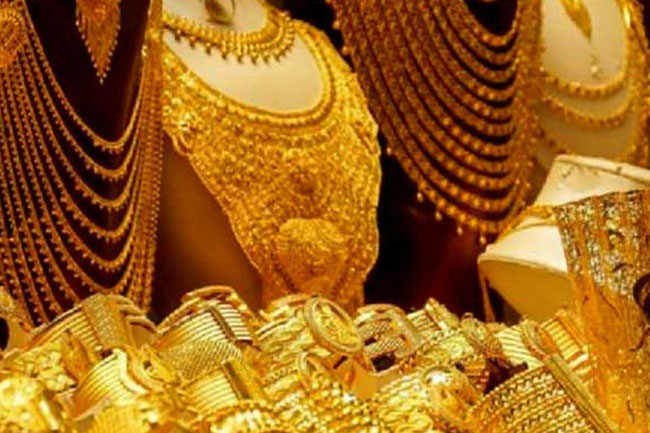
Gold is no longer just glittering; it is speaking — and what it says is unsettling for the U.S. dollar. The yellow metal’s record-breaking surge in 2025 has gone far beyond the logic of safe-haven buying. Beneath the rally lies a quieter revolution — a deliberate, methodical rebalancing of the global financial system away from a single-currency anchor.
New data from the World Gold Council (WGC) and a parallel analysis by CareEdge Global suggest that the world is witnessing not merely a “gold rush,” but a strategic dedollarisation. In the words of one senior Asian economist, “We are entering a post-dollar transition phase — not abrupt, but inevitable.”
The Numbers Tell the Story
Global gold demand in the third quarter hit 1,313 tonnes, the highest ever recorded. In value terms, that’s $146 billion, a staggering 44% increase year-on-year. Over half came from investment demand, which grew 47%, driven by fears of fiscal fragility, a weakening dollar, and geopolitical volatility.
Central banks added 220 tonnes to their vaults in Q3 alone — a 28% quarter-on-quarter jump. While below the record accumulation of the past two years, the buying pattern is revealing: broad-based, steady, and purposeful.
As one European fund strategist put it, “This is not diversification anymore — this is repositioning. Central banks are not buying gold to hedge (against) inflation. They are buying it to hedge (against) Washington.”
The Historical Arc: Every Empire’s Currency Has Its Time
The dollar’s dominance today echoes earlier hegemonies — and the parallels are instructive. The Venetian ducat ruled Mediterranean trade in the 14th century. The Spanish real followed in the 16th century, underpinned by New World silver. The Dutch guilder rose with Amsterdam’s trading supremacy in the 17th century, only to be displaced by the British pound sterling, which anchored global finance for over a century until the Second World War.
The U.S. dollar, consecrated by the Bretton Woods system in 1944, has now enjoyed its reign for eight decades — longer than most of its predecessors. Yet, as one economist at a Singapore-based think tank observed, “All dominant currencies carry a half-life. They begin as symbols of trust, and end as instruments of policy. The dollar is somewhere in between.”
The historical pattern is striking: when fiscal excess, external debt, and political unpredictability erode faith in an issuer’s discipline, global capital gradually migrates to neutral stores of value. In earlier centuries, that meant bullion. It still does.
The Dollar’s Erosion and Gold’s Political Neutrality
The U.S. fiscal trajectory is feeding this drift. Gross government debt, now over 122% of GDP, is projected to hit 140% by 2029. Meanwhile, the One Big Beautiful Bill Act of 2025 — a combination of tax reliefs, subsidies, and higher defence spending — has widened deficits even further.
The US Dollar Index has fallen nearly 9% this year. But the deeper problem, economists say, is not valuation; it’s credibility.
“The dollar is not collapsing,” said a former IMF official based in Europe. “It’s simply being questioned in ways it hasn’t been for 70 years. Every sanction, every fiscal impasse, every politicised rate cut chips away at the presumption of neutrality that once made it supreme.”
For emerging economies, the 2022 freezing of Russian reserves by Western powers was a wake-up call. That episode, as the CareEdge report notes, “reminded central banks that sovereign assets in foreign currencies are not beyond the reach of political leverage.”
Gold, by contrast, cannot be sanctioned, frozen, or defaulted upon. It is an asset without an issuer — an ancient form of monetary independence.
The BRICS Bloc: Building Parallel Anchors
The most visible pushback against dollar dominance is emerging from the BRICS+ alliance — now enlarged to include Iran, Egypt, and the UAE. Six of the world’s top ten official gold buyers in recent years have been BRICS nations. Between them, China and Russia have added over 2,500 tonnes since 2014, while India has accumulated 318 tonnes, including 73 tonnes last year.
Collectively, BRICS members now hold around 17% of their total reserves in gold, compared with 56% for G7 nations. This, analysts say, is not merely an economic manoeuvre but a strategic declaration.
“Gold is the common denominator of distrust,” said a Delhi-based economist. “For BRICS, it is not about replacing the dollar with the yuan or the rupee — it’s about creating a parallel buffer system where no one power dictates value.”
India’s Paradoxical Position
India remains both a symbol and a symptom of this transition. Despite producing barely a fifth of its domestic gold requirement, it continues to import heavily. In Q3, India’s gold demand reached 209 tonnes, down 16% by volume but up 23% in rupee terms to ₹2.03 lakh crore.
Investment demand rose 20% in tonnage and 74% in value, signalling that households are treating gold less as an ornament and more as balance-sheet insurance. More Indians are using gold as collateral — an estimated 220 tonnes of jewellery pledged this year — reflecting its evolution into a quasi-financial instrument.
As one Mumbai economist noted, “In an environment where financial trust is globalising but creditworthiness is not, gold functions as the one true collateral. Indians understand that instinctively.”
Beyond the Market: The Architecture of Trust
The dedollarisation trend does not imply the dollar’s collapse. The greenback still dominates around 60% of global reserves and 80% of trade invoicing. But its monopoly on trust is weakening.
That trust, the foundation of all reserve currencies, depends not just on liquidity, but on political restraint. The U.S. has begun to test the limits of both.
“The global economy,” said one London-based economist, “is quietly building redundancy into its monetary system — multiple anchors rather than one. Gold is the primary backup.”
This is not an ideological revolt; it’s an insurance policy against concentrated risk. For the first time in modern history, reserve diversification is being driven as much by politics as by economics.
The Long View: A Slow Realignment, Not a Sudden Revolt
The transition away from the dollar will not be dramatic; it will be cumulative — measured in decades, not quarters. The WGC expects central banks to continue buying between 750 and 900 tonnes annually, even at record prices.
Gold’s rise above $3,450 per ounce this quarter, flirting with $4,000 in October, represents both anxiety and adaptation. It’s a market recalibrating to a multipolar world order where confidence is distributed, not concentrated.
As one senior economist put it: “Empires lose their currencies long before they lose their armies. The dollar’s era isn’t ending yet — but the conversation about what comes next has already begun.” And for now, that conversation is being priced not in dollars, but in ounces. (5WH)