



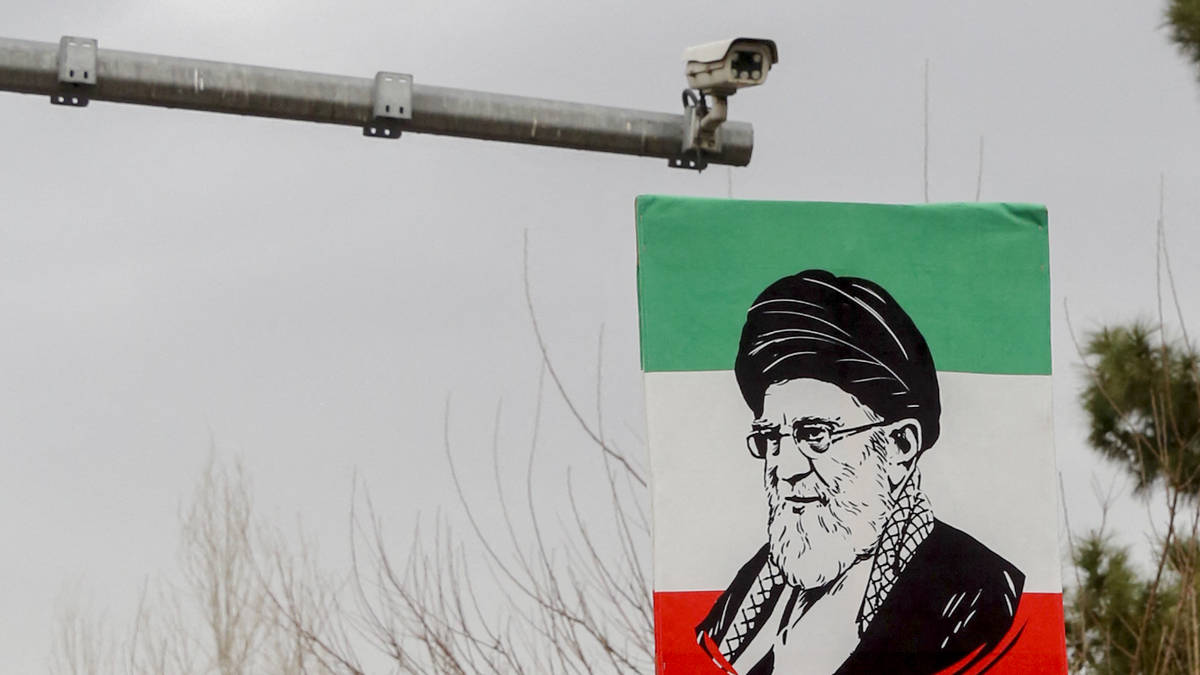
A decade of surveillance, precision missiles and a window of opportunity that lasted one morning
It did not begin with bombs. It began with a traffic camera.
Somewhere along Pasteur Street in central Tehran, a quiet artery flanked by government compounds and the layered security infrastructure of the Islamic Republic, a lens was watching. It had been watching for years. Unknown to the men it surveilled, the footage it captured was not streaming to Iranian state servers. It had been encrypted, rerouted and was arriving, frame by frame, at intelligence analysis facilities in Tel Aviv and southern Israel. That single camera, among dozens of compromised feeds across the Iranian capital, would contribute a small but critical thread to one of the most consequential intelligence operations in modern history.
On Saturday, February 28, 2026, at approximately 6 am Tehran time, Israeli jets fired precision munitions at a government compound near Pasteur Street. Three strikes, three locations, within a single minute. When the smoke cleared from the rubble, Ayatollah Ali Khamenei, the 86-year-old Supreme Leader of the Islamic Republic of Iran, the man who had commanded the state’s theological and military apparatus for 35 years, was dead, his body riddled with shrapnel.
The joint US-Israeli operation, called Operation Epic Fury by American forces and Operation Roaring Lion by the Israelis, killed Khamenei alongside an estimated 40 senior officials. Members of Khamenei’s immediate family, including his daughter, granddaughter, daughter-in-law, and son-in-law, were also killed in the strike.
But behind these lay a story years in the making, a story of digital infiltration, human intelligence, artificial intelligence tools, cyber warfare, and a fateful Saturday morning meeting that brought the Islamic Republic’s leadership together in one place at one time.
PART I: THE LONG GAME
The foundations of what became Operation Epic Fury trace back to 2001, more than two decades before the bombs fell.
According to the Financial Times, former Israeli Prime Minister Ariel Sharon had delivered a directive to Meir Dagan, the newly appointed head of the Mossad, that would reorient the entire trajectory of Israel’s foreign intelligence operations. The Mossad at the time was deeply focused on Palestinian militants, Hezbollah, and Syrian state threats. Sharon had a different priority: “All the things the Mossad is doing are well and fine. What I need is Iran. That’s your target.”
So, the target Iran began. Over the following two decades, the Mossad built one of the most comprehensive intelligence penetrations of a foreign state in modern espionage history. Iran’s nuclear programme was sabotaged through the Stuxnet cyberattack, co-developed with the CIA, which destroyed centrifuges at the Natanz uranium enrichment facility. Iranian nuclear scientists were assassinated in Tehran. Some were shot by motorcycle-mounted gunmen, one killed by a remote-triggered device. In 2018, Mossad operatives physically broke into a warehouse in Tehran’s Shorabad district and removed an archive of 100,000 files documenting Iran’s covert nuclear weapons programme.
But the most important and least visible operation was the surveillance grid being quietly built inside Tehran itself.
>> The Camera Network
Iran’s government had spent years building an extensive urban surveillance network across Tehran. Traffic cameras were positioned to monitor vehicles, identify protesters, and track dissidents. The Islamic Republic used this network as an instrument of domestic repression. What Tehran did not know was that Israeli cyber units had penetrated it.
According to two people familiar with the matter, cited by the FT, nearly all the traffic cameras in Tehran had been hacked for years. Their live footage was encrypted at the source and transmitted to servers in Tel Aviv and southern Israel. Israeli analysts had, in effect, a live window into the daily movements of Tehran’s streets.
One particular camera near the Pasteur Street compound proved especially valuable. Its angle allowed analysts to observe exactly where members of Khamenei’s security detail parked their personal vehicles when arriving for shifts. Over time, this seemingly mundane data, who parked where, at what time, in which car, became foundational intelligence.
“We knew Tehran like we know Jerusalem,” a current Israeli intelligence official told the FT, speaking anonymously. “And when you know a place as well as you know the street you grew up on, you notice a single thing that’s out of place.”
The footage was fed into complex AI-driven algorithms. These systems built what intelligence officials call a “pattern of life”: detailed behavioural profiles of every member of Khamenei’s security chain, including their home addresses, duty hours, commuting routes, and crucially, which senior official each guard was assigned to protect. The profiles were continuously updated and refined as new data streamed in.
>> Unit 8200, Mossad, & Military
The intelligence infrastructure that enabled the strike on Khamenei was the product of three interlocking Israeli agencies, operating in close coordination.
Unit 8200, the Israel Defence Forces’ elite signals intelligence division, often described as Israel’s equivalent of the NSA, was responsible for the electronic and signals collection. Unit 8200 had been penetrating Iranian communications networks, monitoring encrypted government channels and intercepting communications between senior regime officials. The unit reportedly disrupted mobile phone towers near Pasteur Street on the morning of the strike. According to the FT, approximately a dozen cell towers in the area were compromised, causing phones to appear busy when dialled, effectively cutting off Khamenei’s security detail from receiving any outside warning in the critical minutes before the strike.
The Mossad, Israel’s foreign intelligence service, ran the human intelligence (HUMINT) dimension. Mossad operatives had recruited sources within or adjacent to Iran’s leadership circles — sources capable of providing information that no camera or signals intercept could yield. One such human source, described by two people familiar with the matter as being handled by the CIA, provided the final crucial confirmation on the morning of February 28: the meeting was proceeding on schedule. Khamenei was present.
Israeli military intelligence, the Aman directorate, processed the torrent of incoming information into daily operational briefings. This directorate deployed social network analysis, a mathematical modelling method that maps relationships between individuals and institutions, to parse billions of data points. The analysis identified previously unrecognized decision-making hubs within the Iranian state and flagged new targets for surveillance and potential elimination.
“In Israeli intelligence culture, targeting intelligence is the most essential tactical issue,” Brigadier General Itai Shapira, a 25-year veteran of Israel’s intelligence directorate, told the Financial Times.
PART II: THE CIA MANHUNT
While Israeli intelligence was building its surveillance architecture inside Tehran, the CIA was conducting its own extended tracking operation targeting Khamenei personally.
According to multiple people familiar with the matter, cited by CBS News and The New York Times, the CIA spent several months gaining deeper insight into Khamenei’s whereabouts as he moved around Tehran. The agency was accumulating what officials described as “high fidelity” intelligence on his location and patterns of movement, a level of certainty rarely achieved in tracking a figure of this magnitude.
Khamenei, unlike his ally Hezbollah leader Hassan Nasrallah, did not live permanently underground. Nasrallah had spent years in concealed bunkers before Israeli jets buried him under an apartment building in Beirut in September 2024. Khamenei maintained fortified underground shelters but did not always use them. He continued to conduct meetings in his compound offices near Pasteur Street. One intelligence source noted bluntly: had Khamenei been inside one of those reinforced underground bunkers on the morning of February 28, the strike would likely have failed entirely.
The CIA’s network had been sharpened during the 12-day war in June 2025, when Israeli strikes killed more than a dozen Iranian nuclear scientists and senior military officers. That conflict, though ultimately limited in scope, served as an intelligence stress-test, exposing patterns in how Iranian leadership communicated, moved, and dispersed during hostilities. The lessons were applied in the months that followed.
The critical breakthrough came in the days before February 28. CIA sources learned of a scheduled Saturday morning gathering of senior Iranian officials at Khamenei’s compound. The attendees would include the Revolutionary Guard commander, the defence minister, the head of the military council and other figures from the uppermost tier of Iran’s security establishment. Khamenei himself was expected to be present.
The CIA immediately shared the intelligence with Israeli counterparts. Two people familiar with the operation told the FT that the American side confirmed a human source that the meeting was proceeding as planned, a level of verification considered essential given the gravity of the intended action. Officials described the intelligence as providing a “window of opportunity” for both nations to achieve a decisive early victory: the simultaneous elimination of Iran’s top political-military leadership.
That confirmation changed the timeline.
PART III: THE STRIKE
The original plan called for a nighttime operation. The US and Israeli planners had logically assumed that a strike under cover of darkness would reduce the risk of air defences detecting incoming aircraft and maximise the element of surprise. The intelligence about the Saturday morning meeting overturned that calculus entirely.
If the operation waited until nightfall, the meeting would be over. The window would close. Iran’s top officials, alerted to the possibility of war, would disperse and go underground. The chance to eliminate the entire command structure in a single coordinated strike, an outcome that might not present itself again for years, if ever, would be lost.
The decision was made at the highest levels. According to reporting by the Korea Times and other outlets, at 3:38 pm Eastern Time on Friday, February 27, 2026, while travelling on Air Force One to Texas, US President Donald Trump gave the formal authorisation. General Dan Caine, Chairman of the Joint Chiefs of Staff, later told reporters: “The president directed, and I quote, ‘Operation Epic Fury’ approved… Good luck.”
That order set every element of the joint force into final motion. Air defence batteries readied themselves. Pilots and crews completed final rehearsals of their strike packages. US carrier strike groups, including the USS Abraham Lincoln, moved toward their launch points in the region. In the hours before the strike, American cyber units conducted preliminary operations aimed at blinding Iran’s defensive radar and detection systems. General Caine later confirmed these actions were designed to degrade Tehran’s ability to detect or respond to incoming attacks.
Meanwhile, Israeli jets took off hours before the planned strike time, flying long arcs to arrive at precisely the right location at precisely the right moment. Aboard those aircraft were precision-guided munitions, including a missile type identified by Israeli sources as the “Sparrow”, a weapon capable of striking a target the size of a dining table from a distance of more than 1,000 kilometres, outside the range of Iranian air defences. “The decision to strike in the morning rather than at night allowed Israel to achieve tactical surprise for the second time, despite heavy Iranian preparedness”, an Israeli military official, as cited by the FT.
At approximately 6 a.m. on Saturday, February 28, 2026, the compound near Pasteur Street, home to Khamenei’s offices, meeting rooms, and the hub of Iran’s state security apparatus, was struck by a barrage of precision munitions.
The attack was simultaneous: three separate locations within the compound were hit within a single minute. A total of as many as 30 precision munitions were fired, according to a former senior Israeli intelligence official cited by the Financial Times. The compound, built to be the nerve centre of the Islamic Republic, became in seconds a field of rubble and smoke.
The intelligence had been accurate. The meeting was underway. Among the dead were: Ayatollah Ali Khamenei, Supreme Leader of the Islamic Republic; General Mohammad Pakpour, commander of the Islamic Revolutionary Guard Corps; Defense Minister Aziz Nasirzadeh; Ali Shamkhani, a veteran IRGC commander and senior Khamenei adviser; IRGC Aerospace Force commander Seyed Majid Mousavi; Deputy Intelligence Minister Mohammad Shirazi; and multiple other senior officials. Members of Khamenei’s immediate family were also killed.
Khamenei’s body was found in the rubble, struck by shrapnel. A photograph of the corpse was viewed by both President Trump and Prime Minister Netanyahu, according to The Jewish Chronicle. Iranian state media later confirmed the death.
In all, an Israeli military official said, approximately 40 senior figures of Iran’s regime were killed in the opening salvoes. Trump later stated in a video address that “the entire military command is gone.” He also confirmed that three US service members were killed during the broader operation and five were seriously wounded, acknowledging the human cost on the American side as well.
>> Simultaneous US Military Operations
While Israeli jets executed the decapitation strike in Tehran, US forces were conducting a sweeping parallel campaign across Iran’s military infrastructure. According to the US Central Command, American forces struck hundreds of targets inside Iran. These included Revolutionary Guard facilities, ballistic missile production sites, aerial defence systems, and naval assets. CENTCOM confirmed the sinking of at least one Iranian Jamaran-class corvette, destroyed at a pier in Chah Bahar on the Gulf of Oman.
Trump stated that U.S. forces destroyed nine Iranian naval ships and “largely destroyed their Naval Headquarters.” The B-2 Spirit stealth bombers, the same aircraft used in the previous summer’s Operation Midnight Hammer against Iran’s nuclear facilities, were deployed again, striking hardened targets across the country.
PART IV: THE INTELLIGENCE ARCHITECTURE
The elimination of Ayatollah Khamenei represents a convergence of capabilities that have been built, refined, and tested over more than two decades. Several elements made the operation possible that would not have been available even a decade ago.
The first is the scale of passive surveillance. By compromising Tehran’s own camera infrastructure, Israeli intelligence was able to conduct persistent, long-term observation of the compound without ever physically entering Iran. Every person who walked near Pasteur Street for years was potentially being watched. The automation of this surveillance — using machine learning algorithms to process and identify patterns across enormous volumes of footage — transformed what would once have required hundreds of human analysts into a manageable automated workflow.
The second is the integration of signals intelligence with human intelligence. Signals intercepts from Unit 8200 told analysts what was being said and when; human sources told them what was actually happening on the ground. The CIA’s confirmation from a human source that the meeting was proceeding as planned provided the final link in the chain. Technology, no matter how sophisticated, cannot replace a human being who has access to a target’s inner circle.
The third is the weaponry. The “Sparrow” precision missile, capable of striking a precise target from beyond the range of Iran’s air defenses, meant that Israeli pilots could execute the strike without exposing themselves to Iranian defensive fire. The precision of the munitions — 30 rounds, three sites, one minute — limited collateral destruction to the intended targets within the compound.
The fourth is operational security. Despite the scale of the intelligence-gathering operation — years of compromised cameras, penetrated cell networks, recruited human sources — Iran did not detect what was being done to it. The intelligence network, according to The Jewish Chronicle, had been in place even during the 12-day war in June 2025, suggesting that Iran’s counterintelligence services were unable to identify and neutralize the penetration.
The fifth and perhaps most decisive factor was timing. The Saturday morning meeting brought together in one place, at one time, nearly the entire senior leadership of the Islamic Republic. As one intelligence assessment noted, once open war began and Iran’s leadership recognized its vulnerability, Khamenei and his commanders would have gone underground immediately into reinforced bunkers that Israeli munitions could not penetrate. The window for a decapitation strike — if it existed at all — was measured in hours.
PART V: THE EPILOGUE
Operation Epic Fury has permanently altered the geopolitical architecture of the Middle East. The Islamic Republic of Iran, for all its profound internal problems and popular discontent, had governed the country and projected military power across the region for 47 years. The leadership that built Iran’s nuclear program, funded Hezbollah and Hamas, and directed proxy forces from Lebanon to Yemen was eliminated in the span of sixty seconds.
Critics — including former U.S. military officials, international legal scholars, and governments in Beijing and Moscow — have argued the operation was illegal under international law, that it constituted an assassination of a sovereign head of state without congressional authorisation, and that its long-term consequences: regional war, oil shocks, and a constitutional crisis in Iran.
Supporters argue that Khamenei had the blood of Americans, Israelis, and countless others on his hands, that Iran’s nuclear program posed an existential threat, and that decades of diplomacy had failed to produce a resolution.
Both arguments will be debated for years. What is not debatable is the technical and intelligence achievement that the operation represents, the product of a 2001 directive that set the Mossad on a path toward a single target, a CIA tracking operation that ran for months in the shadows, a signals intelligence network that penetrated the Iranian capital at every level, and a human source whose confirmation on one Saturday morning in Tehran accelerated the timeline of history.
It did not begin with bombs. It began with a traffic camera watching a bodyguard park his car.
PART VI: THE AFTERMATH
Iran did not accept the destruction of its leadership silently. Within hours of the strikes, Tehran launched retaliatory drone and missile attacks against US bases and partner nations across the region, targeting Kuwait, Bahrain, the UAE, Saudi Arabia, Iraq, Israel, and Jordan. Saudi Aramco’s Ras Tanura oil refinery, one of the largest crude oil processing facilities in the world with a capacity of over half a million barrels per day, was temporarily shut down after being struck by Iranian drones. Oil prices surged globally.
A missile strike on a synagogue inside Israel killed nine people and injured 45 others. In Iran itself, a strike on a girls’ primary school in the southern town of Minab reportedly killed more than 150 students, according to Iranian state-affiliated media — a claim NBC News could not independently verify.
At the United Nations, China and Russia condemned the operations in the strongest terms. Beijing called the killing of Khamenei “a serious violation of Iran’s sovereignty” and demanded an immediate halt to military operations. The US and its Gulf allies issued a joint statement condemning Iran’s retaliatory attacks across the region.
Inside Iran, the public reaction was sharply divided. Large crowds gathered at Enghelab Square in central Tehran to mourn Khamenei, while in Los Angeles, home to the largest Iranian diaspora outside Iran, the mood was reportedly celebratory. Across Iran itself, some citizens were filmed expressing relief and jubilation at the fall of a government that had ruled the country with an iron grip since 1979.
Iran’s constitution mandates that a new supreme leader be selected by the Assembly of Experts without delay. A three-member interim council was immediately constituted: President Masoud Pezeshkian, Judiciary Chief Gholam-Hossein Mohseni-Ejei, and senior conservative cleric Alireza Arafi. The succession process, under Iran’s legal framework, requires a candidate with distinguished religious scholarship and deep knowledge of Islamic jurisprudence, a criteria that significantly narrow the field of potential successors.
(Bikash C Paul is a Delhi-based senior journalist and executive editor of ‘New Delhi Post’)