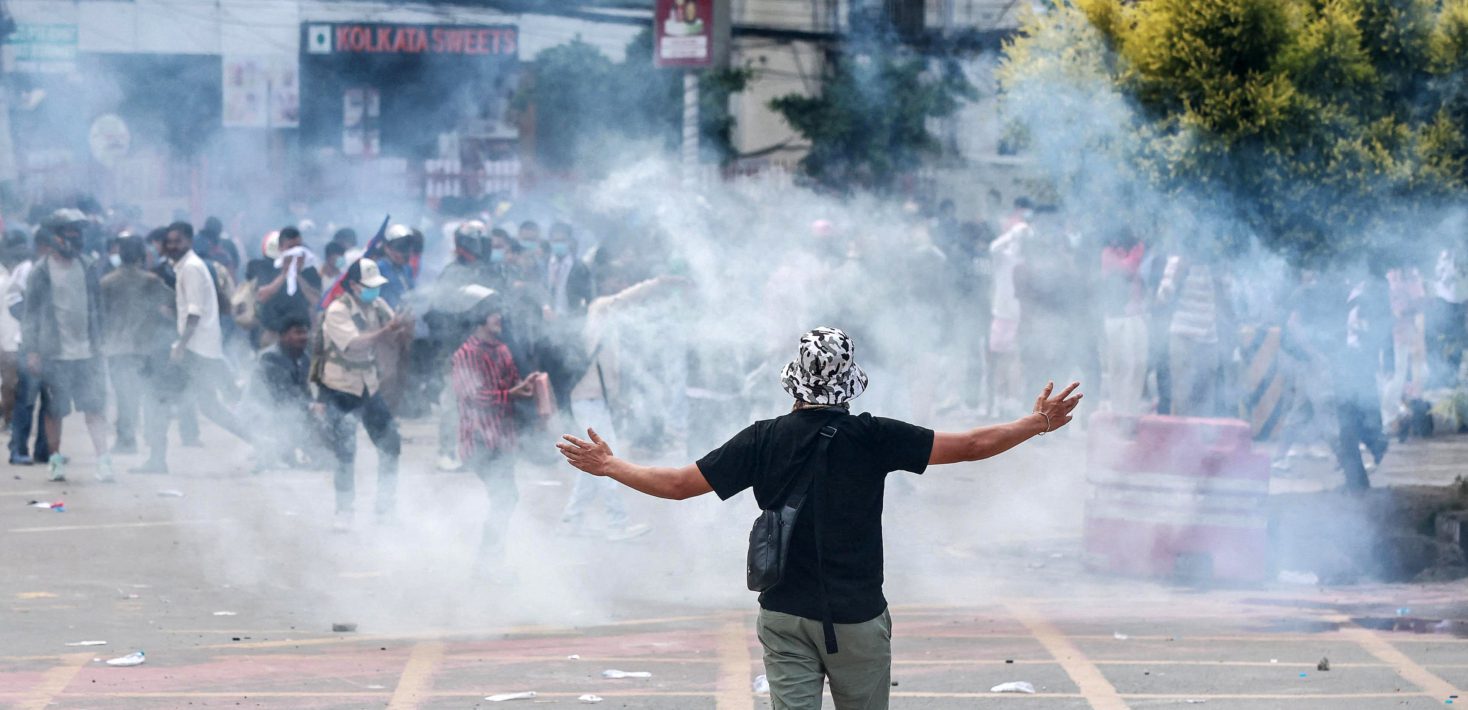
When K. P. Sharma Oli’s government abruptly blocked 26 social media platforms on September 4, ministers called it “a technical regulation”. But it had a different impact on Nepal’s psyche. Within hours, encrypted Telegram groups and VPNs lit up with protest calls. Hashtags like #UnbanOurFuture spilled onto Nepal’s streets, where placards declared: “Social media banned, corruption open.”
Like a bonfire, the Gen Z-led protests soon evolved into Nepal’s fiercest mobilisation since the 2006 pro-democracy movement. Fifty-two people, including one Indian national, were killed in clashes, leading to Oli’s ouster and the installation of an interim prime minister.
The crucial question is why this ban ignited an uprising when corruption, unemployment and frustration have plagued Nepali life for decades. Protesters and observers say the answer lies as much in economics as in politics.
Nearly half of Nepal’s population is under 30, most shut out of traditional jobs. In recent years, social media has become Nepal’s marketplace, classroom and networking hub, anchoring an emerging digital middle class of students, freelancers, entrepreneurs and professionals. From content creators and e-commerce sellers to gig workers, many rely on these platforms to earn, market product and services and build brands. Families dependent on remittances also use them to stay connected abroad and pursue mobility. Social media had become a cultural equaliser, giving young Nepalis a chance to engage globally, assert their voices and cultivate aspirations beyond domestic limitations.
For this digital middle class, the shutdown was not abstract, it was existential. Income streams vanished overnight, communication collapsed and access to the global marketplace disappeared. “When the state switches off the apps, it switches off incomes,” wrote an editorial in the digital outlet, Setopati, capturing the generational mood.
Figures from the Nepal Rastra Bank drove the point home. Its latest report showed Nepali creators earned over NPR 3.53 billion in 2024-25 from YouTube, TikTok and Facebook. As of January 2025, the country has 14.3 million active social media identities; that is nearly 48 per cent of its population. Internet penetration stands at 55.8 per cent, with 86 per cent of users active on at least one platform.
So the fight against censorship always had been a battle for bread and dignity. Protest chants captured that anger: “Rs 3.53 billion stolen dreams”, “Unban our future”, “You can’t censor hunger”. As one Kathmandu Post columnist concluded: “This is not just a policy misstep. It is a generational betrayal.”
For many, survival was literally at stake. A 22-year-old YouTuber in Bhaktapur said: “I pay my tuition from my channel’s ad revenue. After the ban, I feel like the state has shut my classroom door.” A young vlogger told the Kathmandu Post: “My parents thought my YouTube was a waste of time. Now it is my main income, but the government took it away overnight.” A TikToker in Lalitpur explained: “My father lost his job last year. I became the breadwinner with brand deals. The ban felt like being punished for surviving.” A protester told New Delhi Post: “This is not only about Oli or this government. It is about our survival. They took away our work, our voice and our future in one stroke.”
The impact extended far beyond content creators. During the pandemic, thousands of micro-entrepreneurs had shifted online, selling crafts, clothing and food via Facebook and Instagram shops. One Pokhara craft seller said: “The government says this is about regulation, but this is my shop window. Close it, and I am invisible.”
A trade survey cited by Kathmandu Post found that more than 60 per cent of micro-enterprises in urban Nepal rely on social media for marketing. Shutting platforms was like “pulling shutters down on thousands of digital storefronts at once.”
Freelancers too felt the blow. Designers, coders and marketers often secure contracts through LinkedIn, Discord or Instagram. As one editorial argued: “Switching off platforms is not only a blow to domestic creators, but also to Nepali youth plugged into the global gig economy. It undermines aspirations to be part of the world rather than to be shut off from it.”
In a country where the young already feel inadequate opportunities, the social media ban proved to be the final spark. The government may have thought it was tightening regulations. Instead, it lit the fuse of a youth revolt.
The revolt’s energy lay in a dual character: online savvy fused with offline mobilisation. Hashtags and VPN guides circulated alongside protest schedules. The streets were filled not only with activists but with small business owners, freelancers and students suddenly deprived of livelihoods.
In many ways, Nepal’s “Gen Z agitation” differs sharply from earlier uprisings. The 2006 democracy protests were about political freedoms. This one is about bread, dignity and belonging to the only economy the young trust.
Nepal’s interim government now faces a challenge greater than simply restoring platforms. It must rebuild trust with a generation that sees itself as digitally global but domestically neglected.